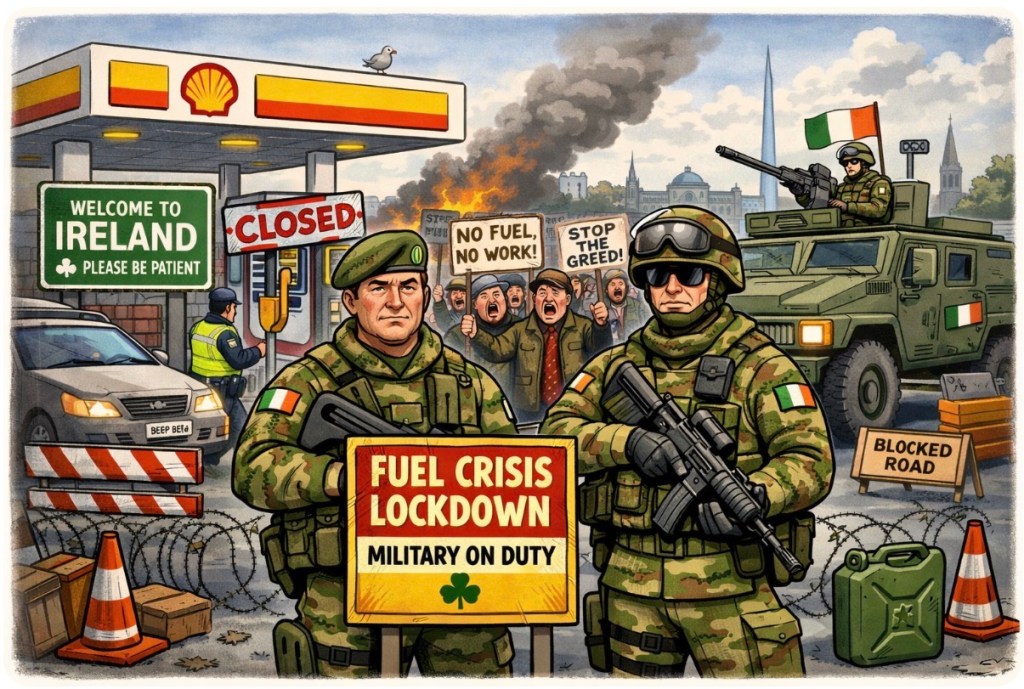
⛽🚨While your telly debates the 47th opinion on biscuit dunking etiquette, over in Ireland things have been… how do we put this… slightly on fire. Fuel protests have escalated to the point where the army’s been called in, supply chains are wobbling like a dodgy pub stool, and officials are muttering phrases like “criminal behaviour” with all the calm of someone watching their house float away.
But don’t worry—if you’re in Britain, you probably wouldn’t know. Because apparently, unless a pigeon steals a sandwich in London, it’s not headline-worthy. 🐦🥪
📺 The Great Media Vanishing Act (Now You See It, Now You Don’t)
So let’s get this straight. A neighbouring country is facing widespread disruption, fuel blockades, and military involvement… and the coverage is thinner than a budget supermarket ham slice?
It raises a few awkward questions:
- Is it too inconvenient a story?
- Too close to home for comfort?
- Or just not spicy enough without a celebrity meltdown attached?
Because when protests “cross into criminal behaviour,” roads clog, and the army steps in, that’s not just a local inconvenience—that’s a blinking warning light on the dashboard of the entire region. 🚨
And yet… silence. Not total silence, of course—but the kind of muted, half-hearted murmur that gets buried somewhere between weather updates and “Top 10 Air Fryer Recipes.”
Meanwhile, people on the ground are dealing with real consequences: disrupted deliveries, rising tensions, and a growing sense that something big is happening… just not big enough for prime-time outrage.
Funny how that works.
🔥 Challenges 🔥
Why does it take chaos with better branding to make the news? Why are some crises headline gold while others get shoved into the media attic? And more importantly—what else are we not being told? 👀
Got a theory? A rant? A conspiracy with just enough spice to make us nervous? Drop it in the blog comments—not just Facebook where it goes to die. Let’s hear it. 💬🔥
👇 Smash comment, like, and share—drag this story out of the shadows.
The sharpest takes, wildest theories, and spiciest truths will be featured in the next issue of the magazine. 🎯📝


 Chameleon Magazine
Leave a comment