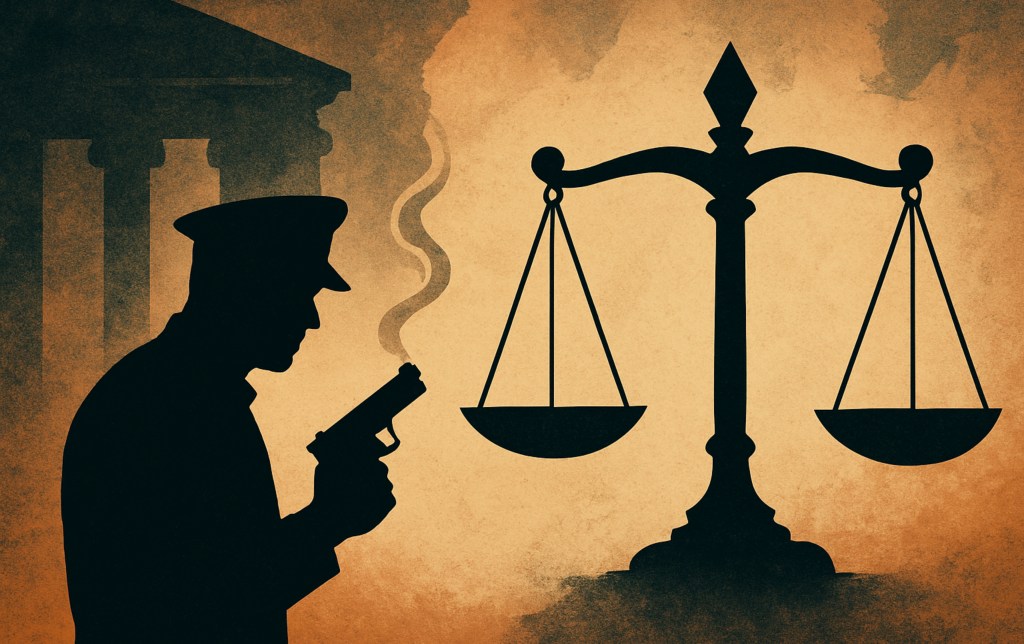
A police officer who shot and killed Chris Kaba has been cleared of murder, but will now face a gross misconduct hearing. The Independent Office for Police Conduct (IOPC) is stepping in for one last dance of accountability—or at least the procedural pantomime version of it. This isn’t just about one moment or one man. It’s about a system that hands out firearms like trust, then acts shocked when something irreversible happens.
🚓 Misconduct or Malfunction? When Split-Second Decisions Collide with Systemic Failures
Let’s not pretend this is a simple “bad apple” moment. If an armed officer can legally pull the trigger and still wind up in a misconduct hearing, we have to ask: is the problem the person, or the process that trained them, armed them, and put them on that street?
This isn’t a Marvel movie. There are no heroes, no perfect split-second decisions. There’s a dead man, a devastated family, and a public trying to square safety with justice. One side screams, “He was doing his job.” The other whispers, “Chris Kaba isn’t coming back.”
What’s gross here might not just be the misconduct—it might be the institutional rinse-and-repeat. We hand guns to police and tell them to act fast. Then when they do, we ask them to slow it all down in courtrooms and internal reviews. If the process that led to the trigger-pull is flawed, then we need to stop slapping wrists and start tearing apart the manual.
Because let’s be real: accountability can’t just mean post-mortem paperwork.
Challenges
Should we be punishing the individual, or dissecting the whole damn system? If the heat-of-the-moment logic is what we trained, then why are we shocked at the result? Drop your take in the comments—be raw, be real.
🗣️ Comment if you think accountability should start at policy, not just the pistol.
⚖️ Like if you’re tired of procedural theatrics after lives are lost.
🔁 Share if you believe both justice and public safety are being failed in this cycle.
The most powerful, uncomfortable, or brutally honest comments will be featured in the next issue. 🎙️🔥


 Chameleon Magazine
Leave a comment