Somewhere in a crowded sports arena, a teenager once stared down a small plastic cup of jalapeños and made a decision that would haunt their sweat glands forever. With the boldness only adolescence and sodium can inspire, they ate the entire cup in one go.
They were never the same.
But this isn’t just a story of youthful hubris and gastrointestinal betrayal. It’s a lens into humanity’s strangest culinary kink: eating things that feel like punishment.
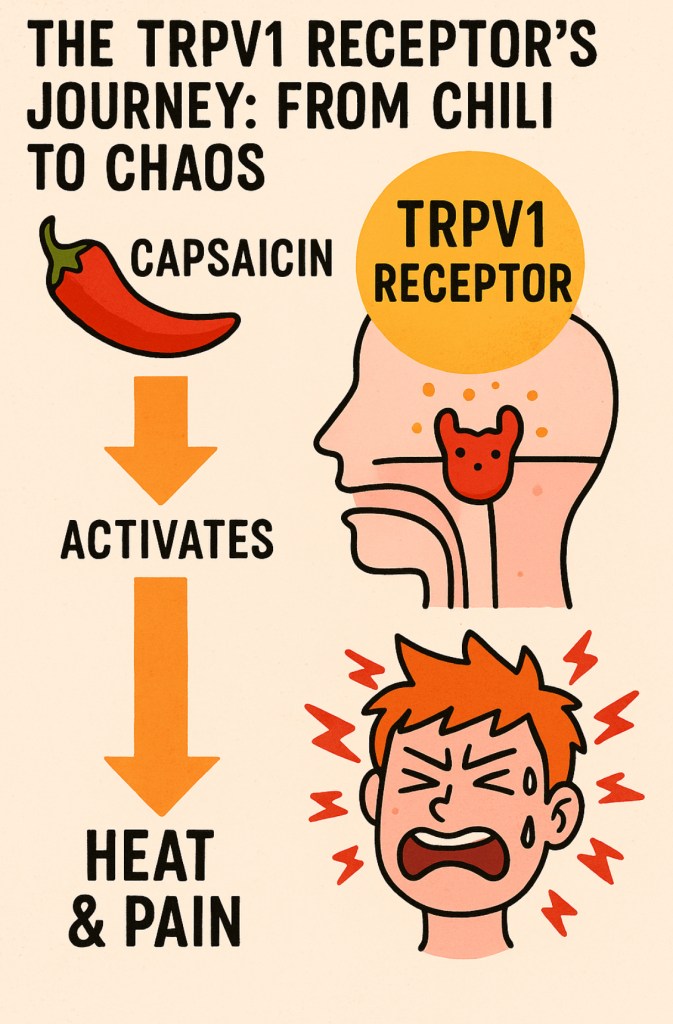
The culprit behind this mouth-based arson is capsaicin, a molecule that activates a receptor in our body called TRPV1 — which, for simplicity, we’ll refer to as the “OH GOD WHY” receptor. This protein exists to detect excessive heat and sound the alarm when things get hot enough to cause damage. Capsaicin, the chemical troll it is, triggers that same alarm even when the food is colder than your ex’s text replies.
In evolutionary terms, chili plants developed capsaicin to repel mammals (read: us) because we tend to chew up seeds like the snack-destroying beasts we are. Birds, on the other hand, get a pass — they can eat spicy peppers without so much as a hiccup, helping the plants spread their seeds without incident. The chili, essentially, is choosing its allies. And mammals are not invited.
Yet here we are, dousing wings in habanero sauce, ordering extra heat “for fun,” and turning Thai food into a spiritual reckoning. Why? Science says it’s probably because humans are weird, capable of building civilizations and also developing Stockholm syndrome for mouth pain.
It helps that repeated exposure to capsaicin desensitizes the TRPV1 receptor — meaning that the more spicy food people eat, the less it hurts. This may explain why one person’s “pleasant zing” is another’s “apocalyptic regret.” It also explains why capsaicin patches are used in medicine to numb chronic pain, and why chili-heads speak in tongues when they discover a new hot sauce at the farmer’s market.
Ultimately, the human love for spicy food isn’t about nutrition or survival. It’s about turning sensory betrayal into a bonding ritual — a way to impress dates, challenge friends, and test the durability of one’s tongue lining.
Because in a world of uncertainty, humans will always find comfort in a shared moment of consensual culinary suffering.


 Chameleon Magazine
Leave a comment