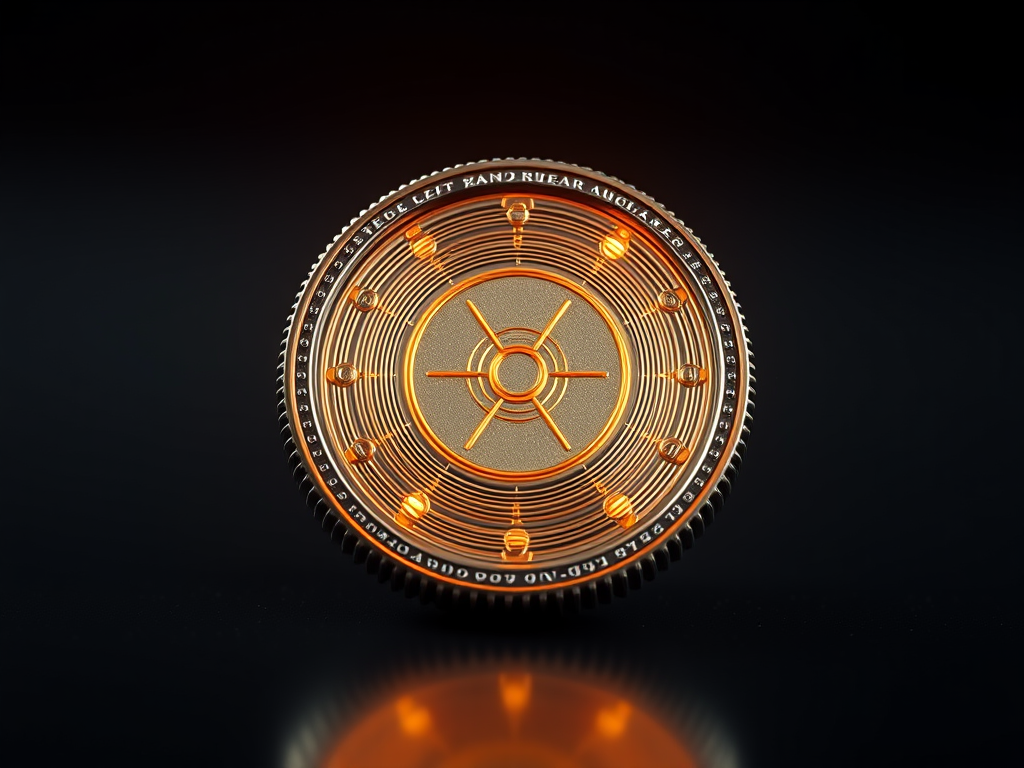
Imagine a battery the size of a shirt button, running quietly for 50 years without a single recharge. No cords, no fuss, just clean, silent power courtesy of radioactive decay. No, this isn’t a prop from Star Trek—it’s a very real innovation by Beijing Betavolt New Energy Technology, and it’s called the BV100.
This coin-sized nuclear battery could reshape the way we think about long-term, low-power energy storage. And if it lives up to its promise, the BV100 might not just change industries—it could power the future, one microscopic robot at a time.
What Is the BV100, Exactly?
At first glance, the BV100 sounds like the kind of gadget Tony Stark might use to power a miniature arc reactor. But the science behind it is grounded and elegant.
The BV100 is a betavoltaic battery—a type of nuclear battery that converts the energy from beta particle emissions (in this case, from the isotope nickel-63) into electricity using diamond semiconductors. Here’s a breakdown of how it works:
- Nickel-63, a mildly radioactive isotope, emits beta particles during its decay.
- These particles pass through two ultra-thin (2-micron) layers of synthetic diamond.
- The diamond semiconductors capture the energy of these beta particles and convert it into electricity.
It’s like a solar panel, except the “sunlight” comes from radioactive decay and the “photons” are beta particles. And just like that, the battery hums along, generating a continuous 100 microwatts at 3 volts.
Why This Matters: Power Without Maintenance
Here’s where things get interesting. This battery doesn’t just sip power—it sips power for half a century. That kind of longevity is unheard of in conventional batteries.
Let’s look at the key benefits:
- Zero Maintenance: No charging. No replacement. No degradation over time. It just works—for up to 50 years.
- Safety: Thanks to the nature of beta particles (which can’t even penetrate skin) and the use of solid-state construction, the BV100 emits no external radiation.
- Green Afterlife: When the nickel-63 decays, it becomes stable, non-toxic copper. No radioactive waste headaches.
- Extreme Endurance: Operates in a temperature range from -60°C to +120°C, making it ideal for harsh environments.
This isn’t your average lithium-ion clunker. It’s precision-engineered for the kind of applications where reliability trumps raw power.
So Where Will We Use It?
Let’s be clear: you’re not going to find the BV100 powering your next iPhone or laptop. At least, not yet. Its power output—100 microwatts—is tiny. But it’s a marathon runner, not a sprinter. And in certain fields, that’s exactly what’s needed.
Here’s where the BV100 shines:
- Medical Devices: Pacemakers, hearing aids, and implanted sensors that could run for decades without needing surgery to replace batteries.
- Aerospace: Satellites, probes, and remote sensors operating far from solar power sources (like in deep space or polar regions).
- Defense: Remote surveillance equipment or autonomous micro-drones that must remain active and undetected for years.
- IoT and Micro-robots: Swarms of ultra-small robots or sensors embedded in infrastructure, constantly monitoring for years with no human intervention.
The kicker? Betavolt is already working on a 1-watt version, which could open up new possibilities in communications, wearable tech, or even certain autonomous systems.
The Fine Print: Challenges Ahead
Of course, no new tech comes without hurdles. A few questions loom:
- Production scale: Nickel-63 is not abundant or cheap. Scaling up production while keeping costs manageable could be a bottleneck.
- Public perception: Despite its safety, the term nuclear still triggers alarm bells. Widespread adoption will require serious public education.
- Regulation: Even low-level nuclear tech faces tight regulations, especially for international deployment.
Still, these aren’t deal-breakers. They’re speed bumps. And history has shown us that when the potential is this big, solutions often follow.
The Atomic Age, Reimagined
In many ways, the BV100 isn’t just a battery—it’s a bet. A bet that nuclear technology can be safe, small, and sustainable. That a device as tiny as a fingernail could run for half a century on a slice of radioactive metal and a pair of diamonds. That our future energy needs don’t always require more power—just better power.
This isn’t the dawn of a new energy source. It’s the evolution of one we’ve known for decades, finally refined to fit the world we’re building: connected, autonomous, long-lasting.
Your Turn:
Would you trust a nuclear battery in your pacemaker? Could this tech ever power your smartwatch—or your house? Sound off in the comments, share this with a friend who loves wild tech, or challenge me: what’s the real limit of betavoltaics?
Let’s spark a reaction—without the radiation.


 Chameleon Magazine
Leave a comment