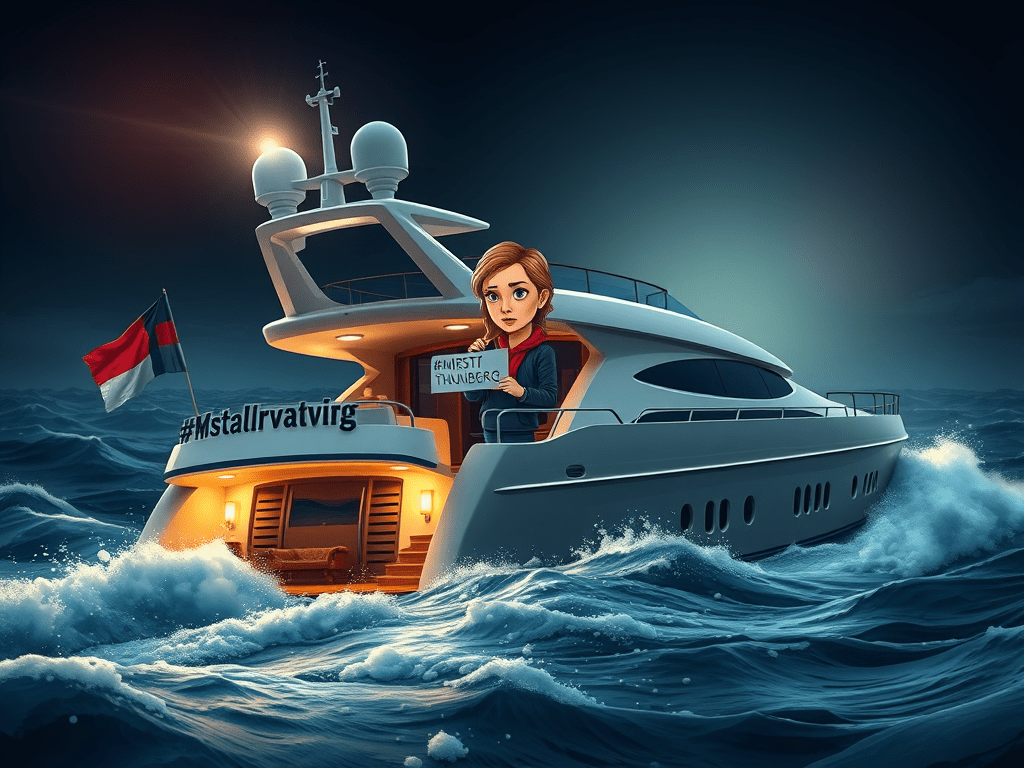
Virtue Floats: Greta, Gaza, and the Yacht of Empty Gestures šŸš¤šŸŒ

When activism sets sail without a compass, what you get is theatre on the high seas—one part moral vanity, two parts photo op, zero parts solution.

šŸŽ­ Humanitarian Theatre With a Life Jacket

Ahoy, it’s the flotilla of feelings again! This time captained by Greta Thunberg and her flotilla of Instagrammable indignation. They set out not with engineers, doctors, or diplomats, but with hashtags, high-resolution cameras, and enough self-righteousness to power a small wind farm.

What exactly was this boat carrying? Aid? Barely. A plan? Please. It was armed to the teeth with moral superiority, sailing directly into the headlines like a scene from ā€œLes MisĆ©rables: Mediterranean Edition.ā€ Israeli forces intercepted them? Of course they did—it’s practically part of the script now.

Let’s not kid ourselves: if your ā€œmissionā€ ends with an op-ed and a detention selfie, you’re not delivering aid—you’re delivering content. šŸŽ„šŸ“¦

Real humanitarian work is boring. It’s bureaucratic. It smells like diesel fuel and compromise. No applause. No headlines. And certainly no yachts.

The Gaza crisis is brutal. It deserves more than cosplay diplomacy and floating protests. But celebrity activism thrives on simplicity—good guys vs bad guys, slogans over strategy, optics over outcomes. Because nuance doesn’t trend.

You want to help? Trade the yacht for a desk at the UN. Spend five years navigating international sanctions law. Learn how aid gets diverted. Build a cross-border logistics plan that can survive reality. Or at least, stop mistaking the deck of a boat for the moral high ground.

This isn’t activism. It’s performance art with a guilt complex and a drone overhead. šŸ›„ļøšŸŽ¬

Challenges

Tired of headline heroics? Exhausted by drive-thru saviors and shallow solidarity? Sound off in the blog comments. Get sarcastic. Get furious. Or just get real. šŸ’¬šŸ”„

šŸ‘‡ Comment, share, and tag someone who thinks kayaking toward conflict zones counts as foreign policy.

The sharpest takes and savage burns will be featured in our next magazine issue. šŸ§ØšŸ“

2 responses to “Virtue Floats: Greta, Gaza, and the Yacht of Empty Gestures šŸš¤šŸŒ”

  1. John Davies Avatar
    John Davies

    In purely logistical terms, yes — it delivered zero aid. But was it pointless? Not entirely. As a one‐off act of witness and solidarity, it succeeded in helping to keep Gaza’s humanitarian crisis in the headlines, mobilizing protests, and spurring calls for new relief corridors. The flotilla generated front‐page coverage from Reuters to the Wall Street Journal, and prompted snap protests at various universities under the banner of Students for Palestine. A United Nations special rapporteur publicly urged more boats to challenge the blockade, citing the Madleen as a template for civil‐society pressure.

    Like

    1. chameleon15026052 Avatar

      That’s a fair account of the symbolic impact—but I’d push back a bit on whether that justifies the effort.

      Yes, the flotilla kept Gaza in the headlines and stirred some activism, but headlines fade fast, and symbolic gestures don’t always translate into sustained pressure or real-world change. Media coverage is valuable, sure—but we also have to ask: at what cost, and for what net gain?

      In a world overloaded with causes competing for attention, symbolic actions can sometimes dilute urgency rather than deepen it—especially if they don’t lead to clear outcomes or follow-through. The Madleen may have inspired a few statements and protests, but did it materially alter the blockade, open a relief corridor, or shift the diplomatic calculus? That’s a harder case to make.

      Solidarity matters—but if it’s not strategically grounded, it risks becoming performance. Courageous, heartfelt, yes—but possibly ineffective. Sometimes civil society pressure works best not through spectacle, but through relentless, quiet, organized effort that builds over time.

      So while I respect the spirit of the flotilla, I remain skeptical about its practical value beyond the brief media bump.

      Liked by 1 person

Leave a reply to chameleon15026052 Cancel reply

Ian McEwan

Why Chameleon?
Named after the adaptable and vibrant creature, Chameleon Magazine mirrors its namesake by continuously evolving to reflect the world around us. Just as a chameleon changes its colours, our content adapts to provide fresh, engaging, and meaningful experiences for our readers. Join us and become part of a publication that’s as dynamic and thought-provoking as the times we live in.

Let’s connect