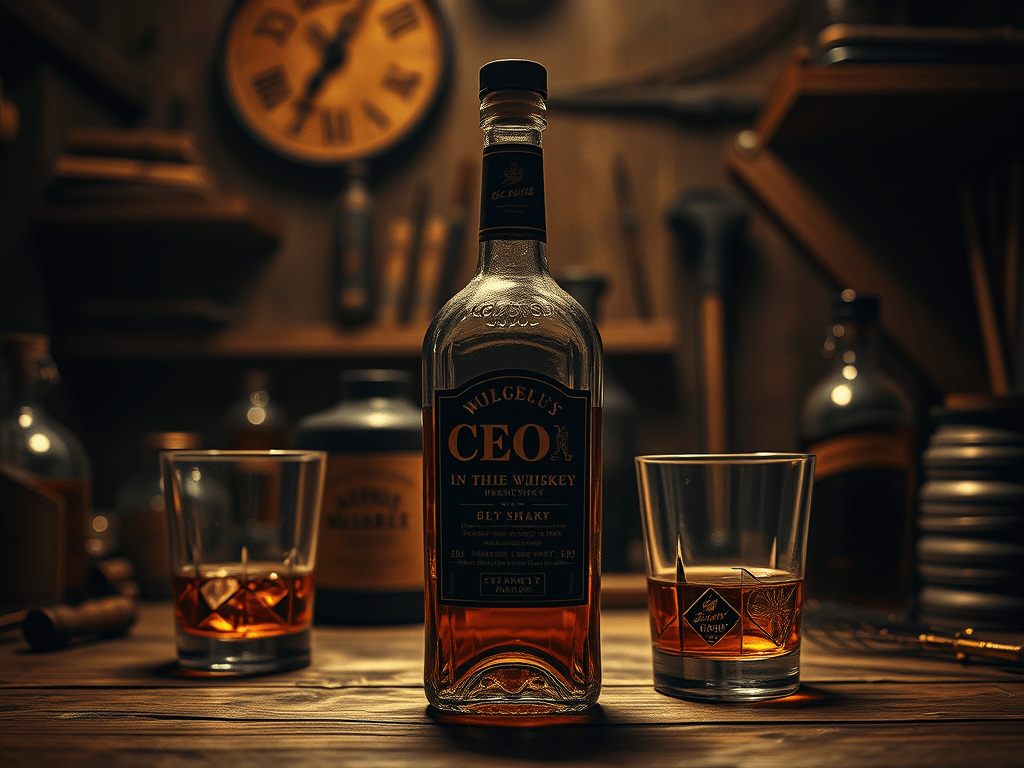
Read Time: 9 minutes — Best paired with a top-shelf illusion and a bitter aftertaste.
Confessions of a Whiskey Tycoon: A Satirical Take on Addiction, Branding, and Bravado
What happens when branding becomes belief? When the bottle you sell starts bottling you in return? This isn’t just a story about whiskey—it’s a meditation on how modern entrepreneurship drinks deeply from the wells of mythology, addiction, and performance. Today, we’re peeling back the label of a luxury liquor brand to reveal what’s really inside: not just spirits, but a slow-burning cultural truth about who we are when no one’s watching—and what we sell when everyone is.
Let’s be clear: this is satire. But like all good satire, it’s dangerously close to real.
The Birth of a Brand (And the Death of a Man)
They told me authenticity was everything. So I faked it perfectly.
The year was 2015. Craft spirits were having a moment. Beards were currency, and “artisanal” could sell you anything—from pickles to pants. I didn’t know anything about whiskey, but I knew how to sell a story. I Googled “what makes a bourbon premium,” called a designer in Brooklyn, and paid an old man in Tennessee $500 to pose for our first bottle.
Our first tagline? “Tradition Distilled.” We’d been in business for 11 days.
This is how branding works now. You don’t build a product, then wrap it in a story. You start with the story—then source whatever you need to make it feel real. The myth isn’t marketing; it is the product. Heritage, grit, craftsmanship—these aren’t qualities, they’re currencies. And I minted them in liquid form.
Addiction Disguised as Ambition
Here’s the dirty truth about entrepreneurship: it rewards obsession, not balance. Workaholism is a virtue. Burnout is a badge of honor. I called it “grind culture” while losing friends, sleep, and whatever was left of my own sobriety.
I wasn’t addicted to whiskey. I was addicted to being worshipped for building a whiskey empire.
People don’t talk about that kind of addiction—the one to prestige, control, applause. But it’s no less destructive. Every deal closed, every investor nod, every industry award… it numbs you. You start chasing bigger highs. And just like that, you’re lost. But hey, at least you’re wearing a founder’s fleece and giving keynotes on “purpose-driven leadership.”
The Lie of the Lifestyle Brand
Here’s what we sold: a rugged, masculine escape fantasy. Our ads were drenched in leather, smoke, and melancholy. It wasn’t just about drinking whiskey—it was about being the kind of man who drinks whiskey like this. A man with demons, yes—but the sexy kind. A man who might’ve seen combat or heartbreak or both. A man who didn’t speak much, but when he did, you listened.
Here’s what we didn’t sell: a nervous millennial checking Google Analytics at 3AM, worrying about Q4 projections and quietly vaping between pitch meetings.
We called it lifestyle branding. But it was really emotional exploitation. We weren’t just selling alcohol—we were selling longing. We sold comfort to the lonely, rebellion to the buttoned-up, identity to the lost. And our audience—God bless them—paid top dollar for the delusion.
Culture as Consumption
Our culture is starved for meaning. So we consume it wherever we can. We buy coffee that promises mindfulness, sneakers that claim revolution, and whiskey that whispers legacy.
But meaning manufactured is meaning diluted.
At some point, I started to believe my own press. The brand persona bled into real life. I posed harder. Spoke deeper. Wore denim to board meetings like I’d just come in from mending fences in Montana. But inside? I was hollow. Full of buzzwords, bloated with attention, and strangely, inexplicably lonely.
Branding had become my personality. And in turn, I became my product.
The Hangover
Now, the empire’s running itself. We’ve got a PR team, a flavor chemist, and a whiskey sommelier who says things like “leathery finish” with a straight face. I rarely touch the stuff anymore. Not because I don’t drink—but because I know too much.
Every sip tastes like spin.
I look at our bottles and wonder: is this what I wanted? A company built on beautiful lies? A legacy soaked in borrowed nostalgia and caramel coloring?
Turns out, you can bottle anything. Pain. Pride. Power. But the question you have to ask is: who’s drinking it? And who’s getting drunk?
Your Turn:
Have you ever bought into a brand that made you feel something deeper—only to realize it was a mirage? Are we living in an age where marketing has overtaken meaning?
Pour your thoughts in the comments. Neat, messy, or on the rocks—I want to hear them. And if this post left a sting, good. Maybe it’s time we all sobered up.


 Chameleon Magazine
Leave a comment