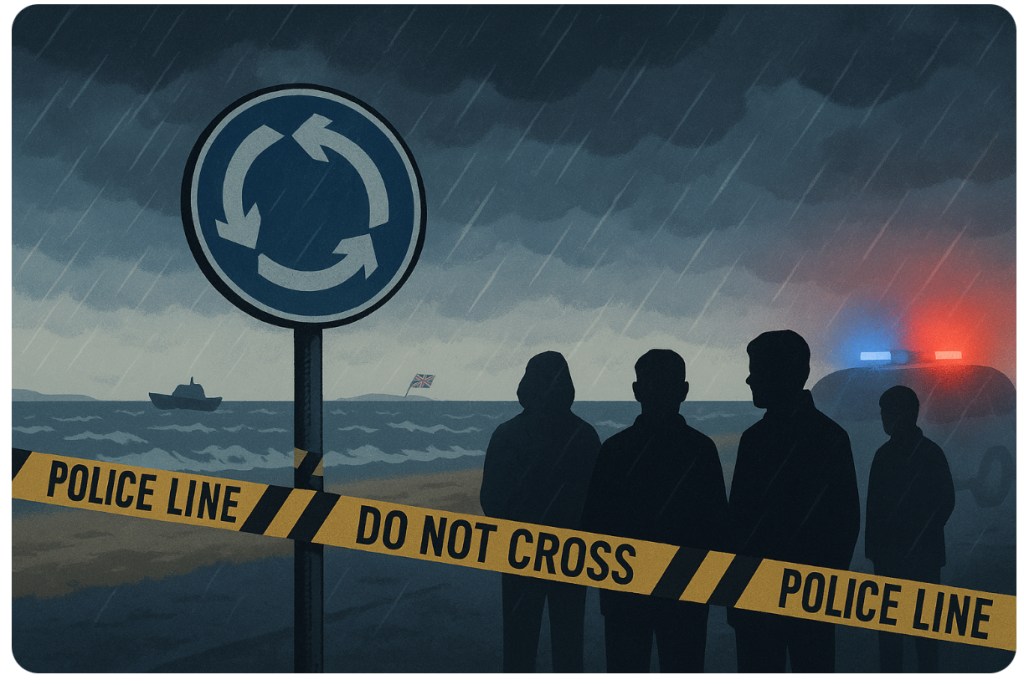
The seaside town once famous for cream teas and coach trips now has a new claim to fame: a blood-soaked street brawl that left tourists fleeing their souvlaki and police mopping up crimson puddles. The alleged culprit? 24-year-old Khalifa Eissa Benyzeed, who arrived in Britain by small boat from Libya, was granted leave to remain—and is now sitting in a police cell on suspicion of grievous bodily harm.
His brother insists it was self-defence: three men chased him, things turned violent, and out came the knife. Whether that’s the truth or a well-rehearsed asylum narrative, one fact stands: Eastbourne got turned into a low-budget gangster film set while families were trying to eat gyros in peace.
🌊 From Small Boats to Big Headlines
The brothers fled Libya after militias killed three of their siblings, eventually hopping across Europe and into Britain in October 2022. They wanted safety. Instead, Eastbourne got sirens, squad cars, and blood on the pavement. Locals aren’t buying the fairy tale. As one restaurant owner put it: “Eastbourne used to be a nice place, but now it is terrible.” Translation: people didn’t sign up for seaside stabbings with their fish and chips.
And here lies the tension Britain keeps pretending doesn’t exist: on one hand, tragic tales of escape from war zones; on the other, violent headlines in coastal towns where communities feel like their safety’s been bargained away. It’s a cocktail of pity, fear, and rage—shaken, not stirred, with a police cordon around it.
The authorities? Sussex Police have opened “Operation Benton” (which sounds more like a lost Labrador than a stabbing inquiry) and are asking for witnesses. The public? They’re left wondering whether the country’s migration system is importing victims—or importing violence.
🔥 Challenges 🔥
Is this proof the UK asylum system is broken beyond repair? Or just one tragic incident being weaponised in the immigration debate? ⚖️🇬🇧
Should small-boat arrivals be fast-tracked out—or does every story demand its messy human context?
👇 Drop your fury, your sarcasm, or your solidarity in the blog comments.
The sharpest, spiciest takes will be featured in the next magazine issue. 📝🔥


 Chameleon Magazine
Leave a comment