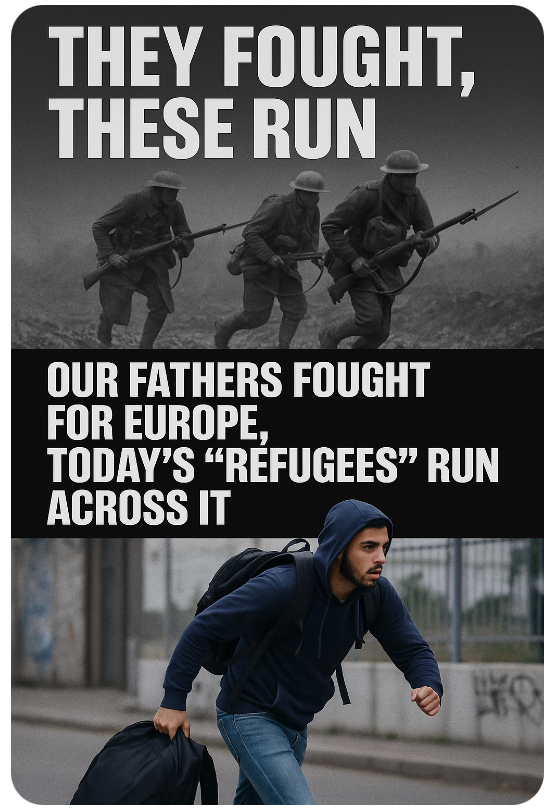
Our fathers, and their fathers before them, crossed borders for reasons not of their own making. Twice in the last century, young British men marched into Europe to fight wars they didn’t start, in countries they had never seen, against enemies they didn’t choose. They left behind families, jobs, and futures — and many never came back.
They didn’t run. They stood.
Fast forward to today, and we’re told to applaud a very different kind of movement across borders: young men of fighting age streaming into Europe, not to defend their homes, but to abandon them. While their fathers and grandfathers fought to protect their own countries, these men are leaving theirs — often leaving women, children, and elderly relatives behind — to live off the goodwill and taxes of others.
And we are expected to call this “bravery.”
Let’s be clear: genuine refugees fleeing persecution and genocide deserve protection and sanctuary. But there’s a difference between a family forced out by bombs and a young man who pays thousands to traffickers for a boat seat, then arrives demanding housing, benefits, and respect he has not earned.
Our fathers didn’t flee. They fought. They endured cold trenches, rationed bread, and the constant shadow of death. They didn’t ask Belgium or France to house them, feed them, and provide them with pocket money. They stood their ground.
So here’s the question: if someone runs from one problem, why would you expect them to stay when faced with another — especially one in a country they have no allegiance to?
Because let’s not kid ourselves: the day things turn dangerous here, the same people running from their own responsibilities will run again. Refuge is one thing. Building a life on the goodwill of others while abandoning your own home and kin is another.
We are not obligated to welcome that. We are obligated to remember the difference between those who fought for us, and those who expect us to fight for them.


 Chameleon Magazine
Leave a comment