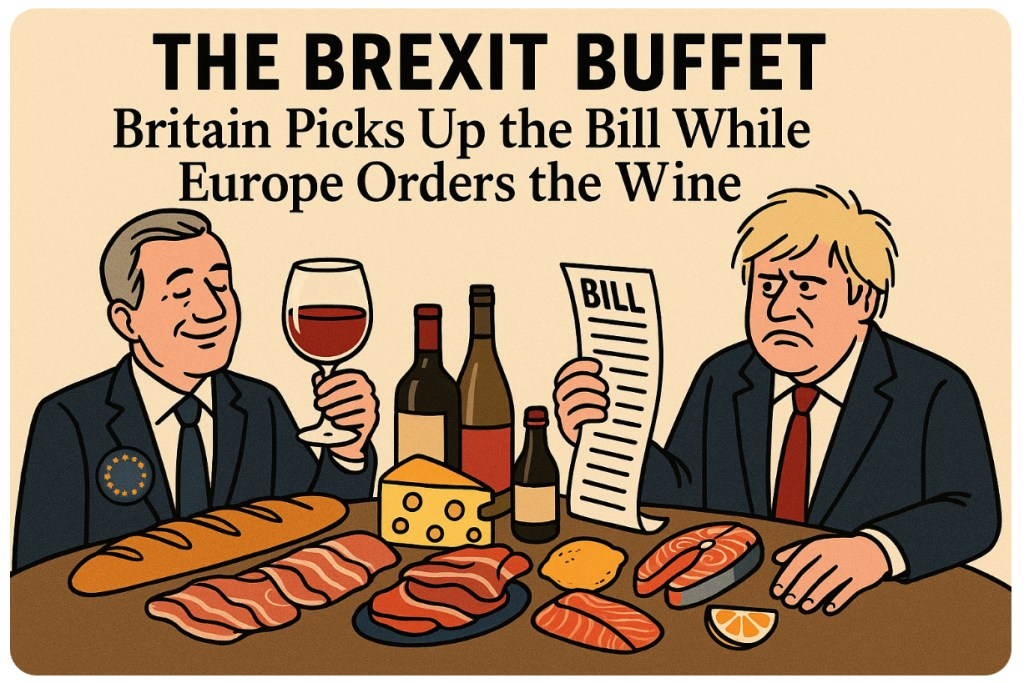
NICK THOMAS – says the UK–EU food and drink trade deal will be like a silver bullet (cheaper cheese, smoother salmon exports, less faff at Dover). But when you look closer, there are several reasons why it likely won’t deliver for Britain the way it’s being spun.
1. Britain doesn’t control the rules anymore
• Pre-Brexit, the UK helped write the EU’s food standards and trade rules.
• Now it’s a rule taker: to keep food flowing smoothly, Britain will have to align with EU regulations without a seat at the table.
• That means whenever Brussels tightens a safety standard (e.g. Listeria limits, packaging rules, PFAS bans), UK producers will have to comply anyway — but without influencing the science, timelines, or exemptions.
Result: Britain imports rules instead of shaping them. Sovereignty looks more like dependency.
2. It won’t cover the full friction at borders
• Even with a deal, there will still be checks, paperwork, and certificates, because the UK is now a “third country.”
• Fresh goods like shellfish, chilled meat, or dairy will still face delays, meaning exporters (especially in Scotland and Northern Ireland) will continue to lose out.
• The “permanent deal” mainly softens pain for consumers (cheaper imports from the EU), not exporters.
Result: Tesco shelves look fuller, but UK farmers still face extra costs.
3. Imports get cheaper, exports stay blocked
• France, Spain, and Italy want easier access to the British market for their wine, cheese, olives, and charcuterie.
• But when it comes to British exports, many continental countries will keep protections. (France doesn’t want UK lamb undercutting French producers, Germany won’t rush to promote Scottish salmon over its own fish industry.)
• EU tariffs and quotas will be eased selectively, not scrapped outright.
Result: Britain buys more from Europe than it sells to it — the trade imbalance widens.
4. Regulatory divergence fantasy dies
• Brexit boosters promised “Singapore-on-Thames” deregulation — Britain would set looser food, farming, and environmental standards to go global.
• This deal would lock Britain back into EU standards (because you can’t sell meat pies in Paris if they don’t meet EU rules).
• At the same time, it makes trade deals with countries like the US or Australia harder, because they don’t meet EU standards either.
Result: Britain gets neither full EU integration nor free-wheeling global trade. Stuck in the middle.


 Chameleon Magazine
Leave a comment