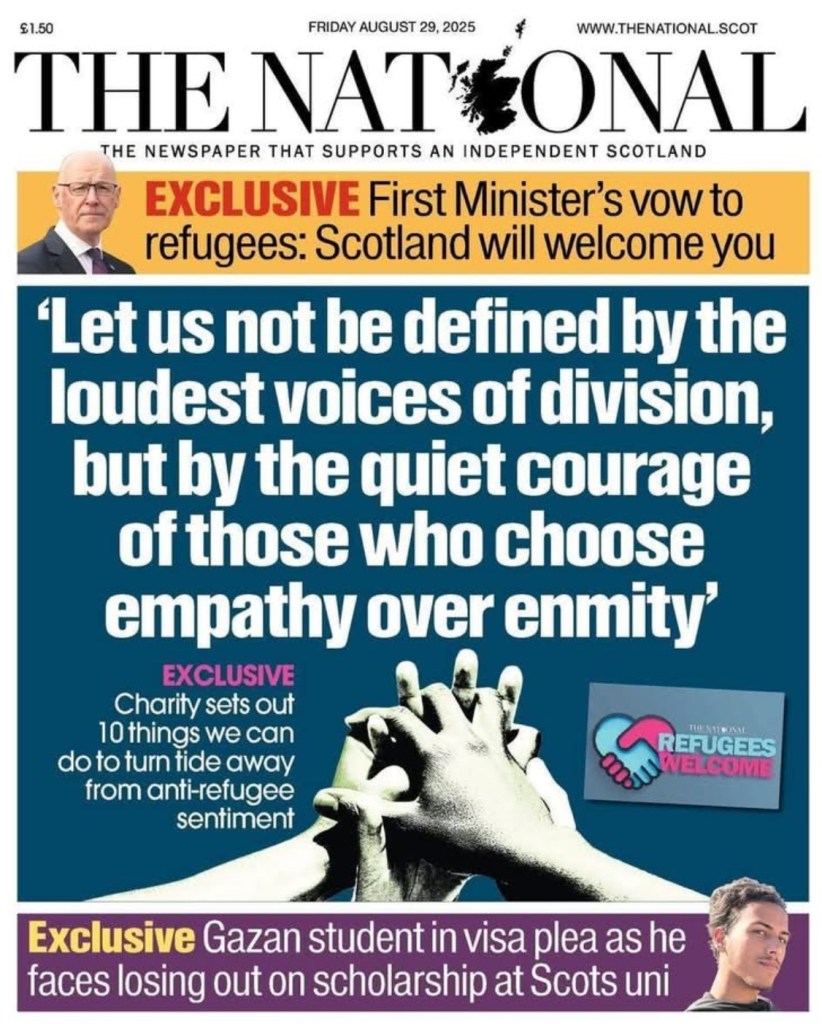
“Let us not be defined by the loudest voices of division, but by the quiet courage of those who choose empathy over enmity.”
Fine words from a politician. But let’s stop pretending the fear in our villages comes from “division.” It comes from decisions.
Imagine this: a small community, maybe a few hundred people, bound together by routine and familiarity. And overnight, a hotel on the edge of the village is filled with hundreds of young men — strangers to the area, with no work, no structure, no integration plan. No warning to locals. No consultation. Just a quiet decision, made far away, dumped on the doorstep of people who had no say.
Is it empathy to ignore the impact on the elderly woman who suddenly doesn’t feel safe walking past the hotel at night? Is it empathy to dismiss the young families who worry about strained services — the GP, the school, the buses — already at breaking point?
The truth is, people aren’t scared of individuals. They’re scared of a situation deliberately mishandled. They’re scared because government policy treats communities like storage units, not living places.
So when politicians tell us to choose empathy, they should first try it themselves. Empathy means understanding the villagers, too. It means recognising that you cannot just parachute in hundreds of people with no support system and expect harmony.
Real empathy isn’t a slogan. It’s planning, listening, and respecting both those who arrive and those already here. Without that, the only voices that grow louder will be the ones you pretend to condemn.
And let’s not kid ourselves: politicians know exactly how to twist words. They dress themselves in the language of compassion, while quietly making ordinary people feel small — branding them as fearful, selfish, or prejudiced — just to push through rules and policies that serve more ego than empathy. The loudest voice of division, in truth, often comes from the top.


 Chameleon Magazine
Leave a comment