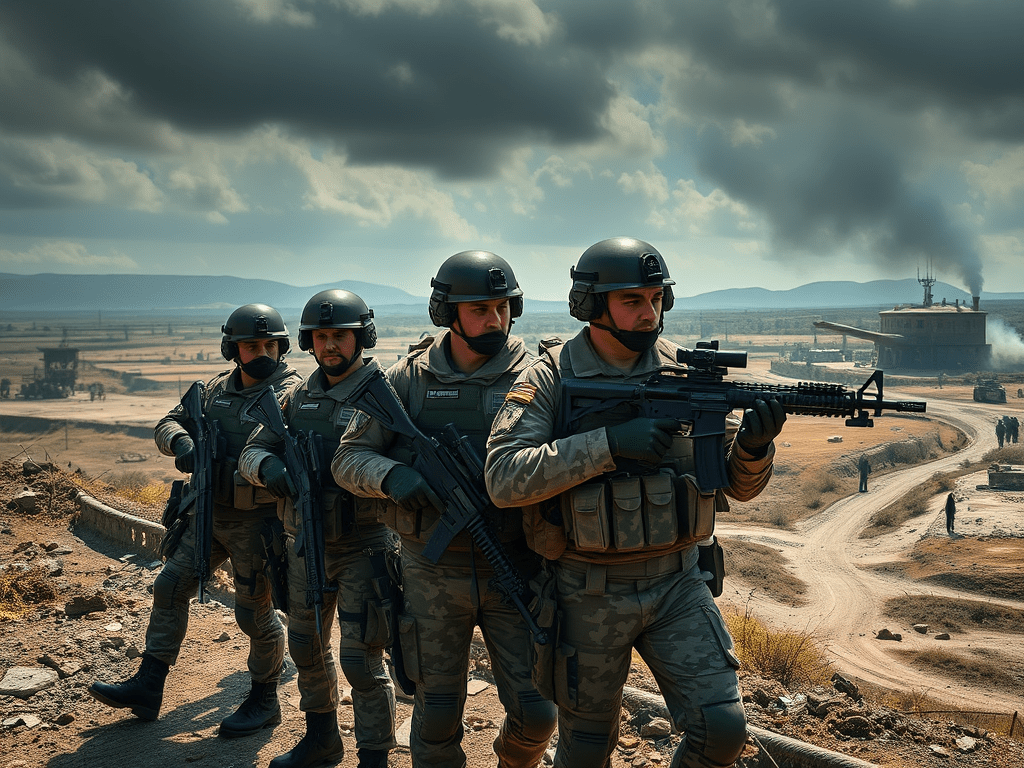
💼🔫America may soon be outsourcing its foreign policy to the private sector—because nothing says “long-term peace” quite like deploying armed contractors with profit margins. With Donald Trump insisting “no US troops in Ukraine,” the plan now on the table is to let private military firms roll in, build fortifications, and guard “US interests.” Translation: the stars and stripes may not fly on soldiers’ shoulders, but it’ll be stitched onto corporate paycheques.
🏗️ The Peace Plan, Contractor-Style
Here’s the gist:
- Build defences: Private firms tasked with fortifying Ukraine’s frontlines.
- Protect US businesses: Oil, gas, infrastructure—basically, capitalism’s version of the Geneva Convention.
- Ceasefire deterrent: Putin’s meant to think twice if “private security” is hanging around with rifles and contracts.
It’s genius in its own twisted way: by promising no “official” troops, Trump keeps his campaign pledge. By parachuting in private soldiers, he keeps a foot in the game. America avoids war optics, but Ukraine gets militarised subcontractors in polo shirts.
💰 The Corporate Soldier Era
This isn’t new—Blackwater in Iraq, Wagner in Africa, mercenary chic has been a growth industry for decades. The difference? Now it’s being pitched not as a dirty secret, but as peace policy. The line between army and company blurs: who enforces ceasefires when the “peacekeepers” have shareholders?
The risk? Once war becomes a business contract, peace becomes bad for business.
🔥 Challenges 🔥
Is Trump’s contractor plan a clever loophole that saves US troops—or a dangerous precedent that turns Ukraine into the world’s first corporate battlefield? Would Putin really be deterred by mercenaries, or would he laugh at America outsourcing its spine? 💬
👇 Comment, like, share—let us know if you think this is peacekeeping, profiteering, or just America doing what it does best: franchising war.
The best takes will feature in the next issue of the magazine. 📝🔥


 Chameleon Magazine
Leave a comment