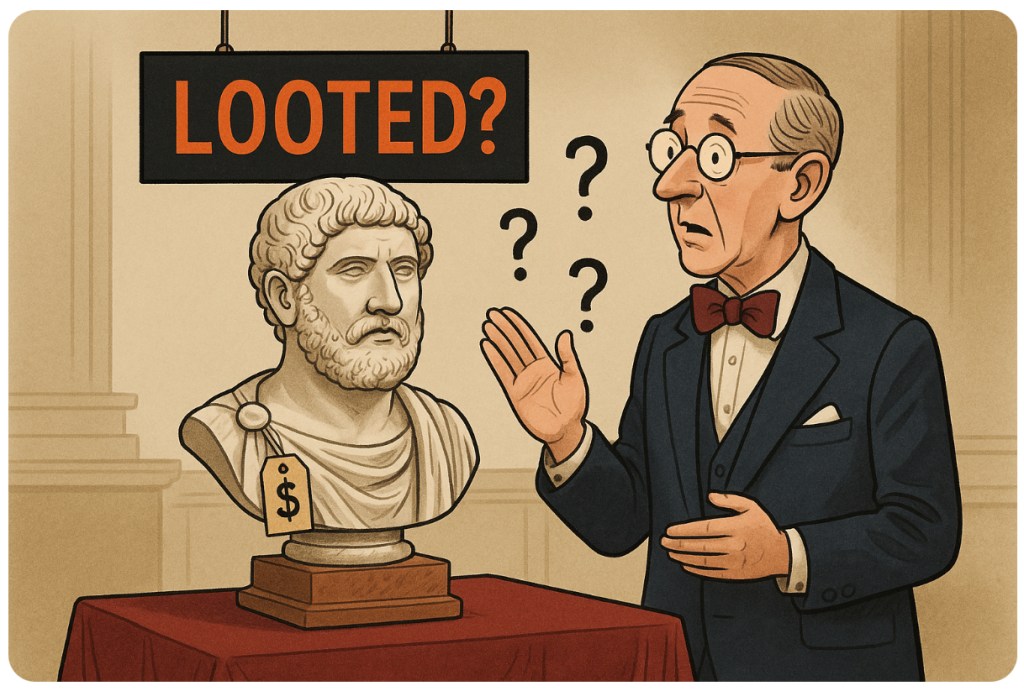
🏺💰🎩The BBC’s genteel Antiques Roadshow—normally a cosy Sunday ritual of teapots, trinkets, and weepy pensioners discovering their Nan’s brooch is worth £12.50—has stumbled headfirst into a scandal. Tim Wonnacott, the bow-tied host, is caught up in a row over a bust of Emperor Hadrian that an expert insists should never have been flogged at auction because, well… it might have been nicked.
🏛️ Raiders of the Lost Roadshow
Instead of “here’s a charming Victorian teacup,” we’re now in “was this smuggled out of a tomb under cover of darkness?” territory. An art historian has called for the Roman bust to be pulled from sale, saying promoting it was basically laundering looted history through a BBC presenter in a nice tie.
Of course, the BBC probably hoped this would just be another charming segment: “Your item, sir, is actually worth a fortune.” But it turns out the fortune may belong to another country. And nothing ruins teatime telly like the creeping realisation you’re watching Time Team: Grand Theft Antiquity Edition.
🕵️ The Antique Elephant in the Room
The bigger issue? Britain’s museums, auction houses, and TV antiques shows are stuffed with objects that may have taken a less-than-legal route into the country. For every “find in the attic,” there’s a very awkward colonial backstory. The Roadshow has just accidentally yanked the velvet curtain back on a trade where heritage and heist blur together.
Tim Wonnacott probably thought he was promoting culture. Instead, he’s promoting an international headache involving heritage laws, dodgy dealers, and the ghosts of Roman lawyers demanding their marble back.
🔥 Challenges 🔥
So what’s worse—Britain’s obsession with clinging onto artefacts that aren’t ours, or the fact we dress it up as cosy Sunday TV? 📺🏛️
💬 Drop your hottest take in the comments. Should the Roadshow stick to teaspoons—or is it time the BBC confronted the colonial skeletons hiding in its antique cabinets?
👇 Hit comment, hit like, hit share. Let’s see if you think this was a harmless bit of telly, or a polished-up art crime.
The sharpest and sassiest comments will make it into the next magazine issue. 📝⚡


 Chameleon Magazine
Leave a comment