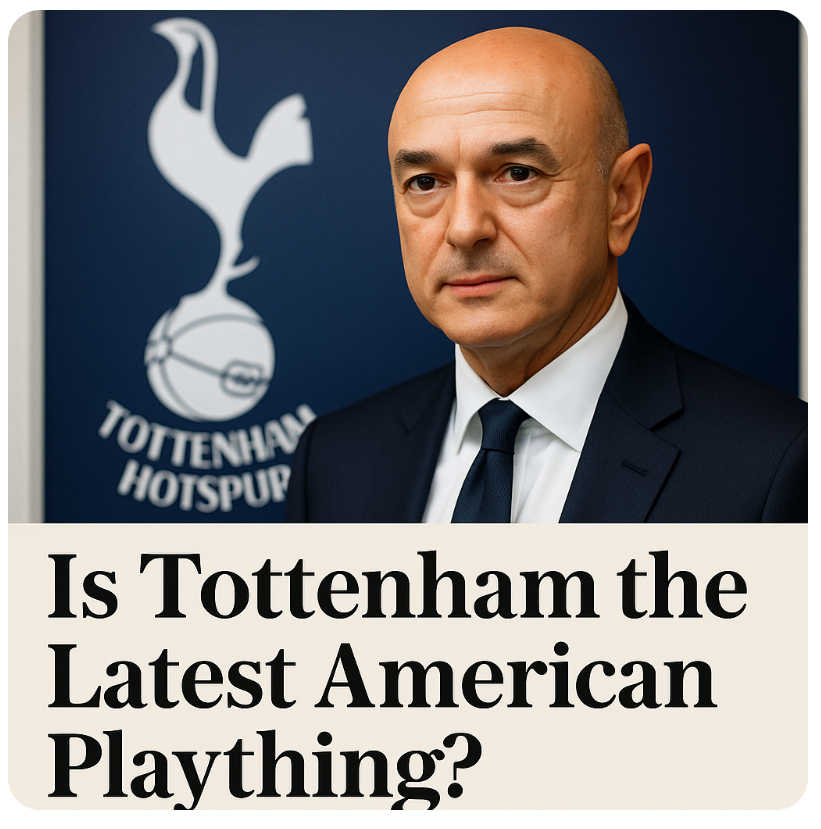
🐓💼🇺🇸Daniel Levy’s “shock” exit might have rattled Spurs staff, but the real shake-up started long before. Step one: parachute in a bunch of American consultants (Gibb River Group) to poke around the club like mechanics under a dodgy second-hand car bonnet. Step two: slot in new directors and a CEO as if this is just another corporate merger, not a football club with a century of baggage and a fanbase fuelled on pints and heartbreak.
The Lewis family trust, which holds the controlling interest, apparently decided Levy’s empire needed more than a few transfer-window patches—it needed a full corporate detox. And when Americans start talking about “operational and sporting reviews,” you can bet they’re seeing dollar signs, sponsorship deals, and a chance to turn North London passion into balance-sheet performance.
⚽ The Premier League: Britain’s Shiniest Toyshop
Tottenham’s Europa League win and Champions League return should have been Levy’s golden ticket. Instead, it became his swan song. Because here’s the truth: the Premier League is no longer about loyalty or legacy—it’s a global billionaire playground. Americans already own Arsenal, Liverpool, Chelsea, Man United, and now Spurs are on the operating table, waiting to be optimised like a Silicon Valley startup.
So, is Tottenham just another “plaything”? Or are they the latest pawn in the long game of turning English football into the NFL with shin pads? If fans wanted passion, grit, and history—they may have to settle for quarterly reports, consultancy jargon, and a new “brand vision.”
🔥 Challenges 🔥
Do you buy the story that this is about “sustained sporting success”? Or is Tottenham just the next shiny trophy for American investors who see football as streaming content with ad breaks? 🍿📈
👇 Have your say in the blog comments—not just on Facebook.
The best roasts and rants will feature in the next issue of the magazine. 📝⚡


 Chameleon Magazine
Leave a comment