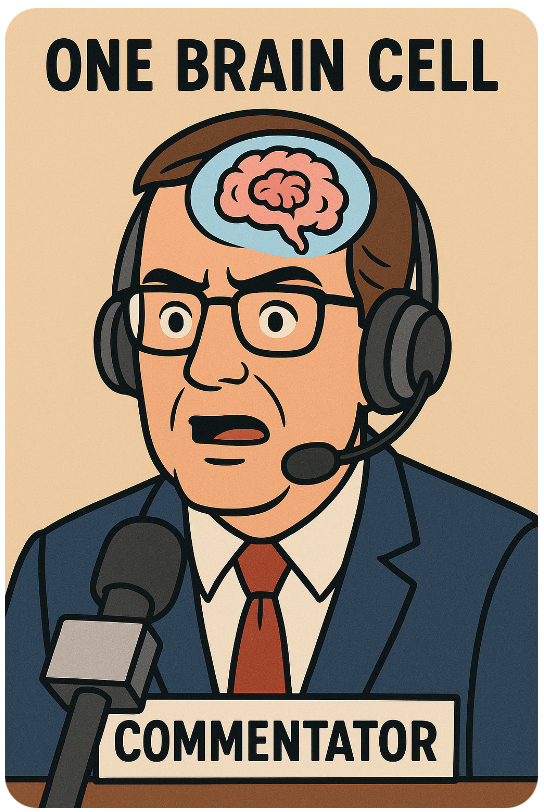
🗳️📰Reform UK may have a buffet of policies on the table—tax reform, NHS shake-ups, energy strategy—but don’t expect to hear about them. Why? Because the political media machine only has one brain cell reserved for challenger parties, and it’s permanently stuck on immigration, immigration, immigration. Journalists call it “narrative framing.” I call it intellectual autopilot.
🎭 The Media’s Magic Trick: Turning Parties into Punchlines
Here’s the disappearing act: Reform publishes 50 pages on economic policy, but by the time it filters through the media grinder, it’s reduced to “angry people shouting about boats.” Why?
- Journalists love easy labels—they treat manifestos like IKEA manuals: too long, too boring, and nobody ever reads past page one.
- Narrative inertia—once a party is branded “anti-woke,” good luck rebranding them as “pro-economic reform.” You’d have an easier time rebranding Ryanair as a luxury airline.
- Reform’s own comms team—they lead with fireworks (border control, Net Zero skepticism), then wonder why nobody covers the small print about VAT tweaks.
The cherry on top? Big-party loyalists in the press are only too happy to keep Reform boxed in as “that angry protest group.” Why hand oxygen to rivals when you can stuff them in a pigeonhole and nail the lid shut?
And the audience? Oh, they’re not off the hook either. Voters tune in expecting a row about immigration, not a 20-minute TED Talk on energy deregulation. So that’s what the producers deliver.
The result: a “full political party” shrunk into a headline piñata. It’s not analysis—it’s fast food politics. 🍔💥
🔥 Challenges 🔥
Why do we tolerate a political media ecosystem that reduces entire parties into memes? Is it laziness, bias, or just audience bloodlust for a punch-up? Drop your thoughts in the blog comments 💬—not just on Facebook’s outrage machine.
👇 Smash comment, smash like, smash share. Do it before the pundits boil this down to “angry Reform fanboys on the internet.”
The sharpest takes get immortalised in the next issue of the magazine. 📝⚡


 Chameleon Magazine
Leave a comment