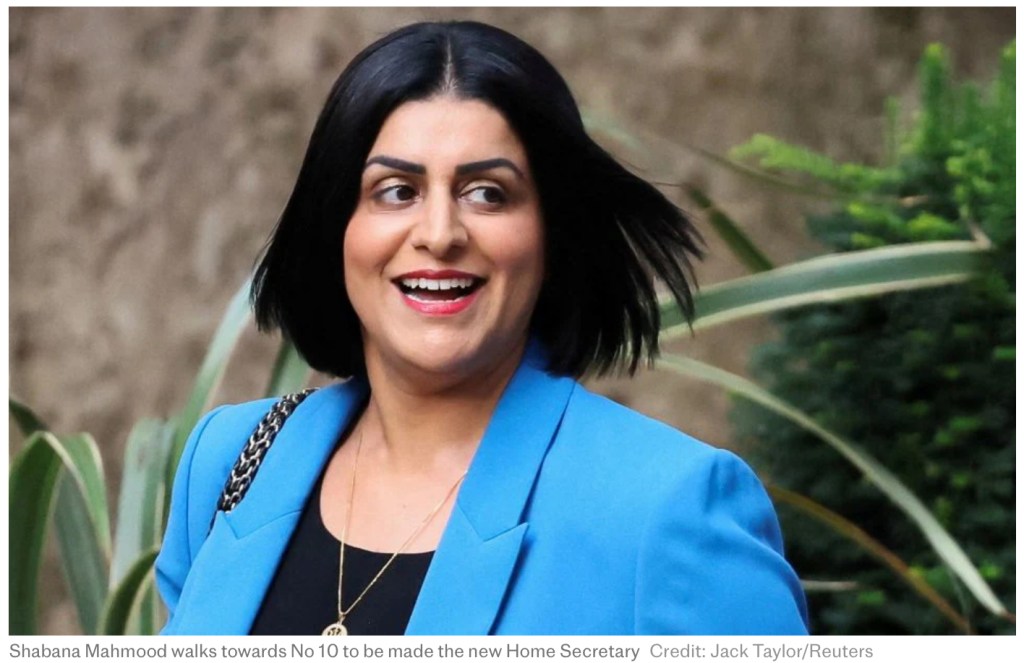
🪜🚪🇬🇧Shabana Mahmood, the new Home Secretary, is being tipped to take a hard line on illegal migration. After her stint as Justice Secretary, she’s now expected to be “uncompromising” in tackling the refugee crisis. But here’s where the political soap opera writes its own script: a politician with roots in migration tasked with slamming the door on the next wave.
🔄 The Double Standards Dilemma
It’s the oldest paradox in politics: those who benefited from an open door pulling it shut behind them. Refugees, immigrants, descendants of migration—suddenly cast as the guardians of fortress Britain. It’s like climbing a shaky ladder, then yanking it up the second you find a safe perch.
The message? “We’re settled now. You’re not.” It plays well with voters who want someone “tough” on borders, but it also leaves a bad taste of hypocrisy. And let’s not pretend the symbolism is subtle: the government installs a Muslim Home Secretary just as migration gets framed as a threat. That’s not irony—that’s political theatre.
And here’s the sharpest edge of the blade: I also wonder how her religion will cope with this. Islam places strong emphasis on compassion, community, and protecting the vulnerable. How will that square with policies aimed at cracking down on those whose main drive is not desperation but economic desire—people chasing a better standard of living rather than fleeing warzones? That tension between faith and political expediency could be where this story really unravels.
Meanwhile, the boats keep coming, the seas keep churning, and human ambition for more doesn’t pause for party conference applause. But sure, let’s call it “taking control.”
🔥 Challenges 🔥
Is Mahmood’s hard line a necessary dose of realism—or a betrayal of shared history and faith? Can a government rooted in migration credibly criminalise those seeking the same chance for economic advancement? Drop your sharpest takes in the blog comments—we’re ready for fury, sarcasm, and fire. 💬🔥
👇 Hit comment, hit like, hit share. Let’s tear into the ladder-pulling politics together.
The best replies will feature in the next issue of the magazine. 📝⚡


 Chameleon Magazine
Leave a comment