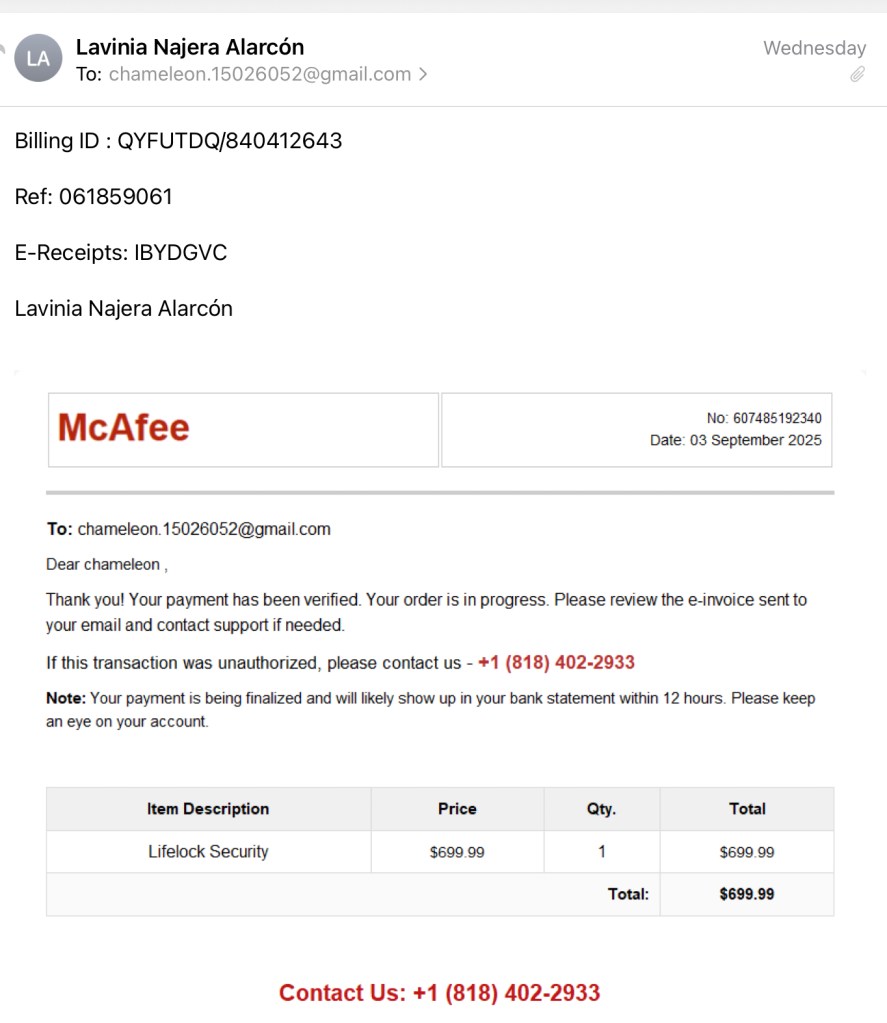
They never die, they just respawn in your inbox with a new Gmail address and a sob story. Whether it’s a “Prince” offering you gold, a fake Amazon refund, or someone promising you love if you just “verify your bank details,” the scammers are still thriving. They don’t sleep, they don’t quit, and apparently, they don’t run out of broken English templates.
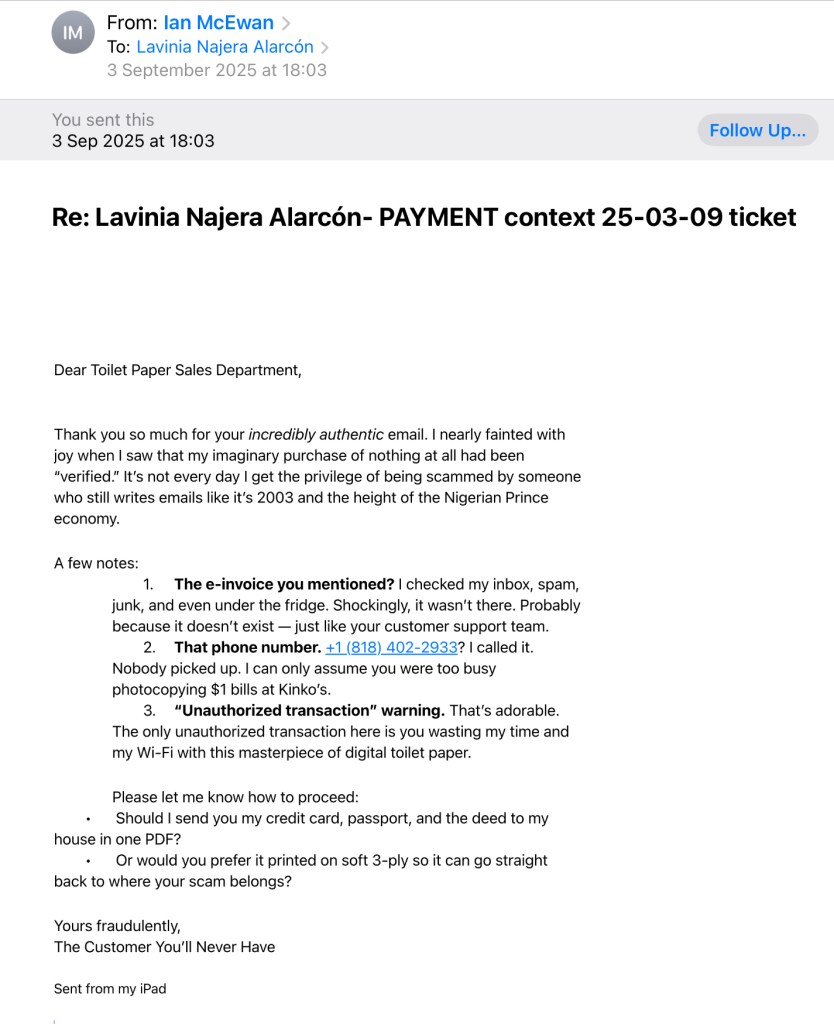
My Response to Scammers
The Shape-Shifting Parasites of the Internet
Scammers are like glitter: once they’re in your life, good luck ever getting rid of them. One minute it’s “Congratulations! You’ve won a cruise,” the next it’s “Your Netflix account has been suspended” (which is funny, because you canceled it three years ago). They prey on fear, greed, and the tiny hope that maybe—just maybe—you really did inherit millions from a long-lost cousin in Botswana.
Spoiler alert: you didn’t. 🪦
The worst part? Scammers are basically remote-working entrepreneurs. They’re hustlers with zero morals, side hustles with a body count. They read your desperation for cheaper bills, dream vacations, or quick cash, then turn it into their payday. Honestly, if they put half as much effort into actual jobs, they’d probably be running Fortune 500 companies by now. Instead, they’re running off with your Nan’s pension fund.
So here’s the rule of thumb: if it sounds too good to be true, it’s a scam. If it sounds just bad enough to be believable, it’s also a scam. Basically—trust no one. Not even me. (But especially not the guy asking for Bitcoin “for tax purposes.”)


 Chameleon Magazine
Leave a comment