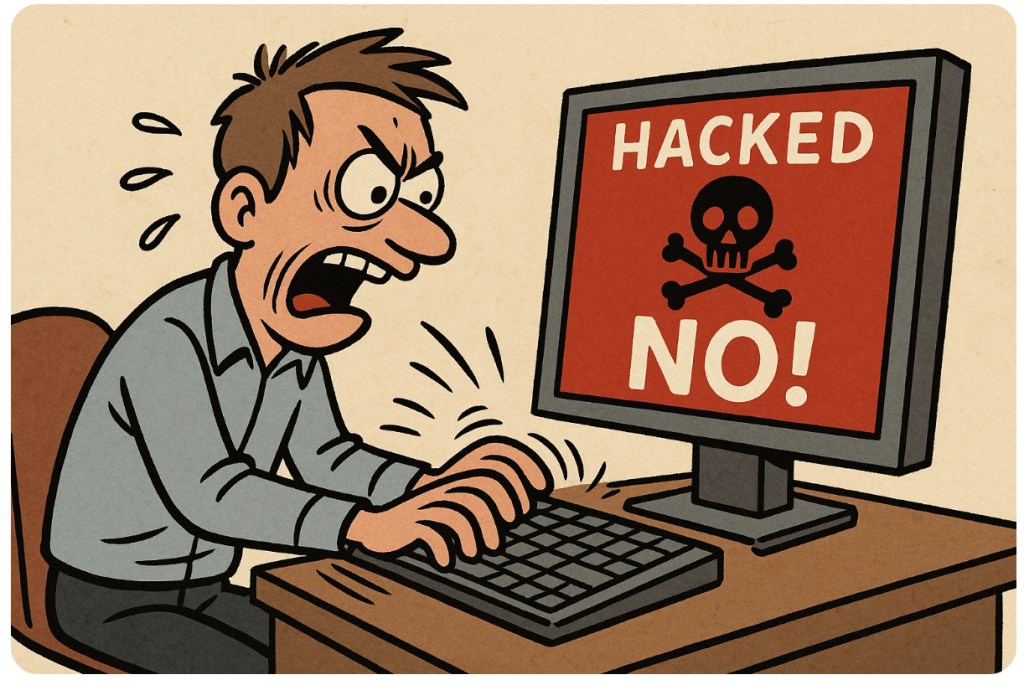
💻🔌Every time hackers crash through some digital fortress, the headlines sing the same sad chorus: “Critical systems down, backups mysteriously missing, chaos reigns.” You’d think after decades of ransomware, phishing scams, and mysterious “technical glitches,” somebody somewhere would have printed out a spare copy of reality and filed it in a dusty cabinet. But no—our great technological overlords built an empire balanced on one Wi-Fi signal and a server running Windows 98.
🖥️ When the Wi-Fi Goes, So Does Civilization
The pattern is depressingly simple: hackers attack, data vanishes, leaders stare into cameras with the same expression as someone who’s just accidentally deleted their wedding photos. And then comes the whimper: “We’re working to restore services.” Translation: nobody thought to plug in an external hard drive since 2003.
The irony? We survived millennia without cloud storage, yet today, if a single server sneezes, planes can’t fly, hospitals cancel surgeries, supermarkets can’t scan bananas, and your nan’s heating bill vanishes into the digital ether. It’s less “progress” and more “oops, we put the entire world into a glorified Tamagotchi and forgot to change the batteries.”
Somehow, we’ve gone from “the show must go on” to “the system is down, please wait indefinitely.” And the hackers? They’re not evil geniuses—they’re just the IT equivalent of a kid unplugging the Xbox.
🔥 Challenges 🔥
Are we victims of our own digital laziness? Should governments be forced to keep dusty filing cabinets, rotary phones, and ledgers “just in case”? Or should we embrace the chaos and accept that the next world war will be fought over who has the last working fax machine?
💬 Share your most savage takes—and your best “life when the Wi-Fi died” survival stories—in the blog comments.
👇 Comment, like, share… or just pray the hackers don’t delete this post.
The wittiest replies will feature in the next issue of the magazine. 📝⚡


 Chameleon Magazine
Leave a comment