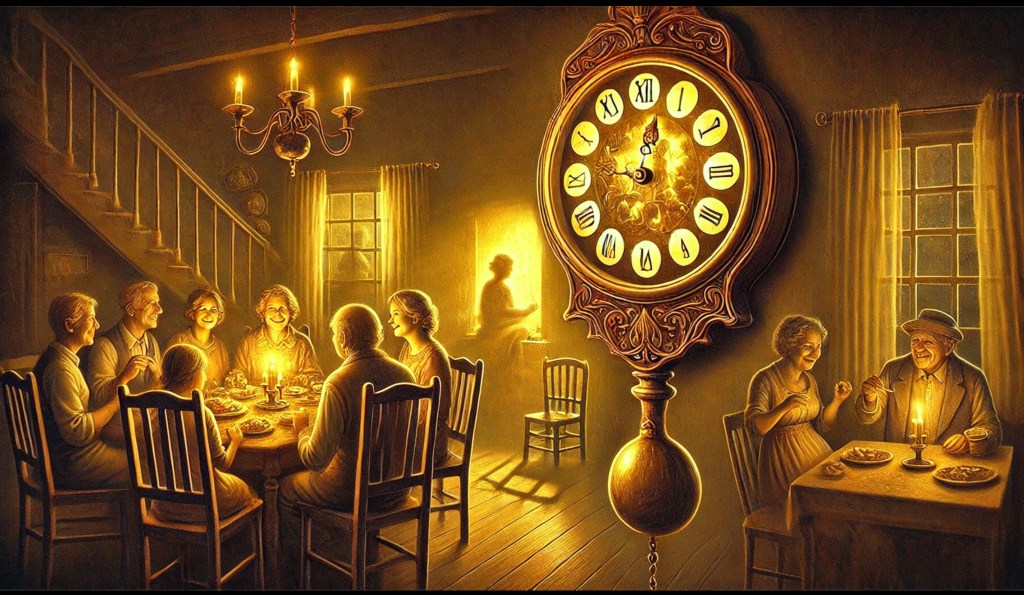
Edda was born into a family of clockmakers, but she despised ticking. To her, every swing of the pendulum was a threat: one less moment left. She vowed to design a clock that added days instead of stealing them.
For years she built prototypes: clocks that ran backward, clocks that only ticked when you spoke, clocks powered by heartbeat. All failed—until she noticed an old woman in her town who never seemed to age. The woman’s secret? She kept a garden of chairs. Every evening, neighbours came, sat, and shared stories. Arguments dissolved, laughter bloomed. Time there didn’t feel wasted—it felt gifted.
So Edda built a new clock: one with no numbers, only a polished mirror in the face. It ticked not in seconds, but in silences. The clock rang only when people spoke kindly in its presence. In homes where it hung, arguments softened; meals lingered; sleep came easy.
Visitors whispered that these houses felt like they had more days inside them than outside. And Edda smiled, for she had finally learned the truth: length of days is not carved by gears or pendulums but by peace itself.


 Chameleon Magazine
Leave a comment