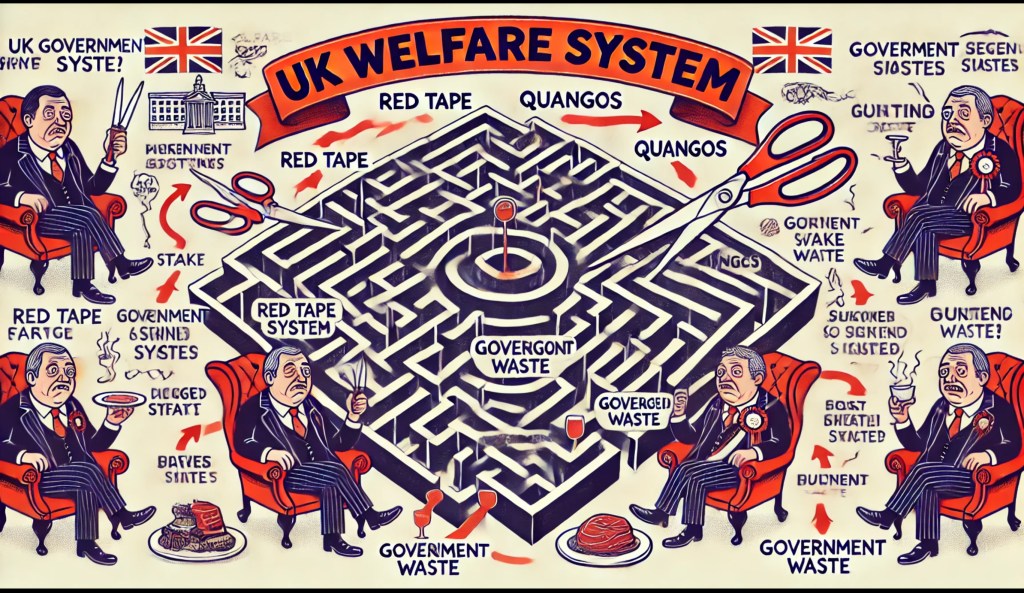
🧩🇬🇧Nigel Farage is swinging for the fences again—this time vowing to stop foreign nationals from receiving welfare. On the surface, it sounds like a tidy solution: tighten the system, save money, restore fairness. But here’s the rub—Britain’s welfare rules are already a labyrinth, and the vast majority of claimants aren’t foreign nationals at all.
But just because it’s a labyrinth doesn’t mean it can’t be navigated. Hard doesn’t mean impossible—it just means politicians would actually have to work for once. And when has a little red tape ever stopped someone determined enough to cut through it?
🌟 Ambition Meets Reality
Yes, Reform’s plan faces hurdles: laws, treaties, existing checks, and the boring reality that many migrants come here to work, not to claim. But ambition often starts by tackling the “impossible.” Whether it’s overhauling tax, cleaning up public spending, or—dare we say—reshaping welfare, every big change looks like a pipe dream until someone sits down and does the paperwork.
And here’s the truth no party wants to admit: if governments were really serious about saving money, they’d start in their own backyards—slashing waste in the House of Lords, trimming the jungle of quangos, and putting a stop to the endless merry-go-round of government misspending. There are billions hiding in plain sight, if only someone had the guts to touch it. 💰✂️
The positive spin? If Farage’s push forces the issue, it could open the door for wider reform—tightening loopholes, simplifying welfare, and proving that difficult tasks can be done if someone has the courage (and stamina) to get it over the line.
Big shifts often begin with bold (even messy) promises. And in politics, energy counts—sometimes more than the fine print. 🚀
🔥 Challenges 🔥
Is this the bold shake-up Britain needs, or just another uphill climb dressed in campaign glitter? And what do you think: should welfare reform even be the first stop, or should we start with the Lords’ subsidised lunches, sprawling quangos, and government waste? 💬✨
👇 Share your thoughts in the comments. Debate it, dissect it, or defend it—the best insights will be featured in the next issue of the magazine. 🎯📝


 Chameleon Magazine
Leave a comment