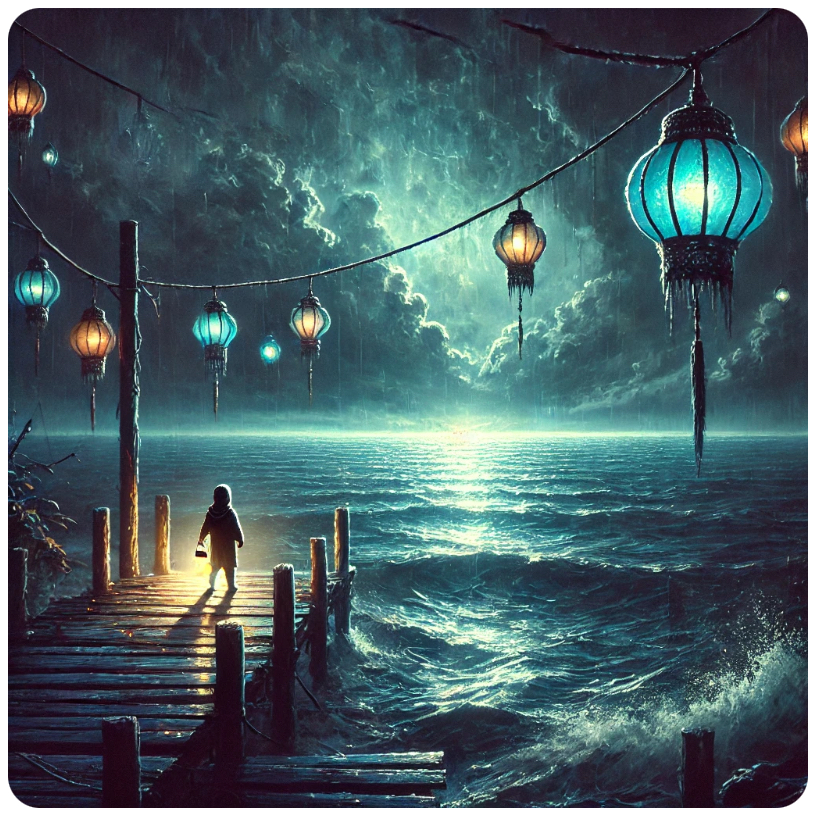
In a small coastal kingdom called Lyria, the harbor was the pride of the realm. Ships came from every horizon, their sails bright with color, their decks alive with laughter. Every week, the Harbor Council lit lanterns along the pier — one for every guild, clan, or traveler who had earned safe passage. It was a tradition meant to welcome all who sought the sea.
But one stormy season, rumors began to spread that the lanterns of the Eastern Traders — bright sapphire lights that shimmered like fish scales — were attracting pirates. “It’s for safety,” the Council said. “We’ll ask them not to light their lanterns until the danger passes.”
The Traders protested. “We are not the cause of the danger,” they said. “The pirates are.”
“Of course,” said the Council, “but it’s simpler this way — fewer lanterns, fewer risks.”
So the sapphire lights went dark.
Weeks later, other rumors began. The crimson lanterns of the Northern Mariners were said to draw storms. “Just until things calm down,” the Council said again. The harbor dimmed further.
By the year’s end, the pier was nearly black. Pirates still came — drawn not by color, but by silence and weakness. And the people of Lyria, stumbling through the dark, began to trip over one another, suspicious and afraid. No one knew who stood beside them anymore.
Then, one night, a child wandering the docks held up a small candle and cried,
“If every light goes out for safety, who will see where safety ends?”
And the people looked around and saw that the only ones unafraid were the pirates — for darkness served them best.
From that night on, the Council reversed its decrees. Every lantern was relit, from sapphire to crimson to gold. And though storms and thieves still came, the harbor’s glow returned, and with it, a fierce knowing: that light is not the danger — fear is.
When safety demands silence from the innocent, it is fear— not peace— that’s being protected.


 Chameleon Magazine
Leave a comment