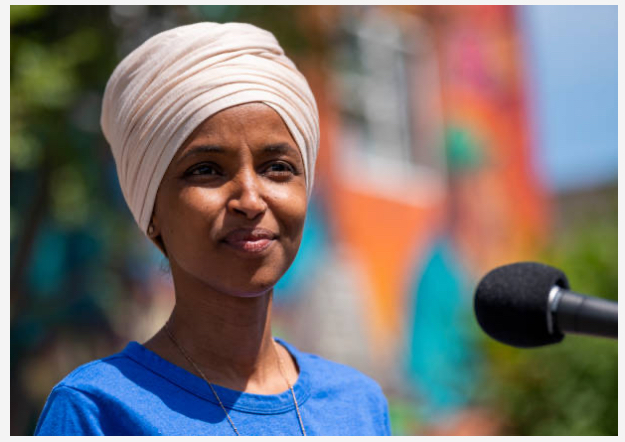
America gave Ilhan Omar a second chance at life — not metaphorically, but literally. From a Somali refugee camp to the U.S. Capitol, her story is the stuff of documentaries and teary campaign ads. But that same journey is now casting a shadow over her moral authority. Because when you rise on the back of a nation’s generosity, how far can you go criticizing it before you’re not seen as a reformer… but a guest trashing the host?
🏠 From Mogadishu to Minneapolis — But Not Back Again
Let’s set the scene. Omar fled a collapsing Somalia, a place she doesn’t rush to defend, visit, or risk her life for. Fair enough — war zones don’t make for cozy homecomings. But therein lies the double bind: she won’t die for the country of her birth, yet she’s more than willing to torch the credibility of the one that took her in.
Yes, she’s absolutely right to hold America accountable. Yes, a healthy democracy needs voices like hers. But what she sometimes forgets — and what many watching don’t — is that the very freedom she wields so fiercely was not her birthright. It was a gift. One she accepted. One that millions around the world would still die for.
🧨 Caution: Righteous Rage May Be Perceived as Rejection
Critique is patriotic. But optics matter. When your most consistent public stance seems to be railing against the country that gave you a platform while going radio silent about the one you fled… people notice. And they don’t like it.
No, this doesn’t mean she should never speak out. But it does mean that tone, timing, and context matter. You can’t expect the public to see you as a truth-teller if all they hear is condemnation without any gratitude — especially when you never turn that same fire toward your roots.
Ask yourself: if someone had left your burning house, rebuilt their life in yours, then used your kitchen table to loudly explain everything wrong with your cooking — without once acknowledging the shelter you gave — how long before you told them to find another home?
🎯 Right Message, Wrong Messenger?
Ilhan Omar’s criticisms are often grounded in real issues: America’s blind spots, foreign policy failures, and hypocritical alliances. But when those critiques come from someone whose very survival depends on the system she’s skewering, the impact gets muddied. Her truth-telling starts looking like disdain — and disdain doesn’t win hearts.
There’s a difference between biting the hand that feeds you… and gnawing on it so publicly that even allies flinch. You can challenge the system without appearing to hate the people who built it. You can fight injustice without acting like the nation that saved you is the root of all evil.
🕊️ You Can’t Preach Reform Without Owning Your Place in It
Let’s be brutally honest: Omar is not just a critic of the system — she is the system now. Elected. Empowered. On the payroll. And with that comes a higher burden. You’re not the outsider anymore. You’re not the refugee knocking at the door. You’re the one inside, shaping policy, shaping perception — shaping how the world sees American democracy.
And if you speak like America is the enemy, don’t be shocked when Americans start treating you like one.
🔥 Challenges 🔥
Where’s the line between accountability and alienation? Is Ilhan Omar holding up a mirror, or throwing shade at the only nation that gave her a future? And what does it say when someone refuses to die for the place they were born — but won’t stop criticizing the place that kept them alive?
👇 Jump into the comments — not just social media — and let it rip.
Should truth-tellers like Omar be more mindful of how they speak, not just what they say?
The best arguments, burns, and reflections will be featured in the next issue. 🧠🔥


 Chameleon Magazine
Leave a comment