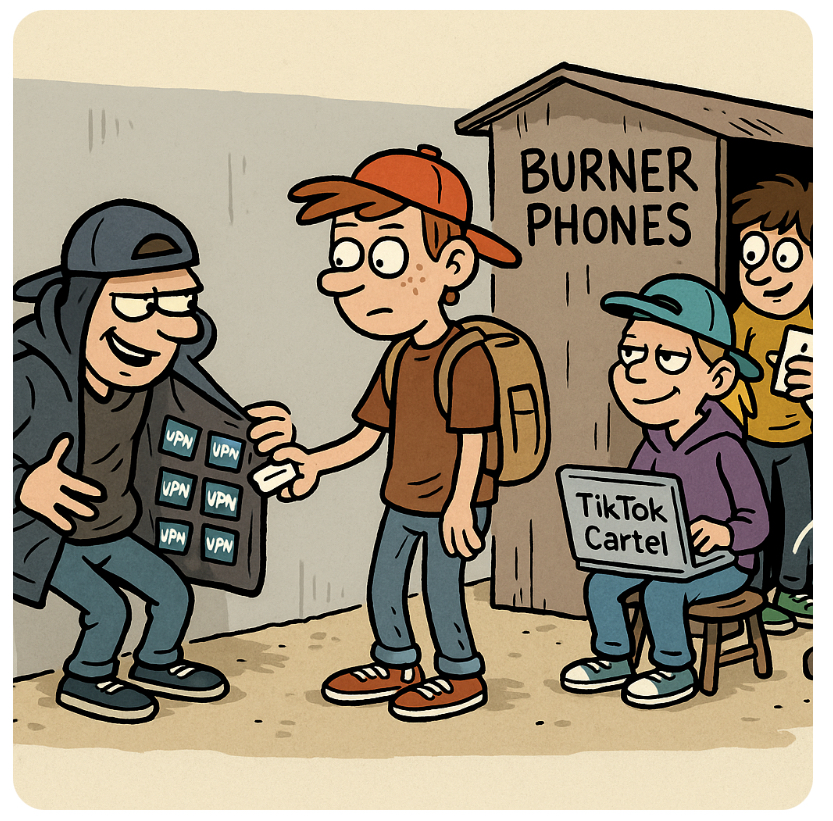
📱💊When governments dream of “protecting the children” by banning social media, they might as well be opening up job applications for Gen Z kingpins with a WiFi hotspot and a grudge. Because if there’s one thing history loves to repeat, it’s this: ban the buzz, and boom — here come the bootleggers.
🚬 From Prohibition to Profile Pics — The New Digital Cartels
Take away TikTok and watch little Pablo from Year 9 roll up to school with three burner phones and a $10/month subscription plan called “TikTopia.” He’s got VPNs in his socks, a crypto wallet in his pencil case, and enough social capital to overthrow a PTA meeting.
It’s not dystopia. It’s supply and demand, baby. And governments just keep forgetting that desire doesn’t disappear — it diversifies.
Ban social media? You don’t eliminate the app. You just invite a black market of memes, streaks, and secret Discord servers that make Silk Road look like a charity shop.
And while politicians hold press conferences with PowerPoints titled “The War on Likes,” real enforcement is chasing encrypted emojis through encrypted group chats like digital narcs at a rave.
We’re minutes away from sniffer drones that bark every time they detect a filter. 🐶📶
Soon enough, parents won’t be yelling about “too much screen time” — they’ll be negotiating with their kid’s dealer just to get access to the school newsletter.
Because in the end, it’s not the apps that are dangerous —
It’s the delusion that bans work in a culture that innovates around every blockade like it’s a side quest in Call of Duty: Shadow Ban Ops. 🎮🔐
🔥 Challenges 🔥
Is banning TikTok the digital equivalent of telling teens not to drink — and then being shocked when vodka disappears from the cupboard? Got a theory, a hot take, or a hilarious underground social media concept? Drop it in the blog comments 🧠💬 — not just on Facebook.
👇 Like, comment, and share this before the sniffer dogs find your signal.
The best replies get published in our next magazine issue — encrypted, obviously. 🕵️♂️🗞️


 Chameleon Magazine
Leave a comment