Britain edges toward recession territory, and now the warning lights are flashing not just over growth—but over who gets left holding the bag.
💼 Buy the Dip! (Signed: The Treasury, Probably)
As Britain’s economic pulse flattens, critics aren’t just accusing Rachel Reeves of steering the country toward recession—they’re accusing her of warming up the public as exit liquidity.
The pitch goes something like this: invest in Britain, believe in growth, get your money working. Ordinary people are nudged toward shares, pensions, and long-term “confidence plays” while ministers smile reassuringly and repeat the mantra of responsibility. Very grown-up. Very sensible. Very 2007 energy.
And then—shock!—the market stumbles, the numbers bleed red, and Reeves appears at the despatch box with hands held aloft like Pontius Pilate:
“Well… you were told they could go down as well as up.” 🤷♀️📉
Ah yes. The oldest spell in the financial grimoire. Losses for you, disclaimers for them.
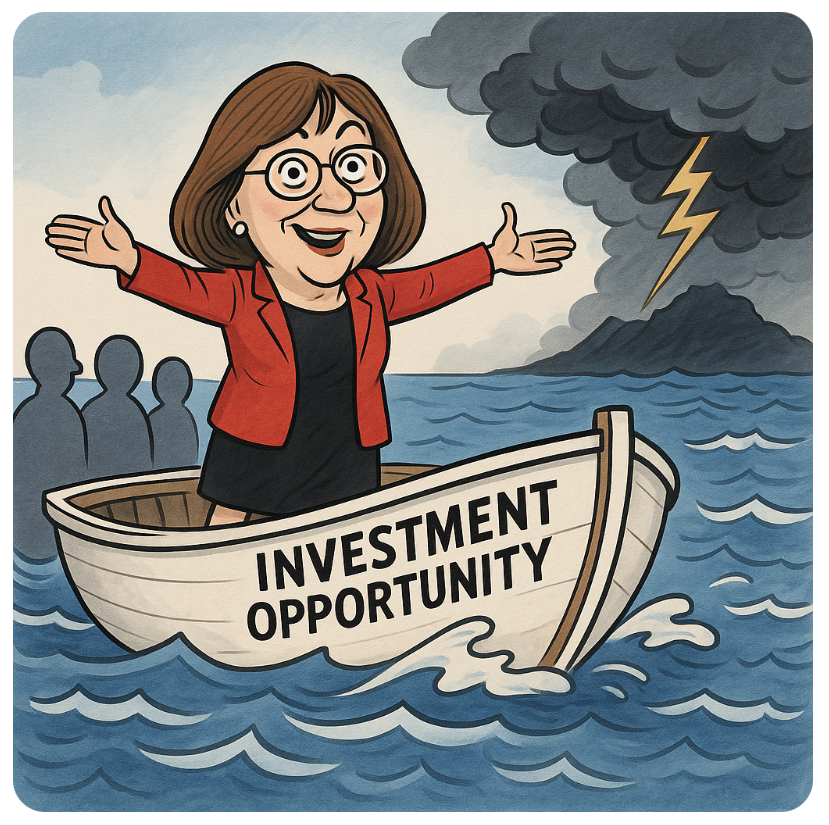
It’s the political equivalent of inviting people onto a boat, assuring them it’s seaworthy, sailing straight into a storm, and then pointing at the tiny print on the ticket as it sinks. Technically correct. Morally hollow.
Supporters will say this is just financial literacy. Critics say it’s risk laundering—where governments talk up optimism, offload danger onto the public, and retreat behind regulatory language when it all goes wrong. Markets calm, voters burned, lesson “learned.”
All while the same people who can ride out crashes with diversified portfolios and expense accounts lecture everyone else about “long-term thinking.” Funny how patience is always easier when you’re insulated from consequences.
If Britain does slide into recession, don’t worry—no one will be to blame. Certainly not the ones holding the megaphone while pointing at the cliff edge. 🧾🔥
🔥 Challenges 🔥
Is this encouraging national investment—or setting the public up to absorb the shock? At what point does “you were warned” become “you were used”?
Put your take in the blog comments—not a drive-by tweet, the real thing. Let’s see who you think really carries the risk. 💬💣
👇 Comment. Like. Share.
The sharpest economic call-outs, darkest humour, and clearest-eyed critiques will be featured in the next issue of the magazine. 📰🔥


 Chameleon Magazine
Leave a comment