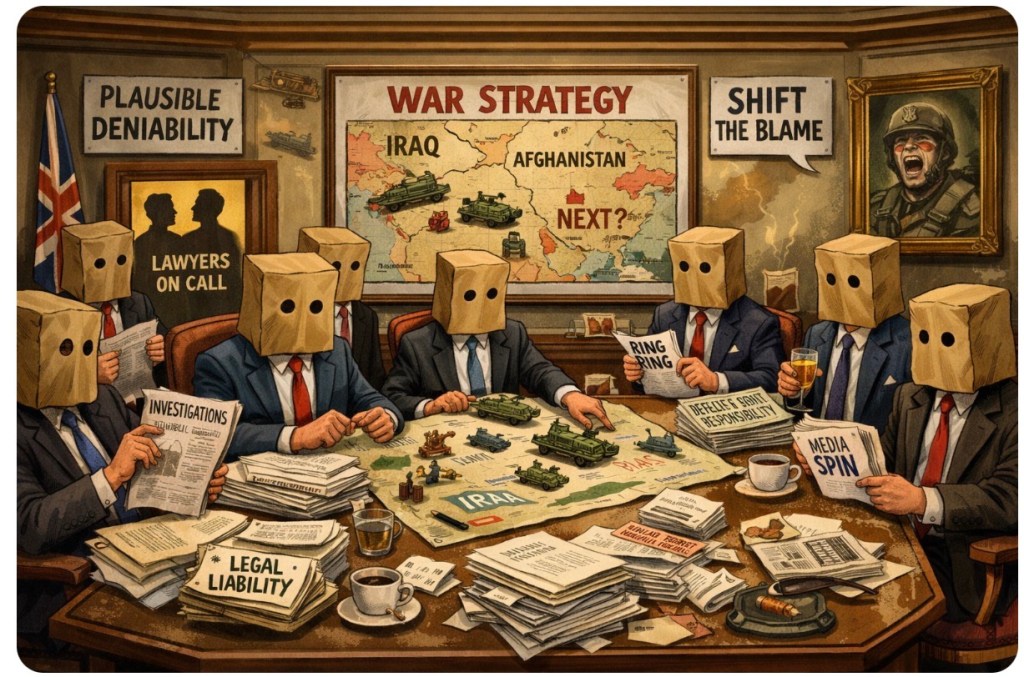
🎖️⚖️A decorated British soldier followed orders, was cleared repeatedly, and still spent decades trapped in legal purgatory—while the people who designed the war slept soundly.
🔥 When the State Says “Thanks for Your Service”… Then Hands You to the Lawyers
Richie Catterall did exactly what the state demanded. He joined the British Army, served for twenty years, and fought in Northern Ireland, Iraq, and Afghanistan. In Basra in 2003, during an armed raid, he shot an Iraqi teacher carrying an AK‑47. Every investigation—again and again—found the same conclusion: lawful self‑defence.
End of story? Of course not. 🙄
Because Britain has perfected a new moral sport: risk laundering. Politicians authorise wars. Lawyers rewrite them years later. And the bill lands on a sergeant who can’t subpoena a Cabinet meeting.
The wiring behind this mess is now public. When Keir Starmer was a human‑rights barrister, he worked pro bono with organisations pushing to extend UK legal jurisdiction into war zones. In 2007, those groups intervened in a claim brought by Iraqi families—arguing prior Army investigations were “wholly inadequate.” Enter the solicitor fronting the case, Phil Shiner—later struck off and convicted of fraud. Oops. Too late.
The logic escaped the bottle anyway. The case reached the European Court of Human Rights, compelling the UK to examine more than 1,000 allegations funnelled through Shiner’s operation. Files reopened. Doubt institutionalised. Soldiers rebranded as permanent suspects for wars they didn’t choose.
Meanwhile, the architects of policy? Untouched. Untestable. Unbothered. 🛋️☕
Catterall’s verdict was life‑long: PTSD, repeated suicide attempts, survival measured in days. “They kept coming for me,” he said. The only thing that stopped the end was his daughter. This is what “support the troops” looks like once the photo‑ops end.
The message to every soldier is brutally clear:
Come fight for us. Make impossible decisions in chaos. And when the politics turns sour, we’ll demonstrate our sensitivity by feeding you to an endless legal grinder.
If Britain believes the wars were lawful and necessary, defend them—at the level of policy. If it believes they were wrong, hold ministers and planners accountable. Don’t sacrifice individuals to cleanse the state’s conscience after the fact.
What happened to Richie Catterall isn’t justice.
It’s cowardice with paperwork.
💥 Challenges 💥
So here’s the uncomfortable question: why are we still pretending this is about accountability, not optics? Why is hindsight outsourced to lawyers while responsibility is outsourced to soldiers? Drop your take—angry, surgical, or savage—in the blog comments. Let’s hear it. 💬🔥



 Chameleon Magazine
Leave a reply to Mike Cancel reply