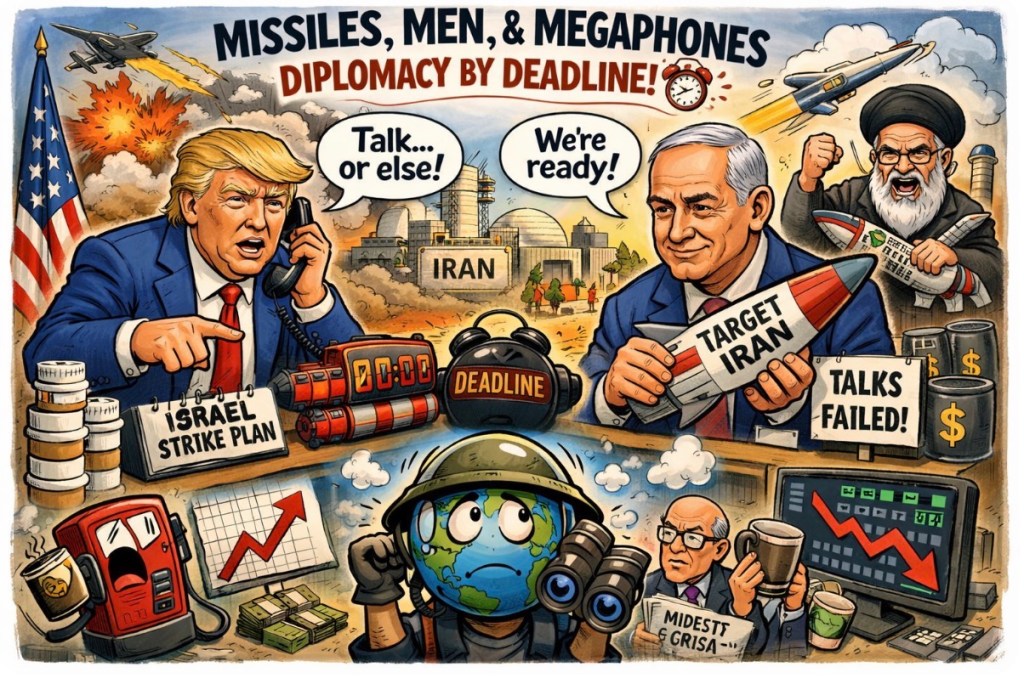
🚀📞🔥Sources suggest that Donald Trump has told Benjamin Netanyahu the U.S. would back Israeli strikes on Iran’s ballistic missile program—if talks with Tehran collapse. In other words: negotiate nicely… or else.
The Middle East peace process just got a new accessory: a ticking clock strapped to a missile silo. And just when everyone thought 2026 might try “calm” for a change, geopolitics said, “Nah.”
💣 Diplomacy, But Make It Explosive
Nothing says “constructive dialogue” quite like quietly floating the possibility of airstrikes as a backup plan. It’s the international relations equivalent of telling someone, “Let’s talk this out,” while revving a motorcycle indoors.
Support for potential Israeli strikes on Iran’s missile infrastructure would mark a sharp escalation in rhetoric—and possibly reality. Tehran won’t read that as a gentle nudge. It’ll read it as a neon billboard flashing: Prepare accordingly.
Meanwhile, regional players are once again stuck refreshing their threat assessments like it’s a weather app predicting a storm made entirely of ballistic hardware. ☁️➡️🚀
And let’s be honest—every time the words “Iran,” “Israel,” and “U.S. support” appear in the same sentence, oil prices do a nervous little jig, global markets reach for antacids, and diplomats start stress-ordering coffee by the gallon.
Is this strategic leverage? Political signaling? Campaign-season chest-thumping? Or just another episode of “Who Blinks First?”
Because when diplomacy becomes a countdown timer, everyone within a thousand-mile radius starts holding their breath.
🔥 Challenges 🔥
Is this strength—or déjà vu wrapped in jet fuel? Are hardline signals the only language Tehran understands, or are we sleepwalking into another cycle of retaliation and regret?
Drop your take in the blog comments (not just your group chats). Are we witnessing smart deterrence—or reckless reruns? 💬👇
👍 Like it. 🔁 Share it. 💥 Sound off below.
The sharpest takes will be featured in the next issue of the magazine.


 Chameleon Magazine
Leave a comment