🪪™️A 17-year legal slugfest between pop megastar Katy Perry and Australian fashion designer Katie Perry has finally ended in the designer’s favour at the High Court of Australia.
After nearly two decades of courtroom ping-pong, the judges decided that fame doesn’t grant a monopoly over a name—especially when someone else legally registered and built a business under it first.
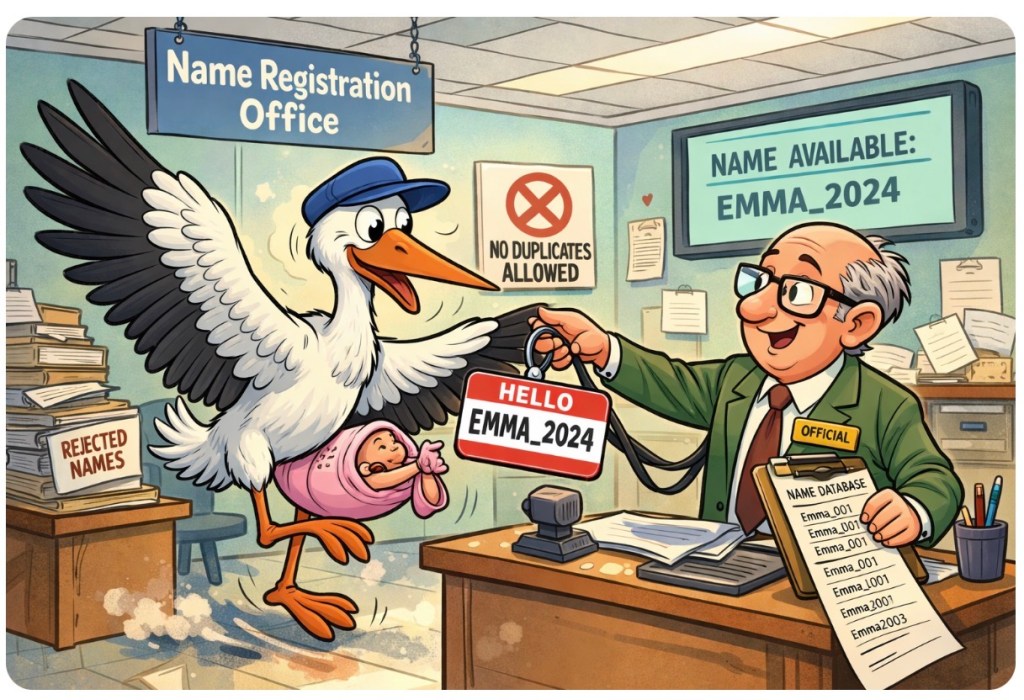
But the case raises a bigger, slightly dystopian question: should your name be legally locked at birth like a username on the world’s most bureaucratic social media platform?
🔐 “Sorry, That Human Name Is Already Taken”
Imagine a future where babies are issued exclusive lifetime branding rights the moment they pop out.
Midwife: “Congratulations! It’s a girl.”
Government clerk: “Unfortunately ‘Emma’ is already registered by 4.3 million people. You’ll need to try again.”
Parents would be hunched over a hospital tablet like frustrated gamers trying to secure a new username:
- “Emma_Official?”
- “Emma_RealOne?”
- “xX_Emma_420_Xx?”
Suddenly playground roll calls sound like the password list from a hacked email account.
But beyond the absurdity, the idea collapses under its own weight.
🌍 The Planet Has 8 Billion People
Names repeat. Constantly.
There are thousands of John Smiths, countless Mohammed Alis, and more Sarah Joneses than a census spreadsheet can handle.
If names were exclusive property:
- Millions of people would need to change their identity.
- Every new birth would require a global database check.
- Family naming traditions would collapse overnight.
And imagine explaining to your grandmother why the baby isn’t named after her.
“Sorry Nan, someone in Nebraska claimed ‘Margaret’ in 1972.”
💼 Why Trademark Law Already Solves This
Modern law separates identity from commercial branding.
You can be named something.
You just can’t always sell products under it if someone else legally registered it in that industry.
That’s why the Perry case focused on clothing trademarks, not the right to exist with that name.
It’s less “who owns the name” and more “who can sell hoodies with it.”
And that distinction keeps the world from descending into bureaucratic madness.
🧠 The Real Lesson
Fame doesn’t automatically override someone else’s lawful business.
A small brand that registers and uses a trademark first can still beat a global celebrity.
In other words: the law occasionally sides with the little fish.
Even if the other fish sells out stadiums.
🔥 Challenges 🔥
If names became exclusive property, would society become more organised… or completely ridiculous?
Would you keep your name, or discover someone in Finland claimed it in 1984?
Jump into the blog comments and tell us:
Should names be legally protected at birth—or is that the fastest way to turn humanity into a giant username crisis? 💬
👇 Hit comment, like, and share.
Drop your take below and roast the idea if it deserves it.
The best comments will be featured in the next issue of the magazine. 🎯


 Chameleon Magazine
Leave a comment