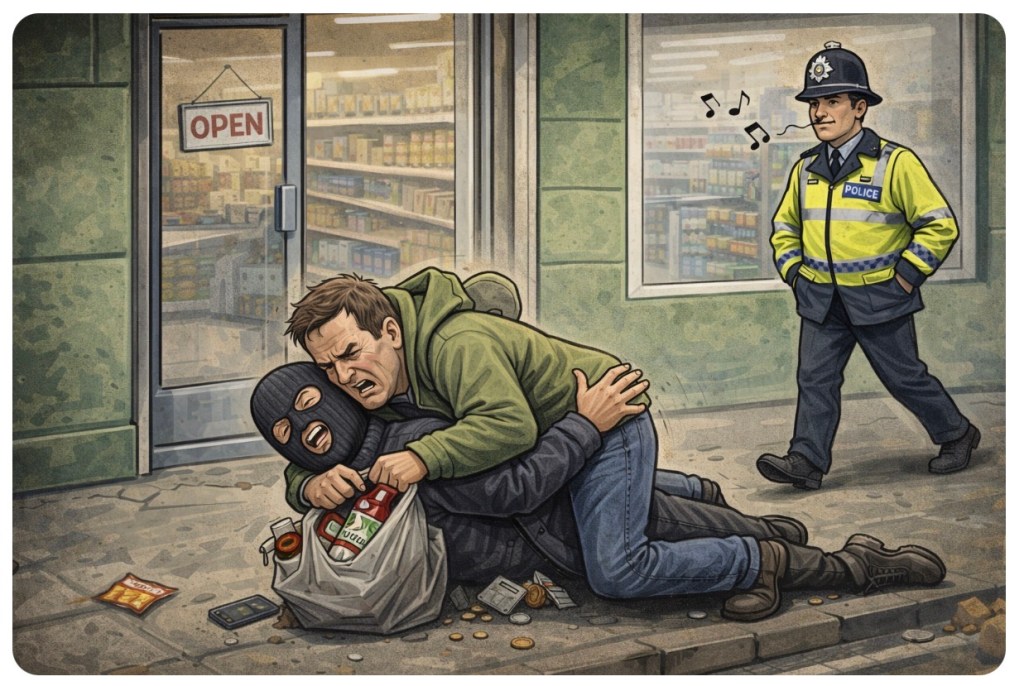
🛒🦸♂️The latest bright idea from the political playbook: if you see a crime, don’t just tut loudly and shuffle past—get stuck in (but only if the suspect isn’t built like a nightclub bouncer). Yes, apparently public safety now comes with a size guide. Medium thief? Go for it. Heavyweight? Best of luck, mate. 🥊
🛑 Citizen Arrest or Citizen Regret?
Let’s unpack this heroic vision of Britain where Doris from number 42 is expected to rugby tackle a bloke legging it with a basket of steaks.
On paper, it sounds bold: “Don’t look away from crime.”
In reality, it sounds like a fast track to:
- People getting injured
- Situations escalating fast ⚡
- Zero clarity on who’s responsible when it all goes wrong
Because here’s the key point—members of the public are not trained police officers. They don’t have:
- Legal training ⚖️
- Protective equipment
- Backup when things turn ugly
And when things do go wrong? That’s where it gets messy.
⚖️ So Who Pays If It Goes Pear-Shaped?
Legally speaking, if a member of the public intervenes and someone gets injured (either the suspect or themselves), it’s not as simple as “the government’s got your back.”
- You can make a citizen’s arrest in the UK—but only under strict conditions
- You must use reasonable force (and that’s judged after the fact)
- If you go too far, you could face charges yourself
So no—politicians don’t swoop in like legal bodyguards if it all unravels. There’s no “Kemi compensation scheme” waiting in the wings. You’re largely on your own.
And that’s the uncomfortable contradiction here:
👉 Encouraging action
👉 Without taking responsibility for the consequences
🤦♂️ The Bigger Picture
This kind of rhetoric often lands because people are frustrated—shoplifting, low-level crime, and police response times are real concerns.
But shifting the burden onto the public? That’s not empowerment—it’s outsourcing risk.
Because the reality is:
- Most shoplifting is handled by store staff (who are trained… sort of)
- Police prioritize based on resources (and yes, often don’t attend minor thefts)
- The public stepping in can escalate a petty crime into something far worse
It’s the difference between stopping a £20 theft… and ending up with a hospital bill or a court case.
🔥 Challenges 🔥
Is this about restoring community responsibility—or quietly admitting the system can’t cope? 🤨
Would you actually step in… knowing the legal and physical risks?
Drop your take directly in the blog comments—brave, cynical, or brutally honest. 💬🔥
👇 Comment, like, and share if you think “DIY policing” sounds more like a liability than a solution.
The sharpest takes will be featured in the next magazine issue. 🎯📝


Leave a comment