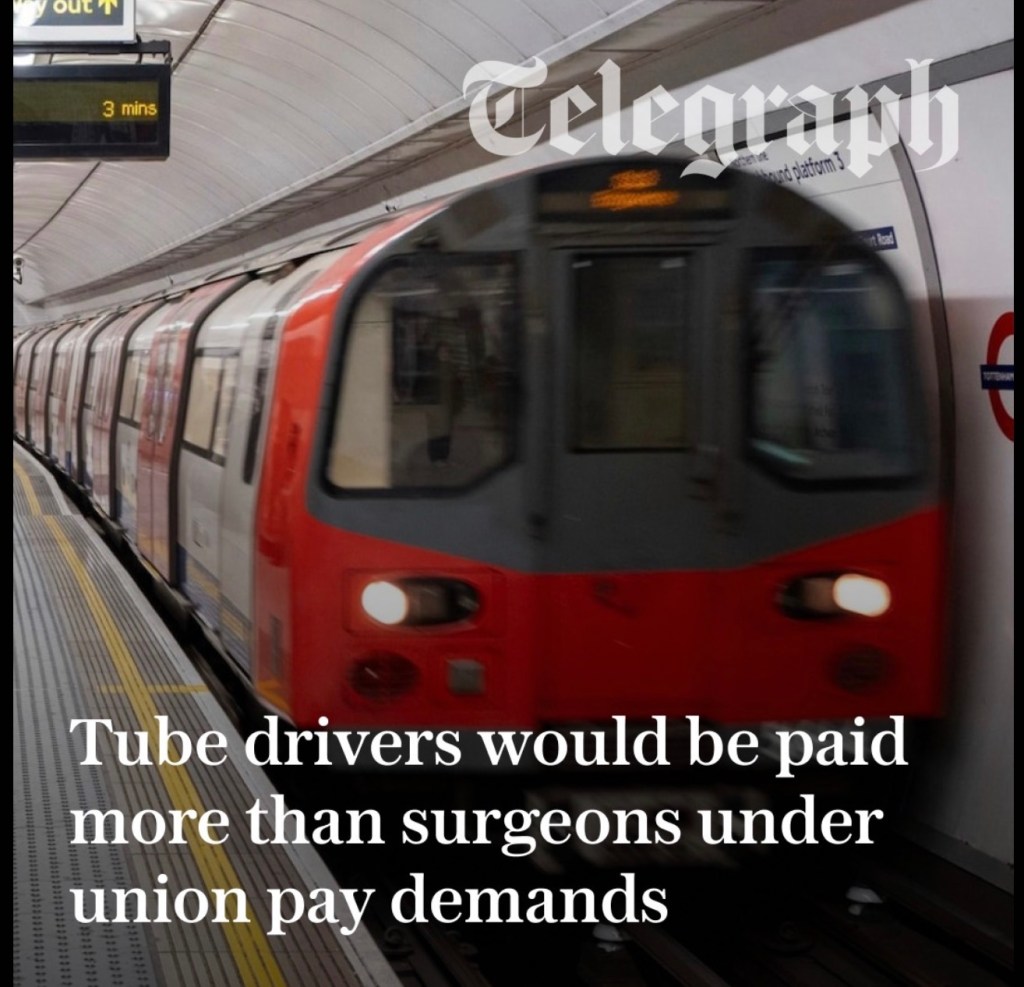
⚙️💸There was a time when unions were the shield—protecting workers from exploitation, fighting for fair pay, and balancing the scales.
Now? Some are starting to look like they’re pushing so hard… they’re accelerating the very future that replaces them.
🚇 Strike Today, Replace Tomorrow
Let’s not dance around it.
When wage demands reach levels that make automation look cheap, predictable, and drama-free…
decision-makers start doing the maths.
And the maths doesn’t care about history, loyalty, or tradition.
It cares about:
- cost
- reliability
- disruption
So when a system can be:
👉 automated once
👉 run continuously
👉 and never go on strike
…you don’t need a conspiracy.
You just need a spreadsheet.
🤖 The Unintended Consequence
Here’s the brutal irony:
The very tactics designed to protect jobs—
strikes, leverage, high pay demands—
can end up doing the opposite.
Because they force the question:
“Why are we still relying on humans for this?”
And once that question is asked seriously…
it doesn’t go away.
⚖️ Power vs Reality
Unions operate on leverage:
- the ability to stop services
- the ability to disrupt
- the ability to force negotiation
But automation flips that completely.
Machines don’t:
- negotiate
- strike
- demand
They just… operate.
So every time disruption increases, the incentive to remove that disruption grows stronger.
🧠 The Crossroads Moment
This isn’t about unions being “bad.”
It’s about strategy in a changing world.
Because there are two paths:
👉 Adapt to the future and help shape it
👉 Or resist it—and risk being replaced by it
And right now, it feels like some are walking straight into the second.
🔥 Challenges 🔥
Are unions protecting workers… or unintentionally accelerating their replacement? 🤔
And when the tipping point hits—will it be too late to pull back?
Drop your take in the blog comments—this one cuts deep. 💬🔥
👇 Like it. Share it. Tag someone who thinks this is just about pay.
The sharpest and most controversial takes will be featured in the next issue of the magazine. 🎯📝


Leave a comment