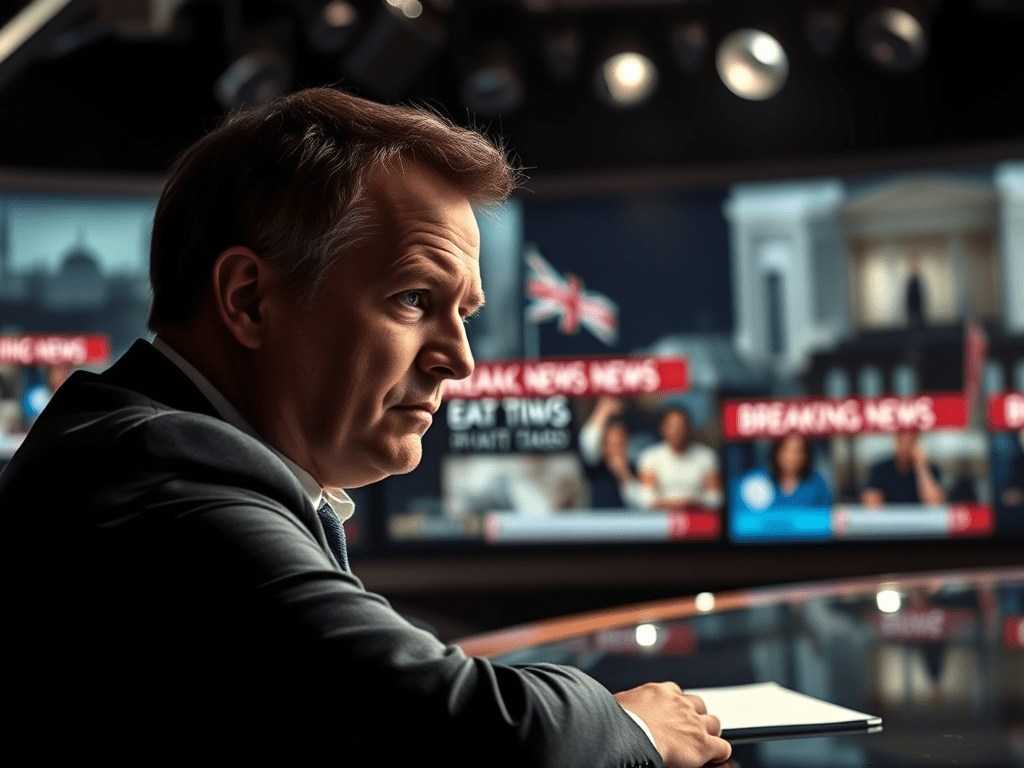
📺🔥Once the calm, authoritative face guiding the nation through wars, elections, and royal weddings, Huw Edwards now finds himself rattled—not by breaking news, but by his own portrayal being broadcast on the very system he once commanded. The newsroom teleprompter has turned into a mirror… and he’s not liking the reflection one bit.
🎭 From Trusted Voice to Unwanted Broadcast
There’s a particular kind of poetic chaos when a man who spent decades reading the news suddenly becomes it—especially when the script isn’t flattering. Reports suggest Edwards is deeply unhappy about being depicted as a paedophile on the same system that once projected his voice into millions of living rooms.
You can almost picture it: the studio lights dim, the familiar desk sits quietly, and instead of solemn headlines about global crises, the system now spits out a storyline he’d very much prefer remained off-air. Talk about a brutal case of “role reversal.”
For years, Edwards embodied the gold standard of BBC seriousness—measured tone, impeccable timing, and that unmistakable “this matters” delivery. Now? The narrative has slipped from his grip, and the control room isn’t taking requests.
It’s the ultimate media paradox: when the machinery that builds reputations also dismantles them—with the same cold efficiency. No dramatic music required. Just a script, a screen, and a very uncomfortable spotlight. 🎥😬
🔥 Challenges 🔥
What happens when the storyteller loses control of the story? When the face of authority becomes the subject of outrage? Does the system owe loyalty—or just airtime?
Jump into the comments and tell us: is this justice, irony, or a media machine eating its own? 💬⚡
👇 Like it, share it, or tear it apart in the comments.
The sharpest takes and most savage observations will be featured in our next magazine issue. 🎯📝


 Chameleon Magazine
Leave a comment