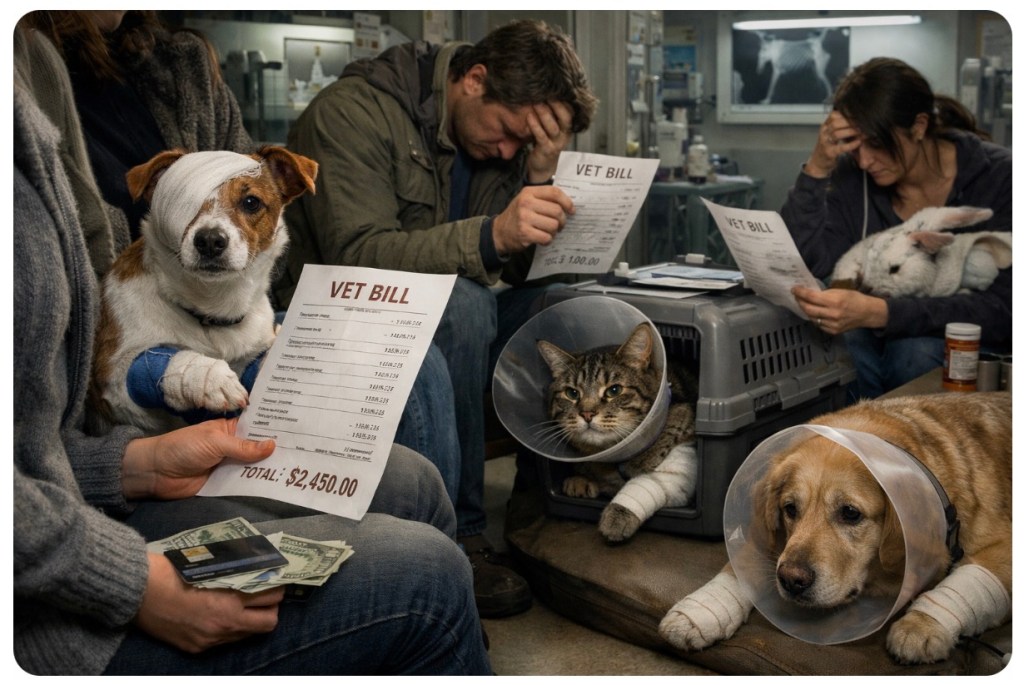
🐶💸🩺The watchdog’s grand answer to soaring vet bills is charmingly minimalist: make clinics reveal prices, show who owns them, and hope the “magic of competition” does the rest. In theory, pet owners get clearer information and corporate chains get dragged blinking into the light. In practice, that’s a bit like responding to a house fire by asking the flames to publish a safety leaflet. Yes, transparency matters. But when families are already being walloped at the counter while clutching a sick cat and a maxed-out credit card, “more information” can sound suspiciously like “good luck out there.” 🐾🔥
🏥 Same Pain, Better Signage: The Market-Friendly Miracle Nobody Asked For 🙃
So here we are: the official cure for vet overpricing is apparently a neat little trio of “reveal prices, expose ownership, and let competition work.” Lovely. Crisp. Respectable. Almost elegant—if you ignore the inconvenient detail that the watchdog deliberately ducks the one thing that might actually terrify profiteers: directly controlling or capping what vets can charge. 😼📈
Because heaven forbid anyone interrupt the sacred romance between private equity and your Labrador’s inflamed ear canal.
The logic seems to be this: once pet owners know the consultation fee before walking in, and once they discover their cosy local practice is really part of some sprawling investment empire with a logo designed in a London boardroom, the market will self-correct. Competition will bloom. Prices will drift downward. Angels will sing over the waiting room fish tank. 🐠✨
Except real life is messier than that. People don’t shop around like bargain hunters when their dog is limping, their rabbit has stopped eating, or their elderly cat is making the kind of noise that empties your soul. They panic. They pay. They sign. And the corporations know it. This isn’t choosing between cereal brands. It’s emotional hostage economics with a stethoscope. 🐕💳
And that’s the sting: the watchdog wants to look stern without ever becoming dangerous. It wants reform with manners. Pressure without punishment. Exposure without enforcement. A polite British compromise where the public gets a spreadsheet and the industry keeps the till. That may improve transparency, yes. But let’s not confuse “now you can see the mugging more clearly” with genuine consumer protection. 🧾😵
🔥 Challenges 🔥
How much comfort is “price transparency” when the bill is still absurd? Does exposing ownership really help when giant chains already dominate the market? And why is the boldest move in the room still too timid to touch actual prices? Drop your verdict in the blog comments—not just on social media. We want the fury, the sarcasm, and the stories. 💬🐾
👇 Comment, like, and share if you’re tired of “reform” that tiptoes around the cash register.
The best comments will be featured in the next issue of the magazine. 📝🔥


Leave a comment