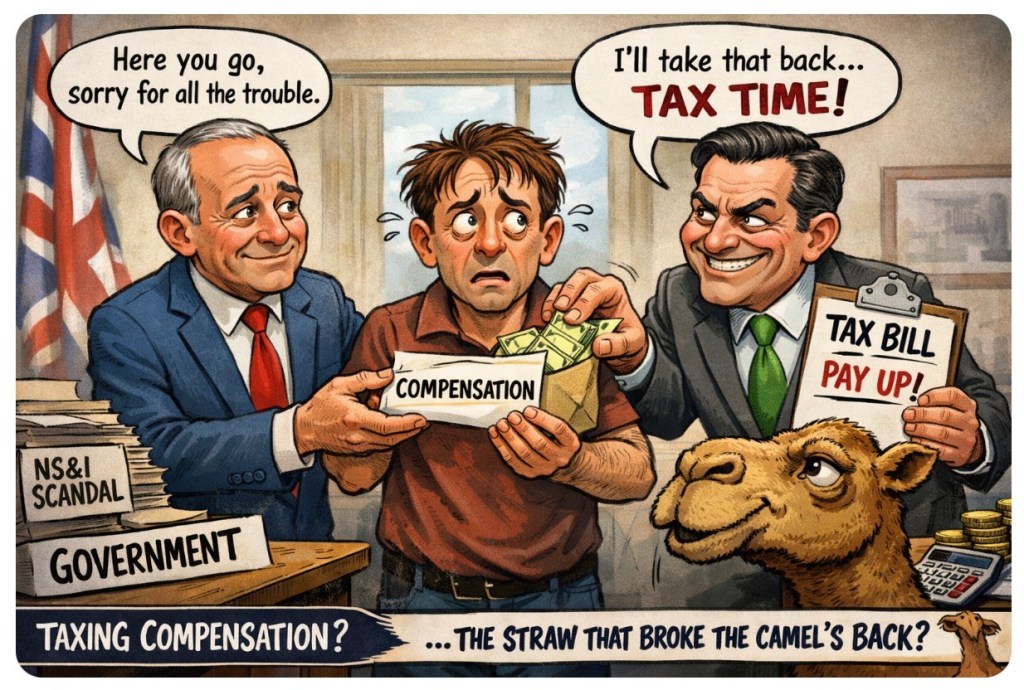
Reform UK saying “people have suffered more than enough” might be the understatement of the year—and if compensation ends up taxed, it won’t just sting… it’ll feel like the system is double-dipping from the same wound.
🧾 Payback… Then Pay Up?
Let’s walk through the logic here. People lose money or are harmed due to failures linked to state-backed institutions like NS&I. After delays, stress, and likely a fair bit of bureaucratic ping-pong, compensation is finally handed over… only for the taxman to hover in the background like, “We’ll take a slice of that, thanks.”
At that point, it stops looking like compensation and starts looking like a partial refund—with a service charge.
Because what’s the message?
“We messed up. Here’s something to make it right. Also, we’ll be reclaiming a portion of that… because rules.”
That’s not closure—that’s a receipt with terms and conditions.
And this is where your “camel’s back” moment lands perfectly. 🐪
People can tolerate delays. They can tolerate mistakes (to a degree). But being told to pay tax on being wronged by the system itself? That’s the kind of thing that tips frustration into outright disbelief.
It risks turning a story about restitution into one about tone-deaf governance.
🔥 Challenges 🔥
Is taxing compensation just standard procedure… or does it cross a line when the harm came from public institutions in the first place? At what point does “policy” start looking like punishment?
Drop your take directly in the blog comments—don’t hold back. 💬👇
👇 Hit comment, hit like, hit share. Call it common sense or call it daylight robbery—just call it out.
The sharpest takes will be featured in the next issue of the magazine. 🎯📝


Leave a comment