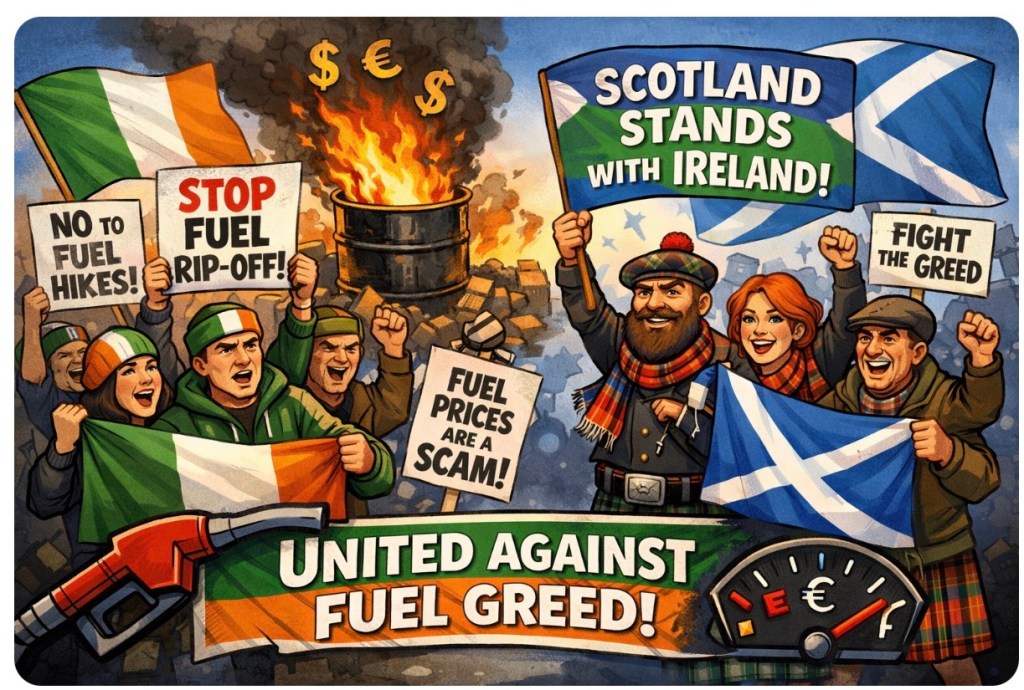
🤫🔥Across the Irish Sea, tensions flare, crowds gather, voices rise… and yet—on this side of the water? Practically crickets. 🦗 The question isn’t just what’s happening in Ireland, but why does it feel like no one’s talking about it here?
📺 The Great British Mute Button
Let’s not pretend the media is some neutral, all-seeing oracle floating above reality. It’s a business. It’s selective. And sometimes, it’s quieter than a politician at a tax audit when a story doesn’t neatly fit the narrative of the week.
So why might coverage feel thin?
First, editorial priorities. Newsrooms are juggling wars, elections, economic chaos, celebrity nonsense, and whatever outrage is trending on social media this hour. If Irish protests aren’t ticking the “mass UK impact” or “ratings magnet” boxes, they can get sidelined faster than last year’s scandal.
Second, proximity bias with a twist. You’d think Ireland—geographically and historically close—would dominate headlines. But ironically, familiarity can dull urgency. Unless there’s direct spillover into England, Scotland, or Wales, editors may treat it as “regional” rather than “nationally critical.”
Third—and here’s where the conspiracy kettle starts to whistle ☕—there’s the idea of containment through silence. The theory goes: less coverage = less awareness = less chance of copycat protests. Sounds dramatic, right? Maybe. But media outlets are aware that amplification can energise movements. That doesn’t mean there’s a grand blackout conspiracy—but it does mean coverage decisions aren’t made in a vacuum.
Finally, complexity kills clicks. If the protests are layered, রাজনৈতিক, or hard to summarise in a punchy headline, they struggle to compete with simpler, more emotionally digestible stories. Outrage sells—but only when it’s easy to package.
Let’s be clear: it’s not necessarily about fear of the UK “catching” protests like a social virus. It’s more mundane—and arguably more frustrating. It’s about what gets attention, what gets airtime, and what quietly doesn’t.
🔥 Challenges 🔥
So here’s the real question: are we being under-informed—or just under-interested? 🤔
What stories are slipping through the cracks while we scroll past headlines about reality TV drama and political soundbites?
And more importantly… what happens when people start looking beyond the silence? 👀
Drop your take directly on the blog—don’t just shout into the social media void. We want the raw, unfiltered opinions. 💬🔥
👇 Comment, like, share—and say what you think is REALLY going on.
The sharpest takes and spiciest truths will be featured in the next issue of the magazine. 📝🎯


Leave a Reply