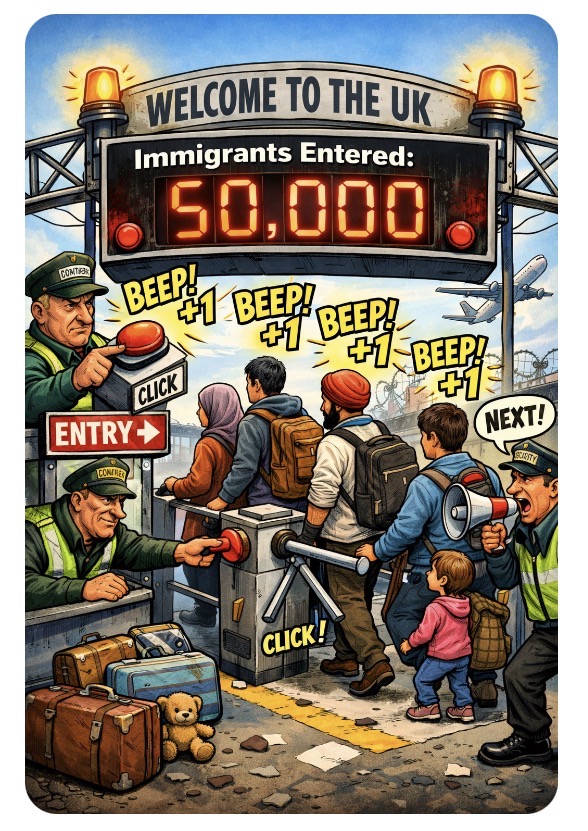
Housing, healthcare, schools, hotels, border control, integration—none of these run on goodwill. They run on money. And that money comes from one place: the public purse funded by people living and working here.
Strip away the noise, and the picture sharpens quickly: when systems slow down, the bill goes up—and it lands on you.
🏠 Hotels, Housing & The Cost of Waiting
When people are kept in temporary accommodation—especially hotels—the cost rises fast.
- Longer waiting times = longer stays
- Limited housing supply = higher prices
Result:
The public pays more simply because decisions take longer.
🏥 NHS Pressure Isn’t Free
More demand on healthcare means more resources are needed.
- Staff, beds, appointments—all finite
- Increased use without matching capacity = strain
Result:
More spending is required to maintain the same level of service.
🏫 Schools Stretch Further
Classrooms don’t expand overnight.
- Additional needs (like language support) require extra resources
- Funding has to stretch across more demand
Result:
The same pot is spread thinner—or increased to cope.
🚧 Not Working, Still Costing
When people are unable to work while waiting in the system:
- They cannot contribute financially
- They rely entirely on support
Result:
Costs continue without offset.
🚓 Border, Processing & Administration
Every stage—arrival, processing, decisions—requires manpower and infrastructure.
- Delays increase workload
- Backlogs multiply costs
Result:
The longer it takes, the more it costs.
🌍 Integration: Paying Upfront
Language training, local services, community support—these are all upfront investments.
Result:
Costs are paid now, with any return only possible later.
⚠️ The Core Issue: Time = Money
When systems move slowly:
- Accommodation costs stack up
- Support continues longer
- Pressure on services increases
Result:
Higher total cost to the public.
💷 Where the Money Actually Comes From
This is the part that often gets blurred:
- The funding does not come from the countries people arrive from
- It does not come from an external pool
It comes from:
→ Taxes paid within the UK
❓ The Unanswered Question
If the cost is rising due to delays and pressure, and the funding comes from within:
- Should the burden remain entirely internal?
- Should there be mechanisms to recover or offset costs?
- Or is this simply part of how the system operates?
No slogans—just the question.
🎯 Bottom Line
- Costs exist across housing, NHS, schools, and services
- Delays increase those costs significantly
- The funding comes from within the UK, not from abroad
- The longer inefficiencies continue, the more the public pays
If time and inefficiency are driving the bill higher, who should be accountable—and what would actually reduce the cost fastest? 🤔💬
👇 Comment. Share. Say your piece.
The sharpest responses will be featured in the next issue of the magazine. 📝🔥


Leave a Reply