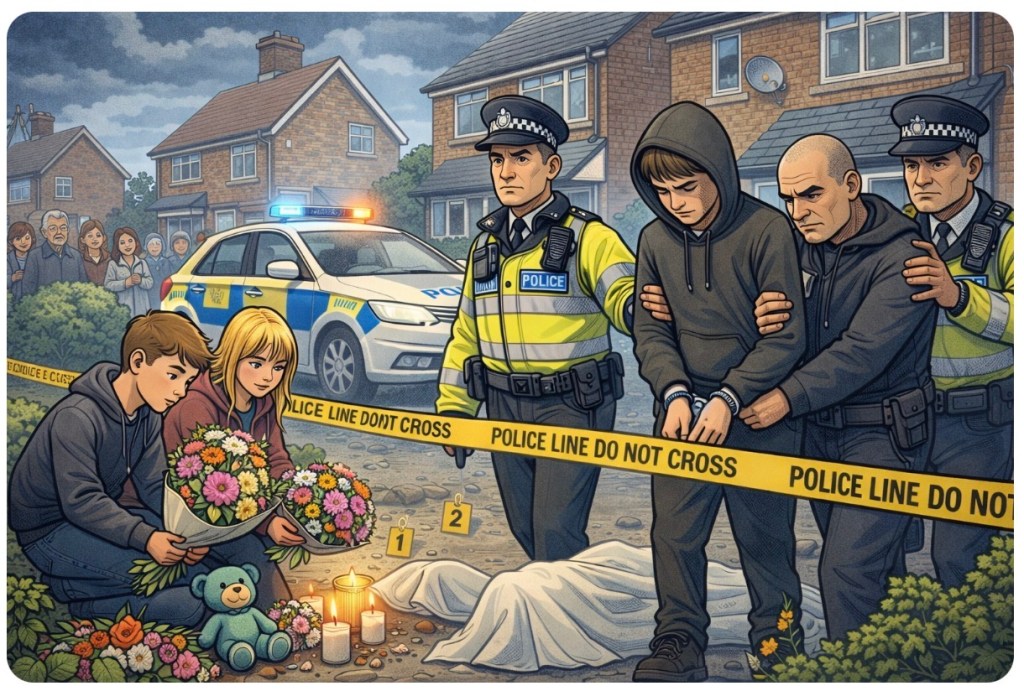
🎒🔪💔In Sheffield, a tragedy that should never have happened has exposed a system many now say is dangerously out of balance. 15-year-old Harvey Willgoose lost his life after being stabbed by a fellow pupil—Mohammed Umar Khan—whose history wasn’t hidden… just quietly relocated.
Over 130 recorded incidents. Violence. Weapons. Aggression. And instead of removal from the system, he was given a “managed move”—a polite phrase that sounds like pastoral care but, in this case, functioned more like passing the problem down the road.
🎓 Inclusion at All Costs… Even When the Cost Is Everything
Let’s call this what it risks becoming: a system so terrified of exclusion statistics that it’s willing to gamble with the safety of the majority. 🎲
“Managed moves” were meant to be compassionate—a way to give troubled students a fresh start. But when “fresh start” turns into “fresh set of victims,” the policy starts to look less like reform and more like roulette.
Because here’s the brutal truth:
- Schools want to avoid the stigma of exclusions 📉
- Authorities want cleaner data 📊
- Problem pupils get shuffled around 🔄
- And ordinary kids? They just hope they’re not sitting next to the wrong person in maths class
No headlines. No accountability. Just a quiet transfer—and a ticking clock. ⏳
And here’s where the wider fear creeps in—cases like this, alongside tragedies like the Southport killings, start to shape how people think. Not always rationally, not always fairly—but powerfully.
When repeated warning signs are ignored, when risks are managed on paper instead of removed in reality, it feeds a growing public sense that the system isn’t protecting them. That danger isn’t being dealt with—it’s being redistributed. And once that perception takes hold, it spreads faster than any official reassurance can contain. 🌪️
This isn’t about fuelling panic—it’s about recognising how preventable failures erode trust. Because when people stop believing the system will act before tragedy strikes, they start assuming the worst long before it does.
And that’s when fear—not policy—starts driving the national mood.
🔥 Challenges 🔥
How many warnings does it take before “inclusion” becomes endangerment? 🚨
And when systems fail this visibly, how do you rebuild public trust before fear fills the gap?
This one cuts deep. Say what you really think—no filters, no safe answers. 💬🔥
👇 Comment, share, and spark the debate.
The most powerful responses will be featured in the next issue of the magazine. 🎯📝


Leave a Reply