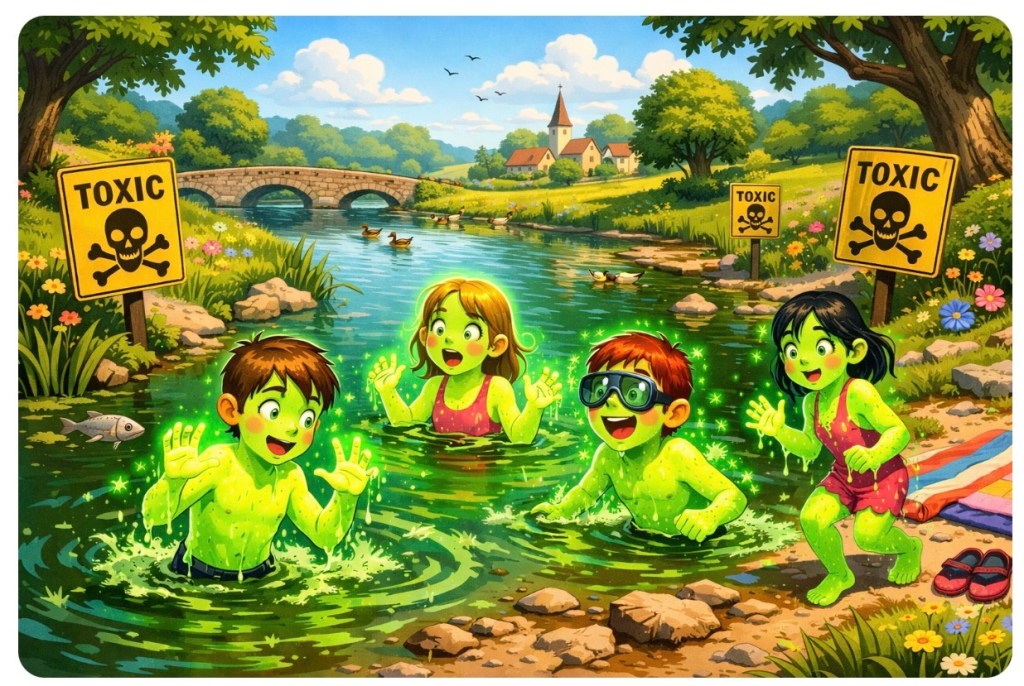
Three problems walk into a country: crumbling pipes hemorrhaging water, rivers doubling as open sewers, and droughts creeping in like an uninvited guest. The punchline? You’re paying more for all of it—and now you might get sick from it too. Welcome to modern water management, where the only thing flowing reliably is risk.
🚿💩🦠 From Leaks to Outbreaks: The Pipeline of Poor Decisions
Let’s upgrade the nightmare. It’s not just water loss and environmental damage anymore—it’s a slow-brewing public health hazard.
Leaking infrastructure doesn’t just waste water; it creates perfect entry points for contamination. Sewage discharges don’t just smell bad—they transform rivers into breeding grounds for bacteria and viruses that thrive in warm, nutrient-rich filth. Think E. coli, norovirus, and other microscopic freeloaders just waiting for a human host. Bon appétit. 🧫
Now stir in drought. Lower water levels mean higher concentrations of whatever nastiness is already in the system. Less dilution, more contamination. That peaceful river? It’s edging closer to a biological cocktail you didn’t order.
And here’s the kicker: this isn’t some distant, abstract risk. People swim in these waters. Pets drink from them. Flooding can push contaminated water into homes and streets. Suddenly, it’s not just an environmental issue—it’s a full-blown public health gamble.
Meanwhile, the response? Patch it, spin it, bill it. Emergency fixes slapped on ageing systems while the root problems fester—quite literally. It’s reactive governance at its finest: wait until something breaks, then act surprised when it breaks again, only dirtier this time.
🔥Challenges🔥
How many warning signs do we ignore before “infrastructure issue” becomes “health crisis”? Would it take widespread illness to force real change—or are we content playing microbial roulette every time it rains?
💬 Drop your thoughts in the blog comments—anger, insight, or firsthand stories. What’s your water really like?
👇 Like, share, and make some noise. Because silence is exactly how this mess keeps flowing.
The most powerful comments will be featured in the next issue of the magazine. 🎯📝


Leave a Reply