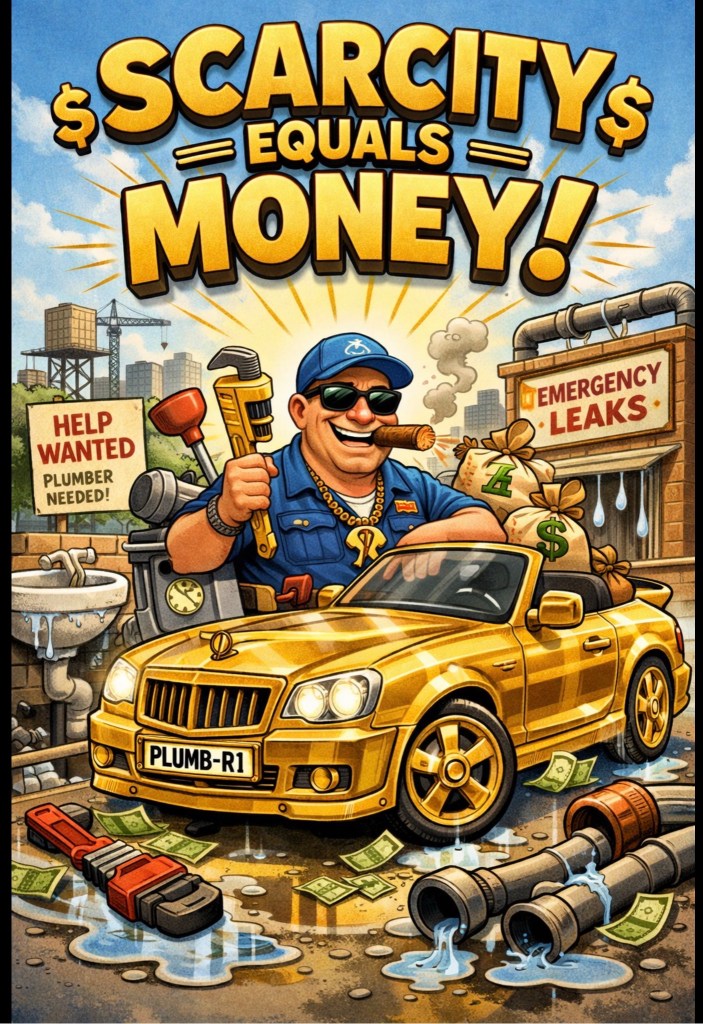
🏗️💼While governments debate immigration caps and universities churn out degrees like confetti at a wedding, the actual engines of society—construction sites, hospitals, warehouses, and engineering firms—are quietly wheezing like a 20-year-old van on its last MOT. Turns out, you can’t run a modern economy on vibes, PowerPoints, and half a million marketing graduates named Oliver.
🧱 Degrees in Dreams, Shortages in Reality
Somewhere along the line, we collectively decided that “success” meant sitting in an air-conditioned office talking about synergy while the real world—roads, bridges, power grids, and patient care—was left to… well… fewer and fewer people.
Construction firms can’t find workers. Engineers are treated like mythical creatures. Healthcare staff are stretched thinner than supermarket ham. Logistics? Let’s just say your “next day delivery” now comes with a side of existential uncertainty. 📦⏳
And yet, for decades, we’ve been sold the same dream: university = success, trades = backup plan. The result? A workforce shaped like a pyramid… upside down. Too many at the top, not enough holding the whole thing up.
We didn’t just ignore skills development—we ghosted it. 👻
Apprenticeships? Underfunded. Vocational training? Undervalued. Long-term workforce planning? About as present as a WiFi signal in a tunnel.
Now the bill has arrived—and surprise—it’s not cheap.
Delayed infrastructure. Rising costs. Burnt-out healthcare workers. Entire sectors running on caffeine, duct tape, and blind optimism.
But sure, let’s have another panel discussion about “innovation.” That’ll pour the concrete, won’t it?
🔥Challenges🔥
Here’s the uncomfortable question: when the people who actually build, fix, and save society disappear… who exactly do we think is going to step in?
Are we sleepwalking into an economy where nothing works—but everyone has a LinkedIn profile explaining why? 🤔💬
Drop your take in the blog comments—rant, reality check, or hot take. We want the truth, not the corporate jargon.
👇 Smash that comment button, like if this hit a nerve, and share it with someone who still thinks “skills shortage” is just a headline.
The sharpest takes will be featured in the next issue of the magazine. 📝🔥


Leave a Reply