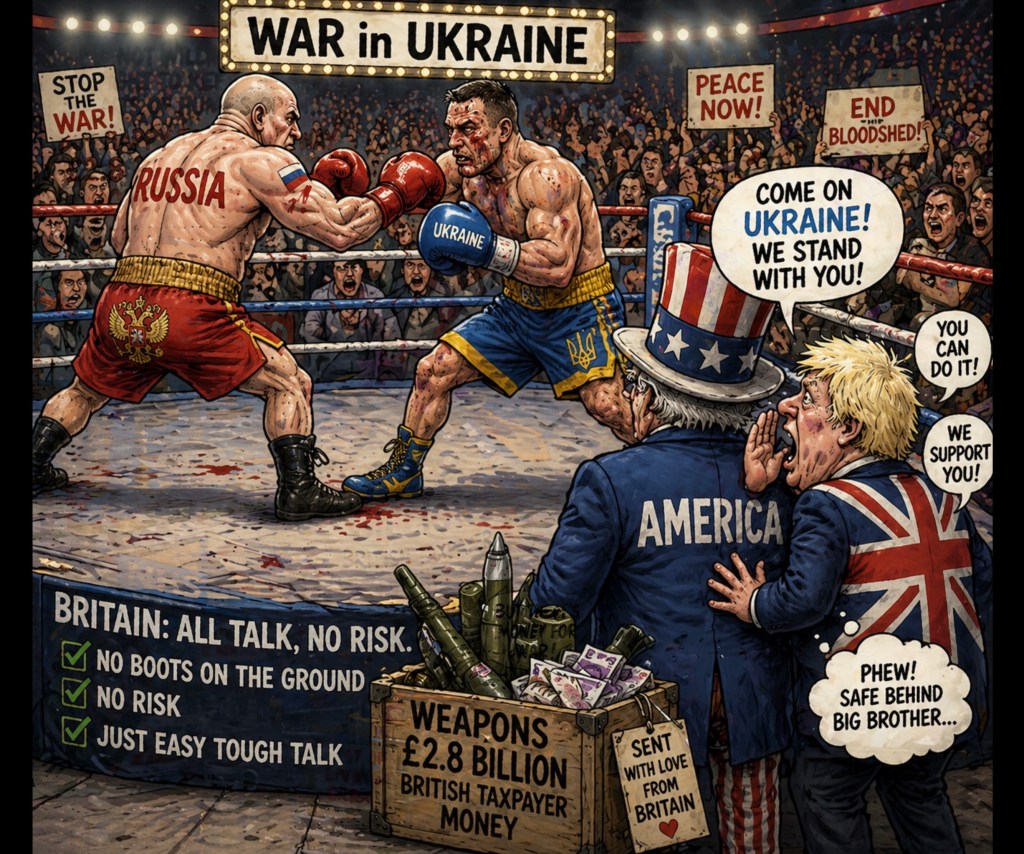
While households across the UK are counting coins like they’re rare artefacts, £2.8 billion has been signed off to fuel the ongoing catastrophe of the Russia-Ukraine War. Not to mediate. Not to de-escalate. Not to force uncomfortable peace talks—just straight into the machinery of war.
And at the centre of it? Keir Starmer—front and centre, pen in hand, nowhere near the consequences.
🧱 The “Gutless and Spineless” Question
Let’s not pretend this criticism isn’t being said out loud anymore: to many, this looks gutless and spineless—not in the sense of lacking aggression, but in avoiding the harder path.
Because here’s the uncomfortable truth:
It takes far more backbone to push for peace than it does to fund war from a distance.
Writing a cheque? Easy.
Standing in the fire of diplomacy, risking failure, backlash, and political capital? That’s leadership.
Critics argue this is the safer route dressed up as strength—appearing decisive without ever stepping into the ring. No gloves on. No risk taken. Just billions committed while British citizens are told, once again, to be patient.
And that’s where the frustration boils over—not just about Ukraine, not just about Russia—but about priorities.
🎭 The Theatre of Toughness (Without the Risk)
There’s a strange kind of bravado in funding war from afar. No boots on the ground, no personal stakes—just statements, signatures, and staged resolve.
Meanwhile, Britain limps along:
- NHS waiting lists stretching into absurdity
- Energy bills still biting
- Cost of living squeezing every corner of daily life
Yet when it comes to war funding, the answer is instant. No hesitation. No “we’ll need to review the budget.”
💰💥 Funny how that works.
So the question lingers:
Is this real leadership—or just the appearance of it?
🔥Challenges🔥
If pushing for peace is harder, riskier, and politically dangerous… is that exactly why it’s avoided? 🤨
And at what point do people stop accepting “strength” that never actually takes a risk?
Don’t just scroll past—drop your take in the blog comments. Say it properly, not buried in a social media thread. 💬🔥
👇 Like it, share it, and leave your verdict below.
The sharpest, boldest comments will be featured in the next issue of the magazine. 🎯📝


 Chameleon Magazine
Leave a comment