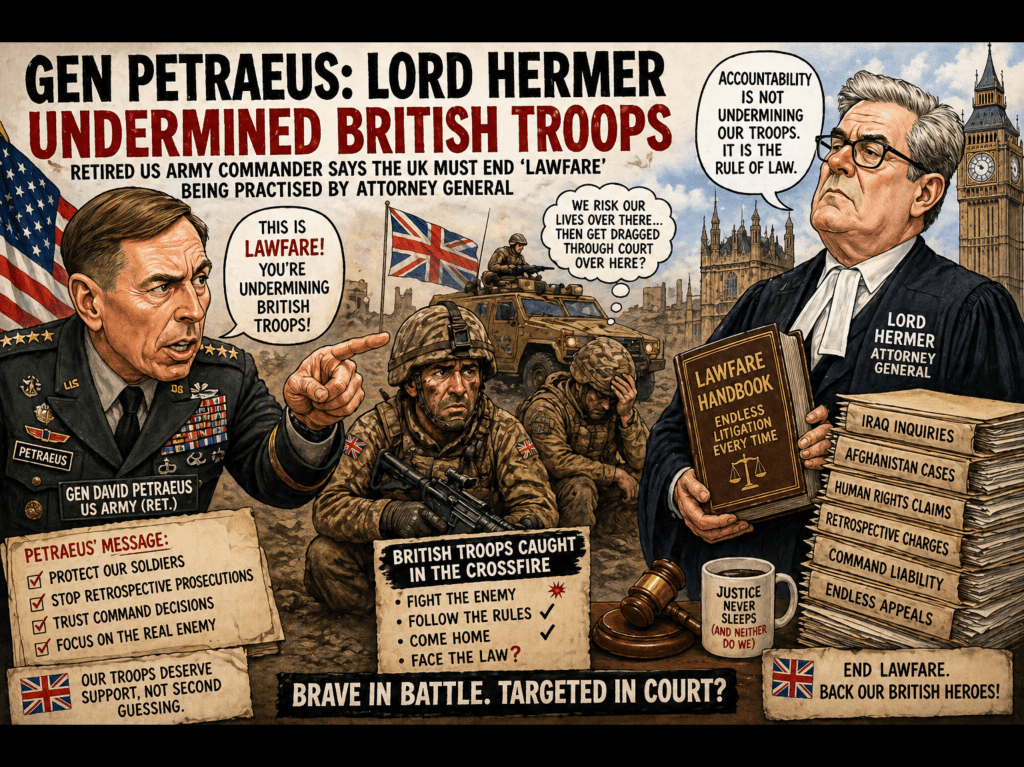
When David Petraeus steps into the UK debate and accuses Lord Hermer of undermining British troops through “lawfare,” this isn’t just policy chatter—it’s a full-blown transatlantic showdown dressed in legal robes and military medals.
💥 Courtrooms vs Combat Boots: The New Battlefield
Ah yes, “lawfare”—the idea that legal systems are being weaponised against soldiers after the dust of war settles. According to Petraeus, the UK risks tying its own troops in knots with endless legal scrutiny, second-guessing battlefield decisions from the comfort of a courtroom years later.
To critics, this all sounds dangerously close to:
“Would you mind committing to combat—but without worrying about consequences later?” 😬
Because here’s the tension:
- One side argues soldiers need protection from what they see as opportunistic or excessive legal claims.
- The other insists accountability isn’t optional, especially when it comes to alleged misconduct in war zones.
And sitting right in the middle? The UK government—trying to balance:
- Military morale 🎖️
- International law ⚖️
- Public trust 🧠
No pressure then.
Petraeus’ comments crank up the heat by framing this as a national security issue. If troops fear legal backlash, will they hesitate in critical moments? Possibly. But if governments dilute legal oversight, what message does that send globally?
It’s a tightrope walk… over a legal minefield.
🔥Challenges🔥
So what’s the real threat here—overzealous lawyers or unchecked power? Should battlefield decisions be immune from hindsight scrutiny, or is that exactly how abuses get buried?
Drop your take directly on the blog—no fence-sitting allowed. 💬🔥
👇 Hit comment, hit like, hit share. Is “lawfare” a shield for justice—or a scapegoat for avoiding it?
The boldest, sharpest takes will be featured in the next issue of the magazine. 🎯📝


Leave a comment