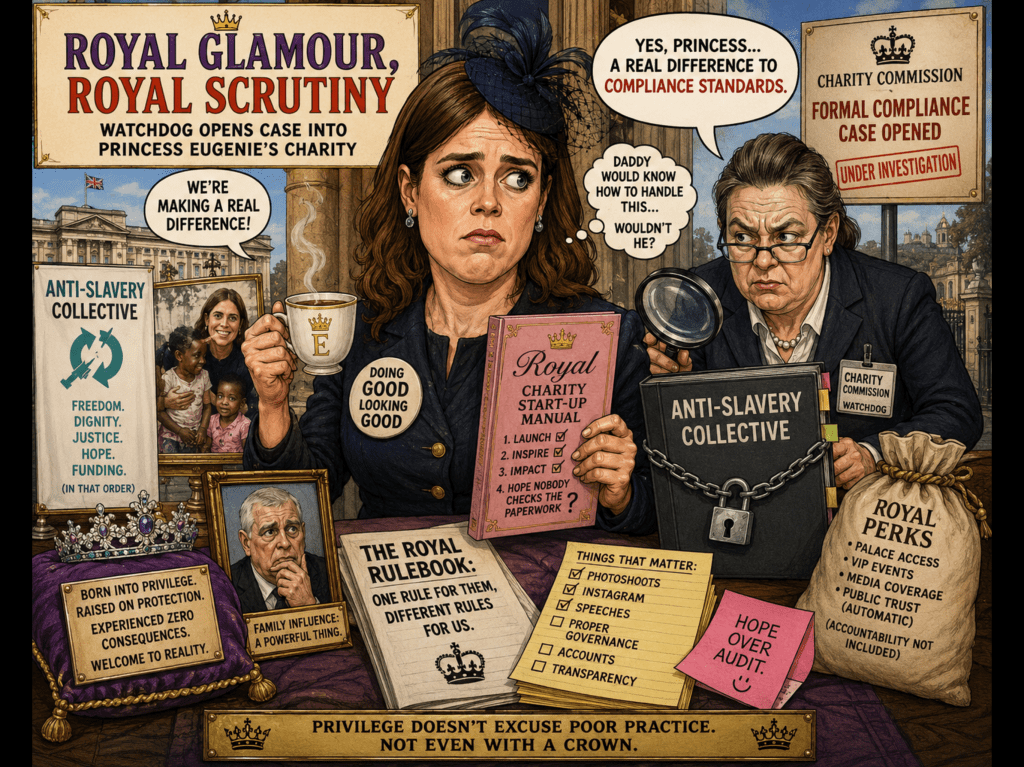
👑💸🔥The Charity Commission has officially opened a compliance case into the Anti-Slavery Collective — the charity co-founded by Princess Eugenie — proving once again that even royal branding can’t always float above scrutiny. Apparently, sprinkling a project with aristocratic fairy dust doesn’t automatically make paperwork disappear.
Now before anyone starts clutching pearls hard enough to cause wrist injuries, this isn’t a criminal trial or a Netflix true-crime special… yet. But it is another awkward headline for a monarchy already juggling more PR disasters than a circus clown on roller skates.
And yes — your point about parents influencing their children practically writes itself here. Because when you grow up watching generations of elites glide through scandals with a polite cough and a commemorative portrait, accountability can start to feel like something that only happens to other people. 🍷🏰
🧾 Blue Blood, Red Flags, and the Magical Disappearing Standards
The modern royal formula seems simple:
- Launch charity.
- Add emotional buzzwords.
- Pose meaningfully beside disadvantaged people.
- Hope nobody checks the admin. 📸✨
The Anti-Slavery Collective was marketed as a force for good tackling human trafficking and exploitation — a serious cause deserving serious leadership. But now regulators are poking around compliance concerns, which instantly turns glossy palace PR into a game of “who forgot to read the forms?” 🕵️♂️📂
And this is where the public frustration kicks in. Because ordinary people running small charities miss one filing deadline and suddenly they’re treated like they’ve hidden offshore diamonds in a garden shed. But when royals stumble? The media often wraps it in velvet language like “administrative concerns” or “procedural matters.” Translation: rich people problems with better tailoring. 👔💰
There’s also the unavoidable shadow hanging over this story: Prince Andrew. The monarchy’s very own cautionary tale about entitlement, insulation, and catastrophic judgement. Fair or unfair, when one branch of the family becomes internationally associated with scandal, the public starts side-eyeing the whole palace Christmas card.
Because privilege doesn’t just pass down titles and tiaras — it can also pass down the belief that consequences are negotiable.
🔥Challenges🔥
Do royal-backed charities deserve more scrutiny precisely because of their influence — or does the public jump too quickly when a Windsor name appears in a headline? 🤔👑
And here’s the bigger one: does growing up surrounded by wealth, protection, and deference quietly erode a person’s understanding of accountability? Or are we unfairly blaming children for the sins of the institution? 💥🧠
Drop your take in the blog comments — not just social media drive-bys. Bring the sarcasm, the scepticism, and the uncomfortable truths. 💬🔥
👇 Hit comment, hit like, hit share.
Should royal charities be held to higher standards than everyone else… or are they simply better at surviving scandals? 😏📢
The sharpest comments and most savage observations will be featured in the next issue of the magazine. 📰🎯


Leave a comment