🇬🇧🔥
Across Britain, more and more people are looking around their high streets asking the same question:
“How are all these places staying open?” 🤔🏪
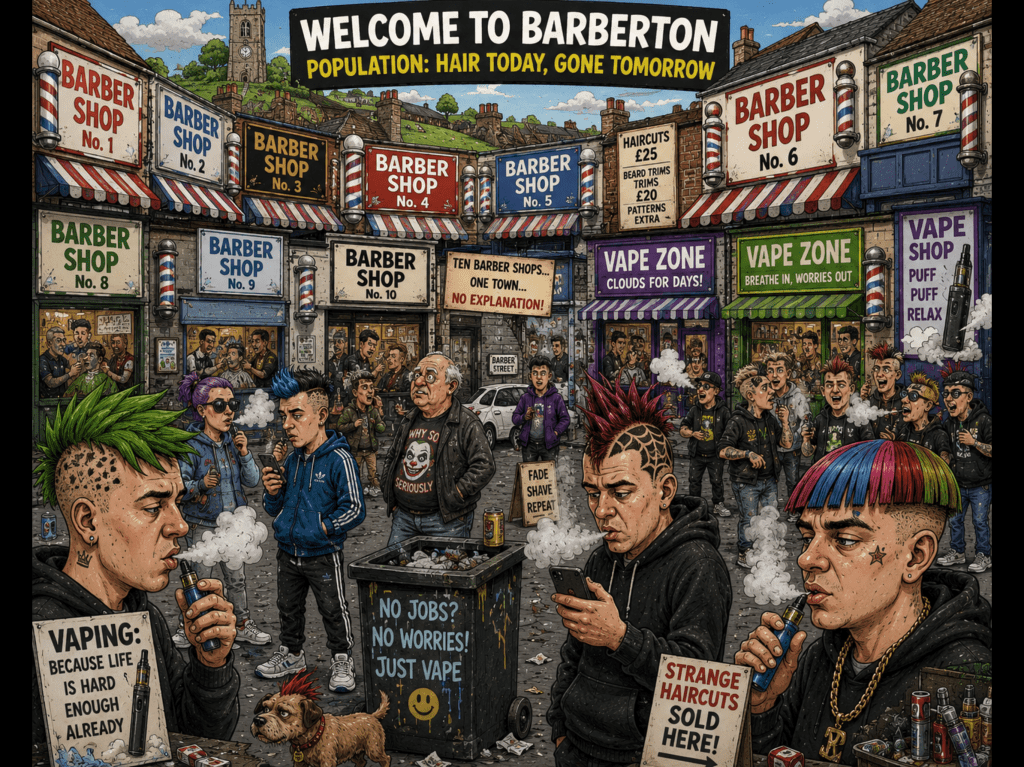
In town after town, barber shops, vape stores, mini-marts, and phone repair shops seem to appear overnight — often several on the same street, all competing for the same tiny customer base. ✂️💨
To many ordinary people, it simply doesn’t add up.
Because when you see:
- five barber shops within fifty metres,
- stores sitting empty most of the day,
- businesses changing hands constantly,
- shutters half-open with barely any customers,
- yet somehow surviving year after year…
people naturally become curious. 📉
And once private investigators, journalists, or online creators begin asking questions, things can quickly become tense and defensive. 🚨
🏛️ Suspicion Isn’t Proof — But It Grows When Authorities Seem Passive
It’s important to separate suspicion from evidence. Most barber shops and vape shops are legitimate businesses run by hardworking people trying to earn a living. ⚖️
But public distrust grows when people feel authorities ignore obvious patterns that look unusual on the surface.
That frustration often sounds like:
- “How can they all make money?”
- “Why are there so many?”
- “Why does nobody investigate?”
- “Would any other industry get this little scrutiny?” 🤨
And when police or regulators appear inactive, conspiracy theories and public anger quickly fill the vacuum. 🔥
🚔 The Problem Police Face
The reality is police cannot shut businesses down simply because they look suspicious or because the numbers seem strange. In Britain, authorities need actual evidence of crimes such as:
- money laundering,
- tax fraud,
- illegal employment,
- counterfeit goods,
- or organised crime links. 📂⚖️
And proving financial crimes is often slow, expensive, and highly technical.
But that explanation rarely satisfies communities who feel something visibly abnormal is happening in front of them while enforcement appears almost invisible. 📉
🇬🇧 Why This Debate Keeps Growing
The bigger issue here is public confidence.
When ordinary people see:
- high streets collapsing,
- local shops struggling,
- pubs disappearing,
- family businesses failing,
yet certain sectors continue multiplying despite weak customer demand, suspicion becomes almost inevitable. 🏚️➡️🏪🏪🏪
That doesn’t mean every business is corrupt.
But it does mean transparency and enforcement matter more than ever if authorities want to maintain trust.
Because once communities start believing rules are selectively enforced — or not enforced at all — resentment spreads fast. 🔥
🔥Challenges🔥
Why do some industries seem to expand endlessly despite weak visible demand?
Are authorities doing enough to investigate financial crime and illegal business activity?
And how do police balance legitimate enforcement with avoiding unfair suspicion toward lawful businesses? 💬🇬🇧
👇 Drop your thoughts in the blog comments.
Like, share, and join the debate if you think Britain’s high streets are raising more questions than answers. 🔥🏪
The strongest comments and fiercest debates could appear in the next magazine issue. 📝🎯
Chameleon News


Leave a Reply