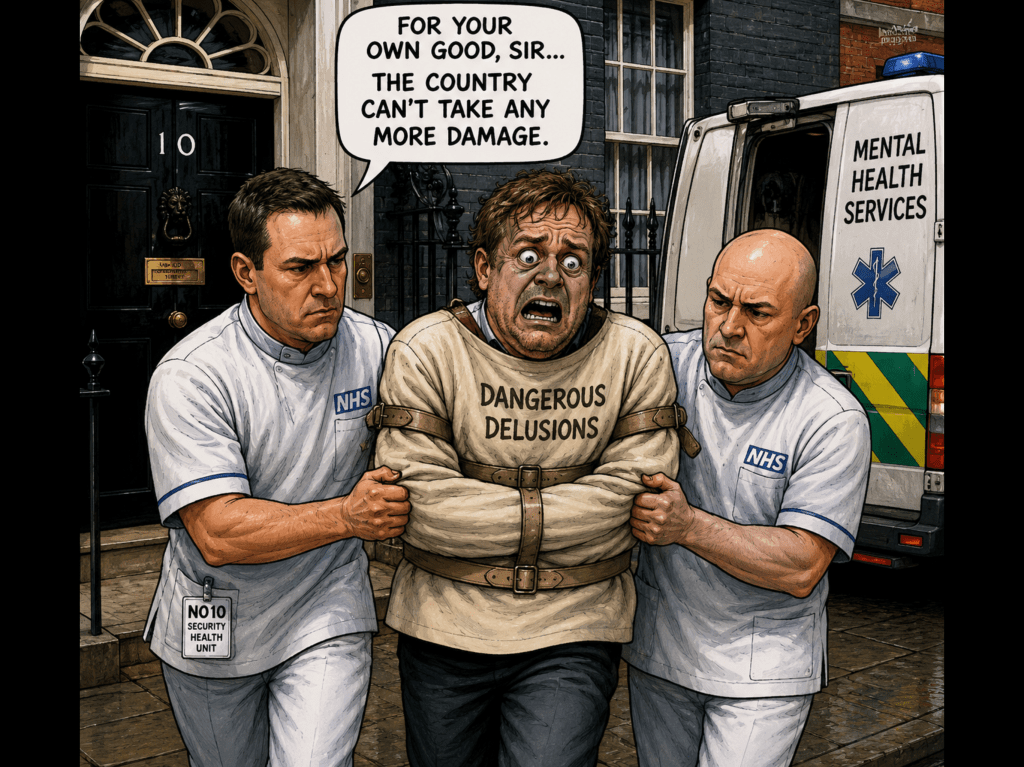
The question alone is enough to spark a fierce debate. Before anyone reaches for the pitchforks or the psychology textbooks, let’s be clear: this is not a medical diagnosis. Psychopathy is a clinical concept, and only qualified professionals can assess it properly.
But when people discuss political leaders, they often compare certain public behaviours with traits commonly associated with psychopathy. So let’s explore the question.
🔍 The Checklist That Fuels the Debate
Some traits commonly associated with psychopathy include:
- Lack of empathy
- Superficial charm
- Manipulation of others
- Refusal to accept responsibility
- Habitual dishonesty
- Emotional detachment
- Ruthlessness in pursuing goals
- Blaming others for failures
- Lack of remorse
Critics of Keir Starmer often point to several behaviours they believe resemble some of these characteristics:
👉 Frequently blaming previous governments, opponents, or external circumstances for current problems.
👉 Changing political positions over time, leading critics to accuse him of saying whatever is politically convenient.
👉 Appearing highly controlled and emotionally restrained during interviews and public appearances.
👉 Making decisions that some opponents argue show insufficient compassion for those affected.
👉 Demonstrating a willingness to remove allies, critics, or even members of his own party when they become politically inconvenient.
Supporters, however, would argue that these are not signs of psychopathy at all.
They would say:
✅ Political leaders must make difficult decisions.
✅ Emotional control is a leadership skill, not a personality disorder.
✅ Changing positions can reflect pragmatism rather than dishonesty.
✅ Holding others accountable is not the same as refusing responsibility.
✅ Tough choices are often unavoidable in government.
🎭 Politics or Psychopathy?
Here’s the real question.
Are these behaviours evidence of a personality disorder?
Or are they simply the traits often found in ambitious politicians trying to survive at the top of a ruthless profession?
Many of the characteristics people associate with psychopathy—strategic thinking, emotional control, resilience under pressure, and willingness to make unpopular decisions—are also characteristics commonly found in successful political leaders.
That makes the line difficult to draw.
🔥 Challenges 🔥
So what do you think?
Are critics seeing genuine warning signs in Keir Starmer’s behaviour, or are they simply describing the realities of modern politics?
Does emotional detachment make someone an effective leader—or a dangerous one?
Drop your thoughts in the blog comments and tell us where you stand. 💬👇
👍 Like it.
🔄 Share it.
🗣️ Challenge it.
The best comments will be featured in the next issue of the magazine. 📰🔥


 Chameleon Magazine
Leave a comment