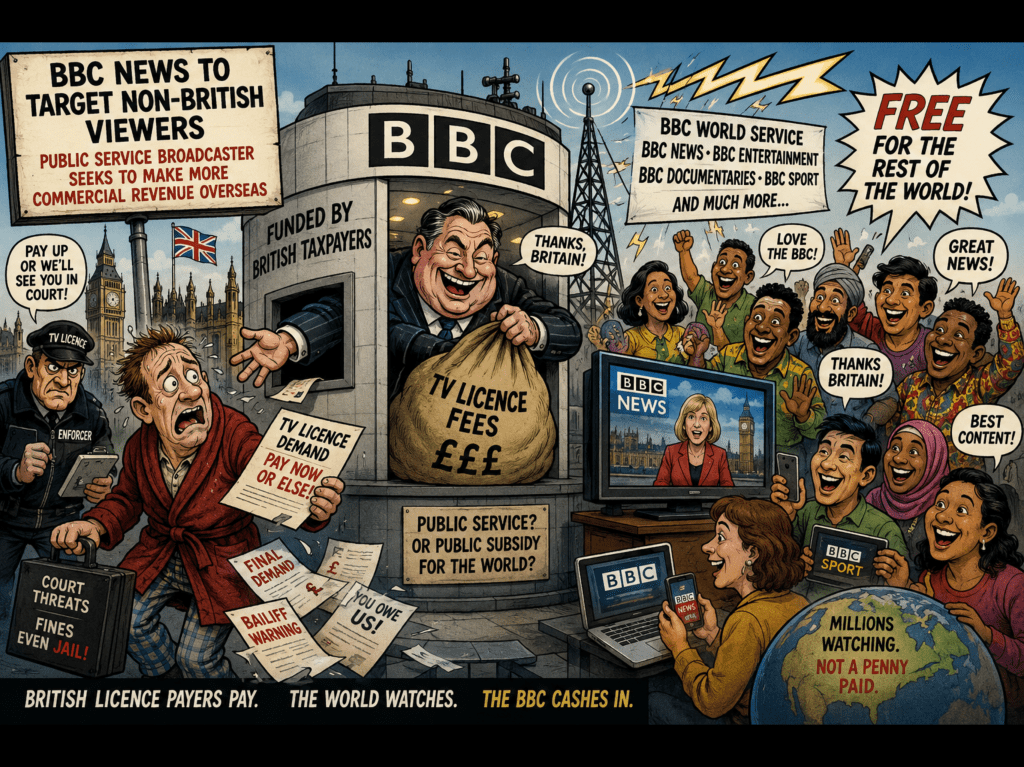
The BBC is reportedly looking to expand its commercial reach overseas and generate more revenue from international audiences. For many licence fee payers in the UK, that announcement may trigger a familiar question: if British households fund the broadcaster through the TV licence, why have international viewers enjoyed so much BBC content without contributing directly? 🤔📺
The debate has simmered for years. While UK households face licence fee enforcement, collection letters, and legal consequences for non-payment, millions around the globe have been able to access BBC news and other content through various international platforms. Critics argue that British viewers have effectively subsidised a global media giant while carrying the financial burden themselves. 💷🌎
💰 From Public Service to Global Sales Pitch?
The BBC has long defended its international presence by arguing that it promotes British culture, journalism, and influence abroad. But are always reminded by the BBC we are a multi-cultural country, so it makes sense they start paying their way. Supporters point out that services such as the BBC World Service contribute to the UK’s global standing and are partly funded through government support rather than solely the licence fee.
However, critics see a different picture. They question why pensioners, struggling families, and ordinary households should continue paying mandatory licence fees while the corporation pursues commercial opportunities across the globe. If overseas audiences value BBC content, why should they not contribute more directly to its costs? 📡💸
The latest push for international revenue suggests the BBC may be recognising the limits of relying on UK licence payers alone. In an era of subscription services and global streaming platforms, asking international consumers to pay for premium BBC content could seem less controversial than repeatedly increasing pressure on domestic audiences.
After all, when a local family misses a payment, enforcement can follow. When millions overseas consume BBC content, the bill has historically landed much closer to home. 🏠➡️🌍
🔥 Challenges 🔥
Is it fair that UK licence fee payers have shouldered the costs of a broadcaster with a massive global audience? Should the BBC move further towards international subscriptions and commercial revenue? Or does its worldwide reach provide enough value to justify the current model?
We want to hear your verdict. Is the BBC a national treasure, an outdated funding model, or something in between? 💬⚖️
👇 Comment on the blog, like, and share this article. Tell us whether overseas viewers should pay more and whether the licence fee has a future in the streaming age.
🏆 The most thought-provoking comments will be featured in the next issue of the magazine.
NOW THEY ARE GOING TO ASK THEM TO PAY WHEN PEOPLE HERE HAVE STOPPED PAYING!


 Chameleon Magazine
Leave a comment