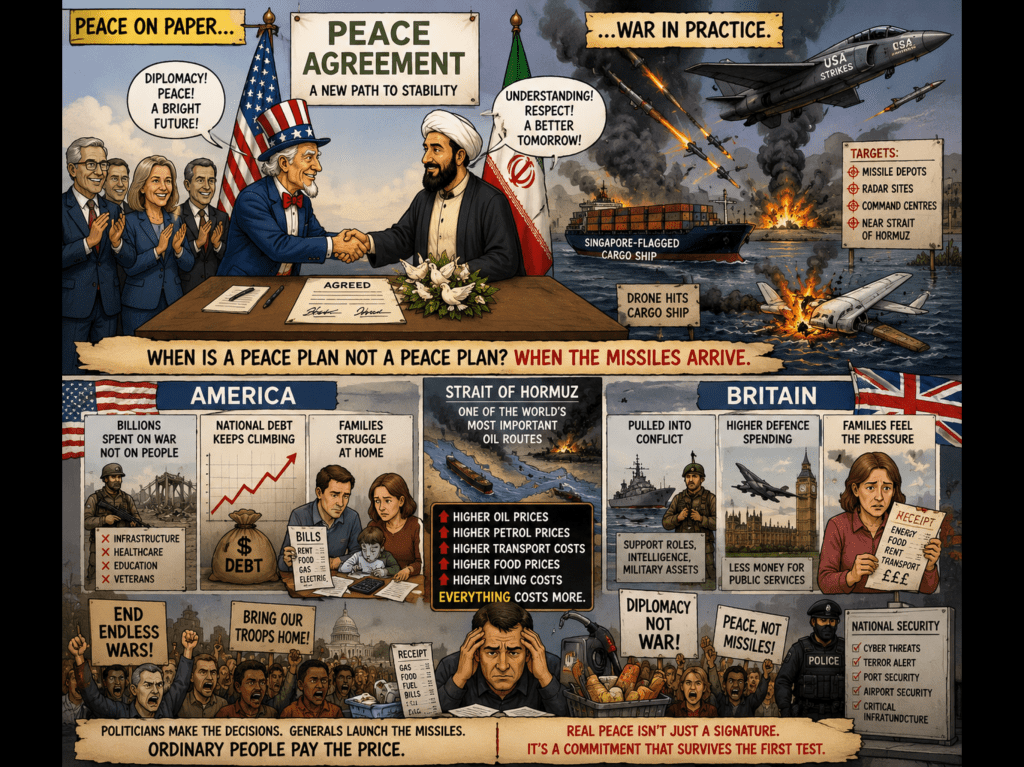
A peace agreement is supposed to mark the end of conflict, not simply provide a brief intermission before the next round of airstrikes. Yet time and again we’re shown carefully staged handshakes, optimistic headlines and promises of stability—only to watch missiles fly days or weeks later.
When is a peace plan not a peace plan?
When military action resumes before trust has even had a chance to take root.
The latest strikes against targets in Iran raise uncomfortable questions. Governments will argue they were necessary to protect international shipping and deter further attacks after a drone struck a Singapore-flagged cargo vessel. Others will ask whether this demonstrates that the so-called peace agreement was never truly built on lasting security, but on fragile political convenience.
The consequences stretch far beyond the Middle East.
For America, every renewed conflict carries a financial burden measured not in millions but potentially billions of dollars. Military operations are enormously expensive, funded by taxpayers who are already grappling with inflation, national debt and rising living costs. Resources devoted to overseas operations are resources that cannot be spent on infrastructure, healthcare, education or supporting veterans at home. Public patience also wears thin after decades of military involvement in overseas conflicts, with many Americans asking whether another prolonged confrontation serves their long-term interests.
Britain, even if it is not leading military action, rarely escapes the consequences. As one of America’s closest allies, the UK often finds itself drawn into diplomatic, intelligence or military support roles. That brings political pressure at home, increased defence spending and difficult questions over Britain’s own strategic priorities.
There are economic consequences too. The Strait of Hormuz is one of the world’s most important shipping routes for oil and gas. Any escalation around this narrow waterway can send energy markets into turmoil. Higher oil prices don’t stay in the Gulf—they reach petrol stations across Britain and America, increasing transport costs, pushing up food prices and adding fresh pressure to household budgets that are already stretched.
Businesses feel it too. Higher shipping insurance, disrupted supply chains and market uncertainty make it more expensive to import goods and harder for companies to plan investment. Pension funds, stock markets and currencies often react sharply whenever conflict threatens one of the world’s key energy arteries.
Then there is national security. Intelligence agencies in both countries will inevitably increase vigilance against potential retaliatory cyberattacks or terrorism. Airports, ports, military installations and critical infrastructure all require greater protection, placing additional demands on already stretched security services.
Politically, leaders face a familiar balancing act. Some citizens will argue that strong military action is essential to deter aggression and protect global trade. Others will see another example of Western nations becoming entangled in conflicts with no obvious end, fearing history is repeating itself.
Whatever side people take, one fact remains constant.
Ordinary families rarely decide when wars begin, yet they almost always help pay the bill—through higher taxes, increased prices, economic uncertainty or, for military families, the possibility of loved ones being deployed into dangerous situations.
Peace is not measured by signatures on a document or carefully choreographed press conferences. It is measured by whether nations can resist returning to conflict when the first serious challenge emerges.
If bombs begin falling before diplomacy has been given every opportunity to succeed, many people will inevitably question whether the peace was ever real in the first place.
🔥 Challenge
Who ultimately pays the price when another conflict begins?
Is military action sometimes the unavoidable cost of protecting international security, or have we become too quick to declare “peace” while preparing for the next strike?
Join the debate in the blog comments below. We want to hear your view—not just on who is right or wrong, but on what genuine peace should actually look like. 💬
👍 Like, 💬 comment and 📢 share if you believe peace should be judged by lasting stability, not optimistic headlines.
🏅 The best comments will be featured in our next magazine edition.


 Chameleon Magazine
Leave a comment