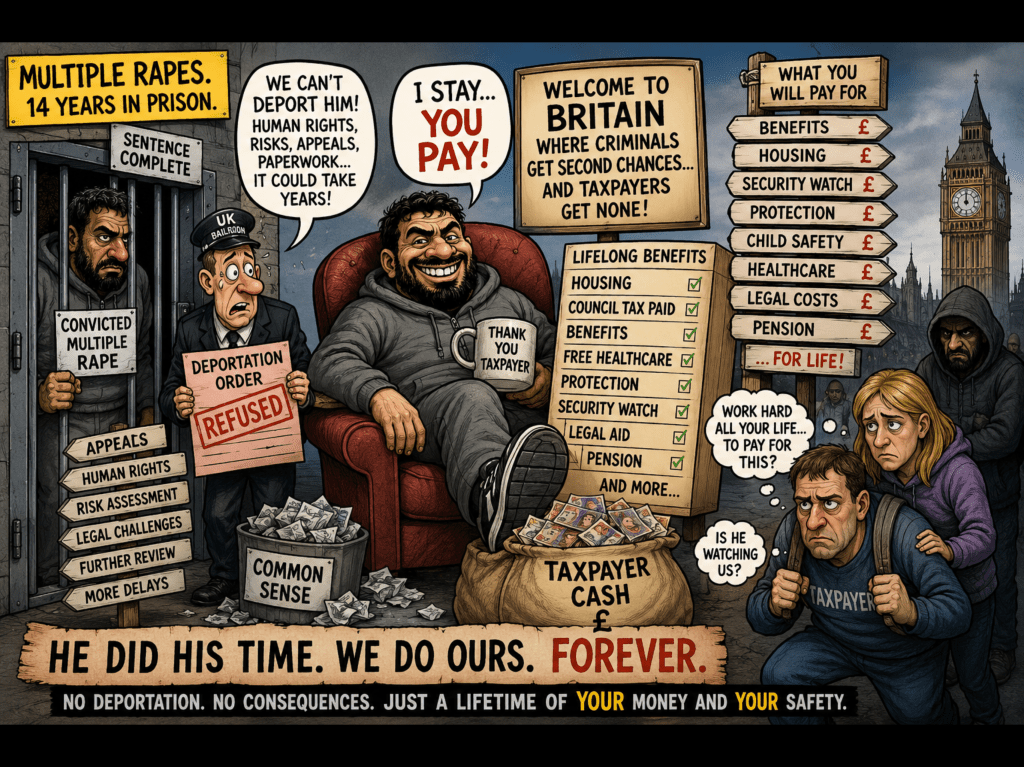
⚖️🔥A serious foreign criminal serves years behind bars, reaches the end of the sentence, and the public naturally expects one simple thing: deportation. Out. Gone. Finished.
Instead, Britain gets the usual bureaucratic circus. Forms. Appeals. Human rights arguments. Legal delays. Risk assessments. Committees. More paperwork than a rainforest could survive. 🌳📄
The State Can Chase the Disabled, But Not the Dangerous
😡This is where the public fury becomes impossible to ignore.
The same system that can hound disabled people over benefits, squeeze pensioners, and lecture working families about “tough choices” suddenly becomes helpless when dealing with someone convicted of horrific crimes.
Apparently, there’s always money for monitoring, housing, legal wrangling, safeguarding plans, benefits, protection and lifelong public expense.
But support for vulnerable citizens?
Sorry, budget pressures. Try again next century. 💸
And the insult is obvious: the victim pays once through trauma, and the taxpayer pays forever through the bill.
People are not angry because they dislike rules. They are angry because the rules seem to protect the wrong people first.
A country that cannot remove dangerous criminals after sentence is complete has not just lost control of its borders. It has lost control of its priorities.
🔥 Challenges 🔥
How did we build a system where the law-abiding are squeezed while the dangerous are managed at public expense? Is this justice, or just state-funded absurdity wearing a cheap wig and calling itself compassion?
Comment on the blog and tell us what you think Britain should do when deportation fails. 💬🔥
👇 Comment, like, and share — because silence is exactly how these scandals keep happening.
🏆 The best comments will be included in the next issue of the magazine.


 Chameleon Magazine
Leave a comment