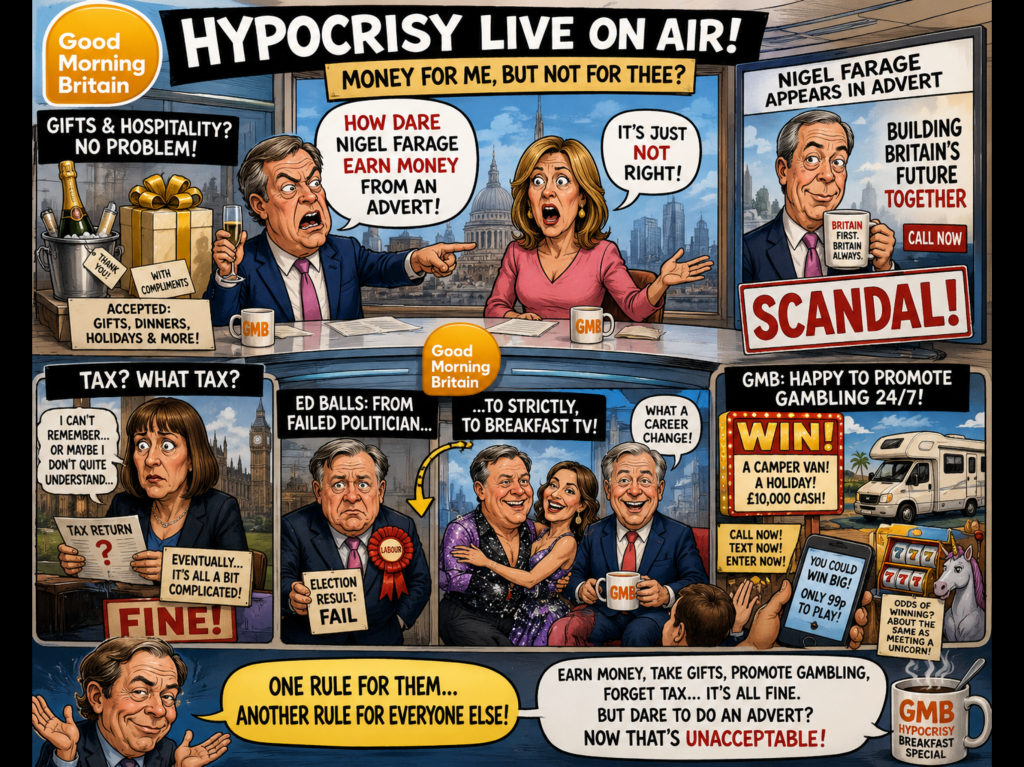
💷📺Watching the breakfast television pundits work themselves into a frenzy over Nigel Farage earning money is becoming something of a morning ritual.
Apparently, advertising and outside earnings are now a national scandal—at least when the person cashing the cheque is someone they don’t like.
It’s an interesting standard.
Many of the same political figures who have accepted gifts, hospitality or donations over the years are rarely subjected to quite the same level of theatrical outrage. The indignation often seems remarkably selective.
Then there’s the memorable episode involving the Deputy Prime Minister having to clarify her tax affairs after questions were raised about them. Tax can be complicated—but somehow that story didn’t generate quite the same rolling moral panic.
And let’s not forget Ed Balls.
A former politician who, after leaving Parliament, reinvented himself as a television personality, first charming audiences on Strictly Come Dancing before landing a prominent role on breakfast television.
Apparently, earning money after politics is perfectly respectable… depending on who you are. 💃📺
Then there’s breakfast television itself.
Every few minutes viewers are encouraged to phone, text or enter competitions for the chance—usually a very remote one—of winning a camper van, a luxury holiday or a cash prize.
The odds are tiny, but the promotions are relentless.
So while presenters happily encourage viewers to part with their money chasing long-shot prizes, they’re simultaneously clutching their pearls because Nigel Farage appears in an advert.
It’s a fascinating definition of moral consistency.
Perhaps the real offence isn’t that Farage earns money.
Perhaps it’s simply that Farage earns money.
🔥 Challenges 🔥
Is this genuine journalism, or selective outrage dressed up as impartial reporting?
We’d love to hear your view—but don’t just argue about it on social media. Head over to the blog comments and tell us whether you think the same standards are applied to everyone, or only to the people certain broadcasters dislike. 💬👇
👍 Like it. 🔄 Share it. ✍️ Leave your thoughts below.
The best comments could be featured in the next issue of the magazine.


 Chameleon Magazine
Leave a comment