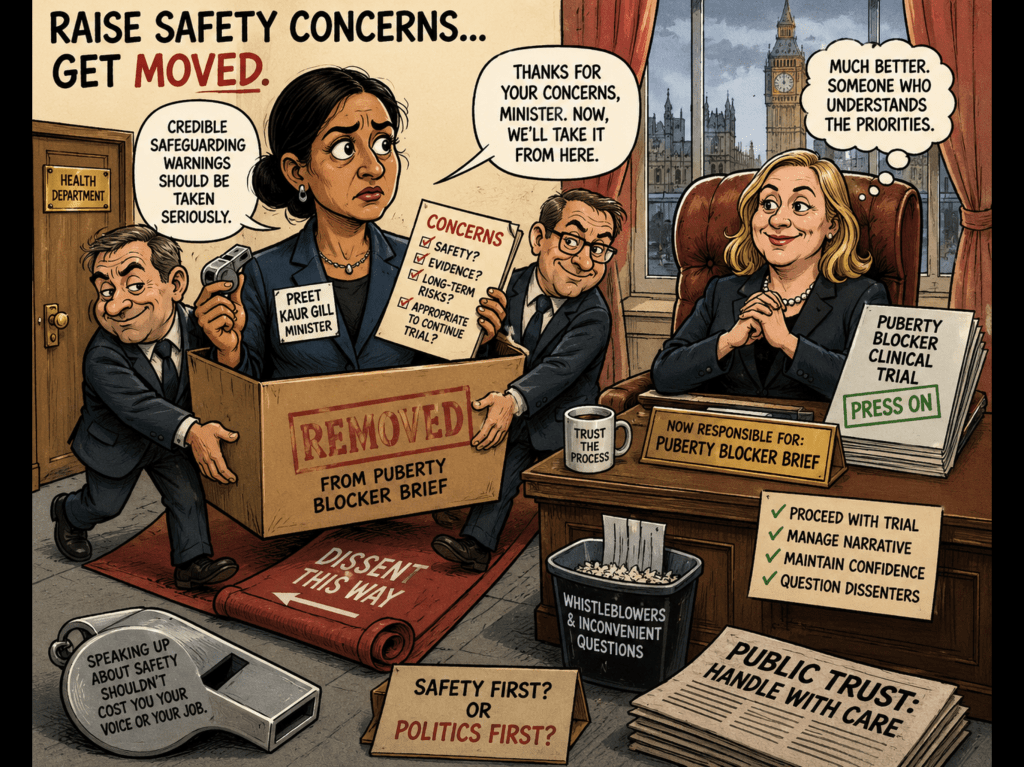
When a minister publicly raises concerns about “credible safeguarding warnings” surrounding puberty blockers, most people would expect those concerns to be examined—not the minister quietly moved away from the issue.
That’s exactly why this story has sparked such fierce debate. Critics aren’t simply arguing about puberty blockers themselves. They’re asking a more fundamental question: if someone responsible for health policy voices concerns about patient safety and is then removed from that policy brief, what message does that send about how government handles disagreement?
🎭 Shuffle the Portfolio, Shuffle the Questions?
Politics has always loved a good game of musical chairs. 🎶🪑 Ministers come and go, portfolios are reshuffled, and officials insist it’s all perfectly routine.
Maybe it is.
But timing matters.
When responsibility for one of the country’s most controversial medical issues changes hands shortly after a minister questions whether unresolved safeguarding concerns should delay a clinical trial, people inevitably start wondering whether the chairs were being rearranged—or whether someone simply wasn’t singing from the right hymn sheet.
The government may well have perfectly ordinary administrative reasons for reallocating responsibilities. That’s entirely possible.
Yet public confidence isn’t built solely on what governments do—it’s built on how their decisions look.
If safeguarding is genuinely the priority, transparency should never be the casualty.
The debate surrounding puberty blockers has already become one of the most emotionally charged issues in British healthcare. Following the Cass Review, routine NHS prescribing for under-18s was halted outside tightly controlled research because evidence about long-term benefits and risks was judged to be limited.
Against that backdrop, every decision carries enormous weight.
When questions are raised by ministers themselves, the public expects those questions to be answered—not quietly filed away with yesterday’s ministerial paperwork. 📂
Scientific evidence should determine healthcare policy.
Safeguarding should remain above politics.
And ministers should surely be able to raise legitimate concerns without creating the impression they’ve talked themselves out of the job.
Because once people begin believing that inconvenient questions lead to inconvenient career moves, confidence in the system becomes far harder to restore than any ministerial portfolio.
🔥 Challenges 🔥
Is this simply a routine ministerial reshuffle—or does the timing leave too many unanswered questions? 🤔
Should ministers be encouraged to challenge policy when safeguarding concerns arise, or does removing responsibility after those concerns are voiced risk damaging public trust?
Share your thoughts in the blog comments. We’d like to hear both sides of the argument—but keep it civil and stick to the evidence. 💬
👇 Like, comment and share if you believe transparency matters as much as scientific evidence.
🏆 The best comments will be featured in the next issue of the magazine.


 Chameleon Magazine
Leave a comment