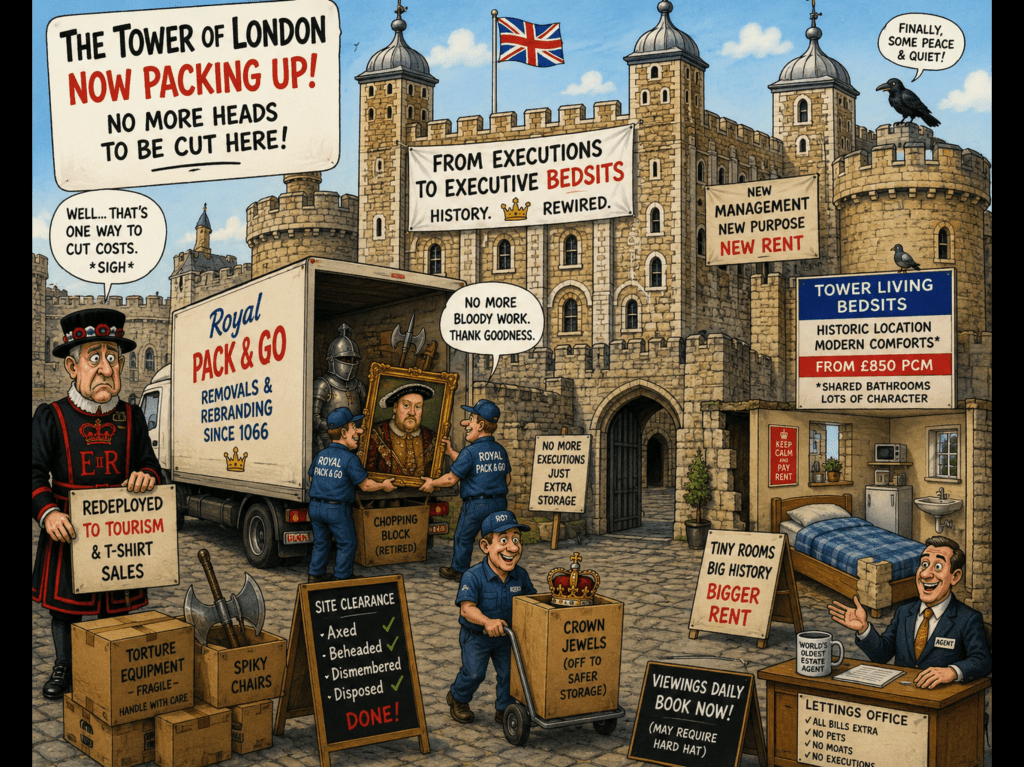
Once upon a time, monarchs lost sleep over which religion their subjects followed. Henry VIII chopped off heads, dissolved monasteries, and rewrote history just to get his own way. Fast forward a few centuries, and today’s Royal Family is happily touring mosques, temples, synagogues, churches and every place of worship with a welcoming smile and a photo opportunity. 📸
History really does have a wicked sense of humour.
🕌⚔️ Henry VIII Must Be Spinning Faster Than a Wind Turbine
Imagine explaining this to Henry VIII.
“So, Your Majesty… your successors now visit mosques, celebrate religious diversity, and encourage harmony between Britain’s many faiths.”
Henry would probably reach for the executioner’s block before you’d finished the sentence.
The monarchy has transformed from “Defender of the Faith” into something closer to Britain’s ceremonial Head of PR, carefully navigating every cultural event with the precision of a diplomat trying not to spill tea on an international incident. ☕🤹
Whether you applaud it or roll your eyes depends entirely on your politics, but one thing is undeniable—the institution has changed beyond recognition.
And that’s where the awkward question begins…
If the monarchy has evolved into a symbolic office designed to represent modern Britain rather than exercising political power, is hereditary succession still the best way to choose that symbol?
If the country is as diverse as politicians constantly tell us it is, should the Head of State continue to inherit the role through one family tree, or should the public eventually choose someone to represent the nation?
That’s a debate worth having.
Some might argue for an elected president. Others may favour respected civic figures such as regional mayors or nationally recognised public servants. People mention names like Andy Burnham not because everyone agrees with his politics, but because he represents the broader question: should Britain’s Head of State be selected rather than simply born into the role?
Meanwhile, the Royal PR machine carries on smiling for the cameras, shaking every hand, visiting every community, and hoping nobody asks the awkward constitutional questions.
Because changing the photo backdrop is far easier than changing the system. 📷👑
🔥 Challenges 🔥
Is the monarchy adapting to modern Britain—or quietly becoming something completely different from what it was created to be?
Should Britain keep a hereditary Head of State for tradition’s sake, or is it time for an entirely new model that reflects the country as it exists today?
Join the debate in the blog comments. No shouting from the sidelines—tell us where you stand and why. 💬
👇 Like it, share it, and leave your sharpest observations in the comments.
🏆 The best comments will be featured in the next issue of the magazine!


 Chameleon Magazine
Leave a comment