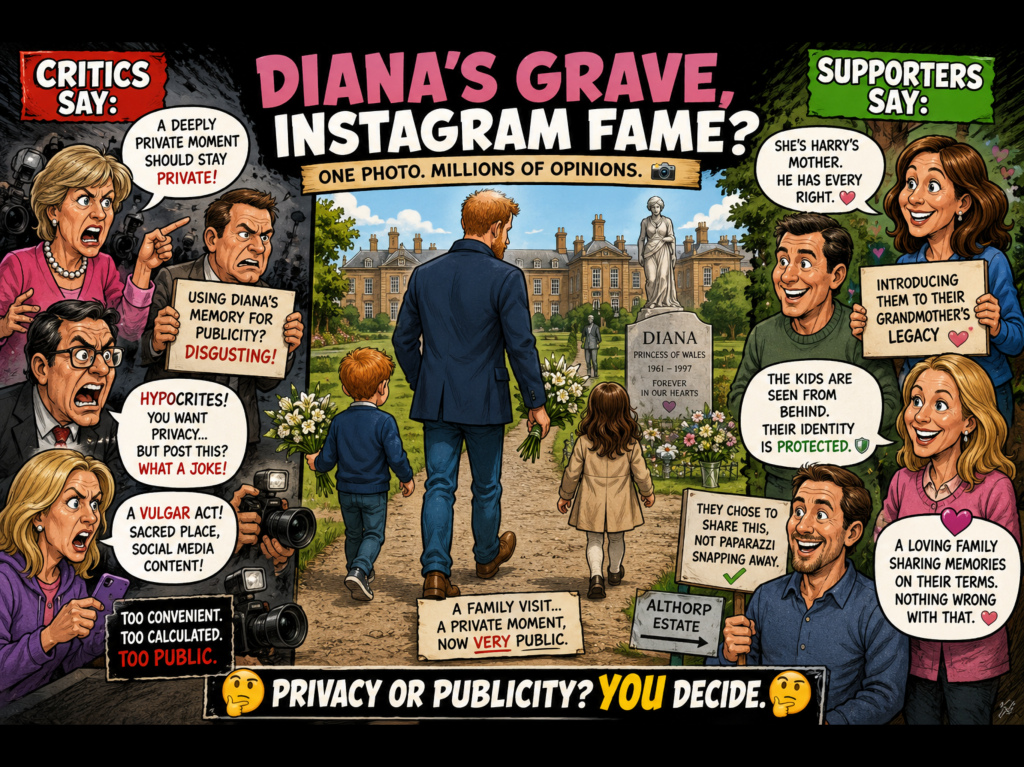
👑🌹One family photograph. One Instagram post. Endless outrage. 😮💨
Meghan Markle’s holiday photo collection included an image widely believed to show Prince Harry, Prince Archie and Princess Lilibet walking through the grounds of Althorp Estate—the Spencer family home where Princess Diana is buried. Harry and Archie appear to be carrying bouquets of flowers, leading many to assume they were paying their respects at Diana’s grave.
The debate isn’t about whether the visit happened. Few would question Harry’s right to visit his mother’s final resting place with his children. The real storm centres on one decision: publishing the photograph for the world to see.
🎭 Privacy… Until It’s Instagram Time?
Critics wasted no time sharpening their keyboards. To them, this wasn’t a touching family tribute—it was a deeply personal moment transformed into public content. 🌹📱
Some royal commentators argued that Diana’s resting place should remain sacred and private, not become another backdrop in a carefully curated social media album. Others accused the Sussexes of once again sending mixed messages: after years of condemning media intrusion and insisting they wanted privacy for themselves and their children, why voluntarily release such an intimate family image?
For critics, the contradiction is impossible to ignore. If privacy is priceless, why selectively monetise—or at least publicise—the moments guaranteed to attract the most attention? 🤔
Supporters see something entirely different.
To them, Harry was simply introducing his children to the grandmother they never had the chance to know. The children are shown only from behind, their faces hidden, allowing the family to share a meaningful glimpse without revealing their identities. More importantly, supporters argue there’s a world of difference between choosing to share your own photograph and having one taken without consent by paparazzi.
Perhaps that’s the uncomfortable truth about modern celebrity. Privacy today isn’t always about sharing nothing—it’s often about deciding what you share and what you keep hidden. 📷⚖️
The phrase “vulgar act” has certainly grabbed headlines, but it’s worth remembering that it reflects the opinion of one royal commentator rather than any established consensus. Like almost everything involving Harry and Meghan, this story has become another battlefield where people often see exactly what they already believed.
🔥
Challenges
🔥
Was this a heartfelt family tribute, or should some moments remain beyond the reach of social media forever? 🤷♂️💭
Where do you draw the line between controlling your own narrative and turning private grief into public content? Join the debate in the blog comments and tell us whether you think the criticism is justified—or completely over the top.
👇 Like it, share it, and leave your verdict below. The sharpest, funniest and most thought-provoking comments could be featured in the next issue of the magazine! 🗞️🔥


 Chameleon Magazine
Leave a comment