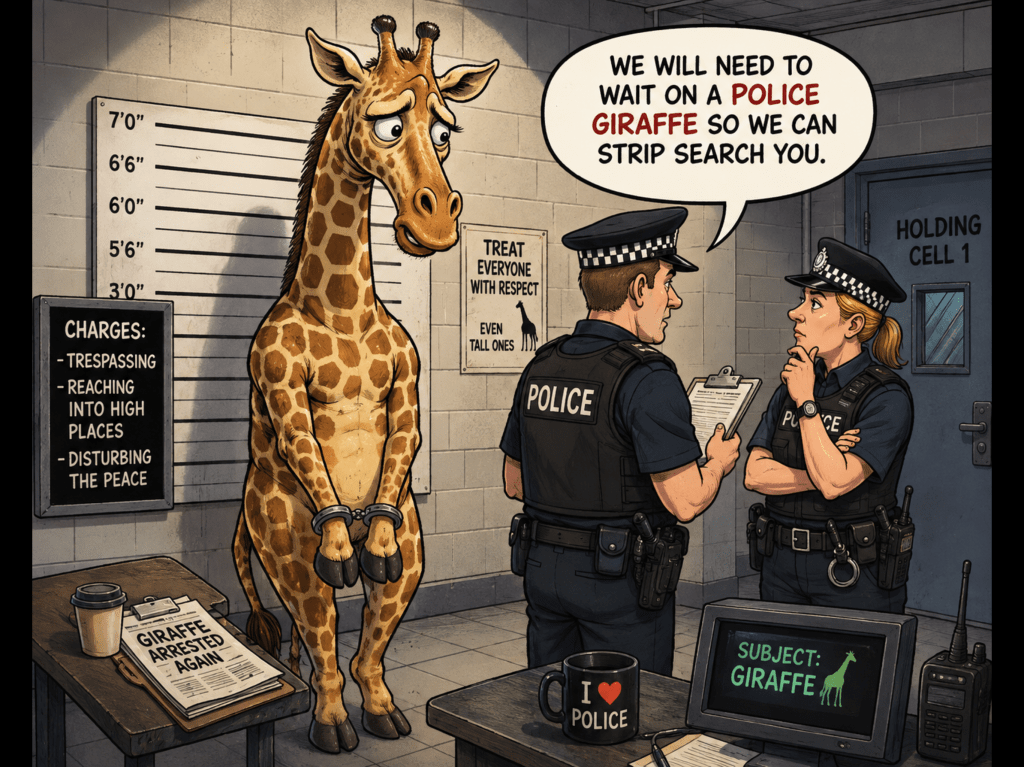
⚖️👮♀️Police guidance allowing transgender suspects to request a strip-search by a female officer continues to divide opinion after campaigners failed to overturn it. While the debate often centres on the rights of suspects, many are asking whether the rights, beliefs, and dignity of the officers carrying out these searches are receiving the same level of consideration.
👮♀️ Who Speaks for the Officer?
It’s easy for politicians, lawyers, and campaigners to argue over policy from behind a desk. It’s the frontline police officer who has to put those policies into practice.
Female officers are not robots. They have rights too. They have personal boundaries, deeply held religious beliefs, moral convictions, and a right to dignity at work. For some, being required to carry out an intimate search in circumstances that conflict with those beliefs could place them in an impossible position.
Surely equality isn’t just about respecting one person’s identity while overlooking another person’s protected rights. A fair system should recognise that both suspects and police officers deserve respect and that policies should be clear enough to protect everyone involved.
When guidance leaves officers feeling pressured or uncertain, confidence in policing suffers. Common sense suggests that procedures should minimise conflict rather than create it, ensuring that no one is forced into situations that unnecessarily compromise their conscience, safety, or dignity.
🔥 Challenges 🔥
Can a policy truly be called fair if it considers one person’s rights but not another’s? How should police balance the rights of suspects with the rights, beliefs, and consent of the officers expected to carry out intimate searches?
Join the discussion in the blog comments. Keep it respectful, challenge the ideas, and tell us where you think the balance should be. 💬⚖️
👇 Like, comment, and share if you believe public policy should protect everyone’s rights—not just those that happen to make the headlines.
🏆 The best comments will be featured in the next issue of the magazine.


Leave a comment