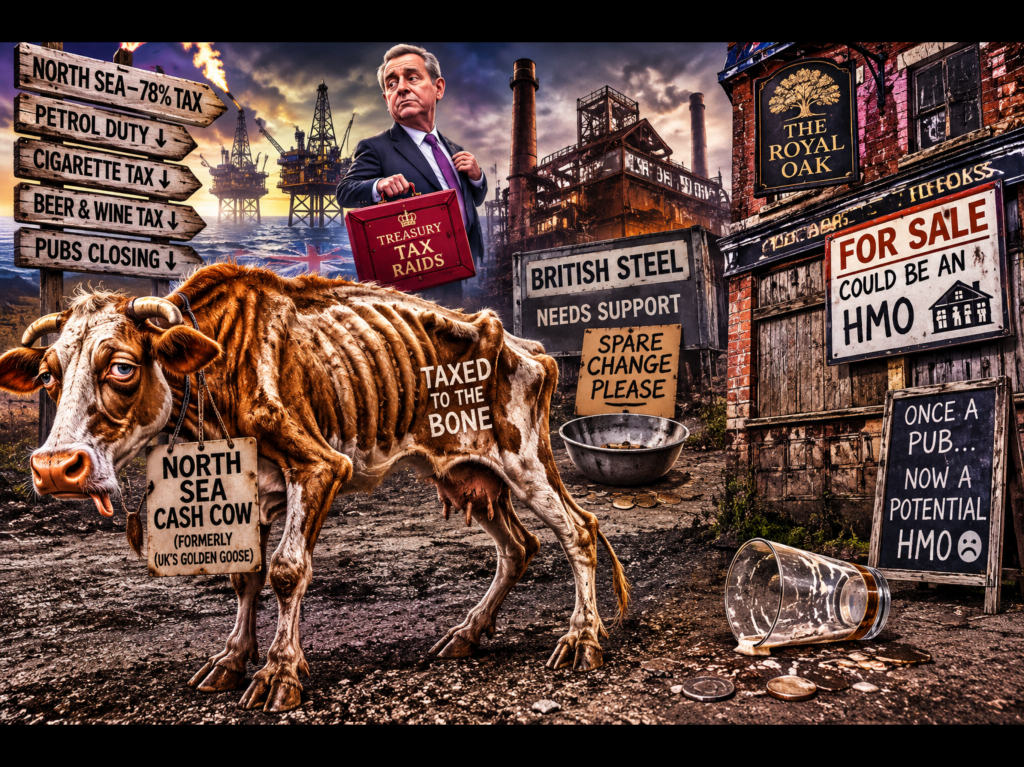
🛢️🍺💸Britain appears to have discovered a bold new economic strategy: tax the industries that make money, regulate the life out of the ones still breathing, then look confused when the Treasury starts rattling around like an empty biscuit tin. The North Sea is ageing, decommissioning bills are huge, fuel duty faces the electric-car squeeze, tobacco duty is falling, and even beer money is starting to foam over the side of the Chancellor’s pint glass. 🍷📉
Officially, the North Sea Transition Authority puts the remaining UK Continental Shelf decommissioning estimate at £43.4bn, with a record £2.6bn spent on decommissioning in 2025 and around 500 wells still waiting for final abandonment. In 2022, the NSTA estimate was £44.5bn, not £36bn, so the £54bn figure appears to have been used in some reports as a dollar conversion rather than the official sterling total.
🧾 The Chancellor’s Vanishing Cash Cows Have Left the Field
For years, the North Sea was treated like a magic money pipe: open valve, collect tax, give speech, repeat. Then came the dithering, the windfall taxes, the green theatre, the policy fog, and the great Westminster hobby of making industry feel about as welcome as a fart in a lift. 🚪💨
The current marginal tax rate on UK oil and gas extraction income is 78%, while mainstream corporation tax is 25%. That is not a tax regime; that is a mugging with a spreadsheet.
And now, shock of shocks, companies are looking at British waters and thinking: “Lovely weather, shame about the fiscal ambush.” BP, Shell, and others adjusting their North Sea exposure is not some mysterious act of corporate astrology. It is what happens when politicians milk a cow, kick the cow, lecture the cow about sustainability, then act offended when the cow climbs into a Norwegian taxi. 🐄🚕🌊
Meanwhile, the government is learning that keeping real industry alive is expensive. Steelworks do not survive on hashtags. Blast furnaces do not run on ministerial optimism. And when profits from places like the North Sea stop pouring into the Chancellor’s coffers, the bill for propping up strategic industries starts to look less like “industrial strategy” and more like a ransom note written in Treasury ink.
Then come the replacement industries. We are told wind power will fill the gap. Fine. Build it. But let’s not pretend the money men behind turbines will cheerfully accept the same fiscal pummelling that oil and gas have taken. The moment anyone proposes North Sea-style taxes on wind profits, the green halo will slip faster than a minister’s memory at an inquiry. 🌬️💰
And it does not stop there.
Fuel duty is a massive source of government income, expected by the OBR to raise £24bn in 2025/26, but electric vehicles are already forcing politicians to confront the obvious problem: you cannot keep taxing petrol forever when you are telling everyone to stop buying petrol.
Tobacco duty is another shrinking well. The OBR expects tobacco duty receipts to fall from £8bn in 2025/26 to £7bn by 2030/31, as consumption drops and vaping takes over. In other words, the government successfully persuaded people to smoke less, then discovered the ashtray used to be full of cash. 🚬🕳️
And now for the final nail in the Chancellor’s pub coffin: beer and wine. 🍺🍷
Alcohol duty is still forecast to raise around £12bn in 2025/26, but the OBR expects alcohol duty receipts to be down 2% compared with 2024/25, with alcohol product volumes forecast to fall sharply this year. HMRC figures also show beer duty receipts in April 2026 were 14% lower than April 2025, while total beer receipts for 2025/26 were 2% lower than the previous financial year.
And the pubs? The British Beer and Pub Association reported 161 pub closures in the first three months of 2026, with an estimated 2,400 jobs lost. So yes, while Westminster congratulates itself for another “targeted relief package,” the local pub is quietly being turned into luxury flats called The Old Dog & Duck Residences. 🏚️🍻
This is the grand problem: Britain has built a Treasury model on taxing petrol, pints, fags, oil, gas, and anything else that moves, burns, bubbles, or gives the public five minutes of pleasure. Now the public is driving electric, smoking less, drinking less, pubs are shutting, North Sea firms are retreating, and heavy industry is holding out a begging bowl the size of a blast furnace.
What replaces it all? Road pricing? Higher electricity bills? A breathing levy? A £4 surcharge every time someone says “net zero” near a kettle? ⚡🫖
Because slapping taxes onto electricity bills is politically much harder than hiding them in fuel, cigarettes, beer, wine, and oil profits. People notice electricity bills. They arrive like threatening letters from a robot bailiff.
So the question is not whether Britain needs an energy transition. The question is whether we are replacing the old tax base with a real economy—or just burning down the shed before building the house.
🔥Challenges🔥
Here is the bit they do not want discussed at the polite dinner table: what happens when all the old cash cows are gone?
No North Sea bonanza. Less petrol duty. Falling tobacco revenue. Beer and wine under pressure. Pubs closing. Steel needing support. Wind profits protected like endangered pandas. 🐼💸
So where does the Chancellor go next—your electricity bill, your road mileage, your savings, your inheritance, or the last surviving pub quiz machine?
Drop your take in the blog comments. Are we watching a clever transition, or a Treasury panic attack in slow motion? 💬🔥
👇 Comment, like, and share. Bring your outrage, your sarcasm, and your best guess for the next tax raid.
The best comments will be included in the magazine. 🎯📝


Leave a comment